

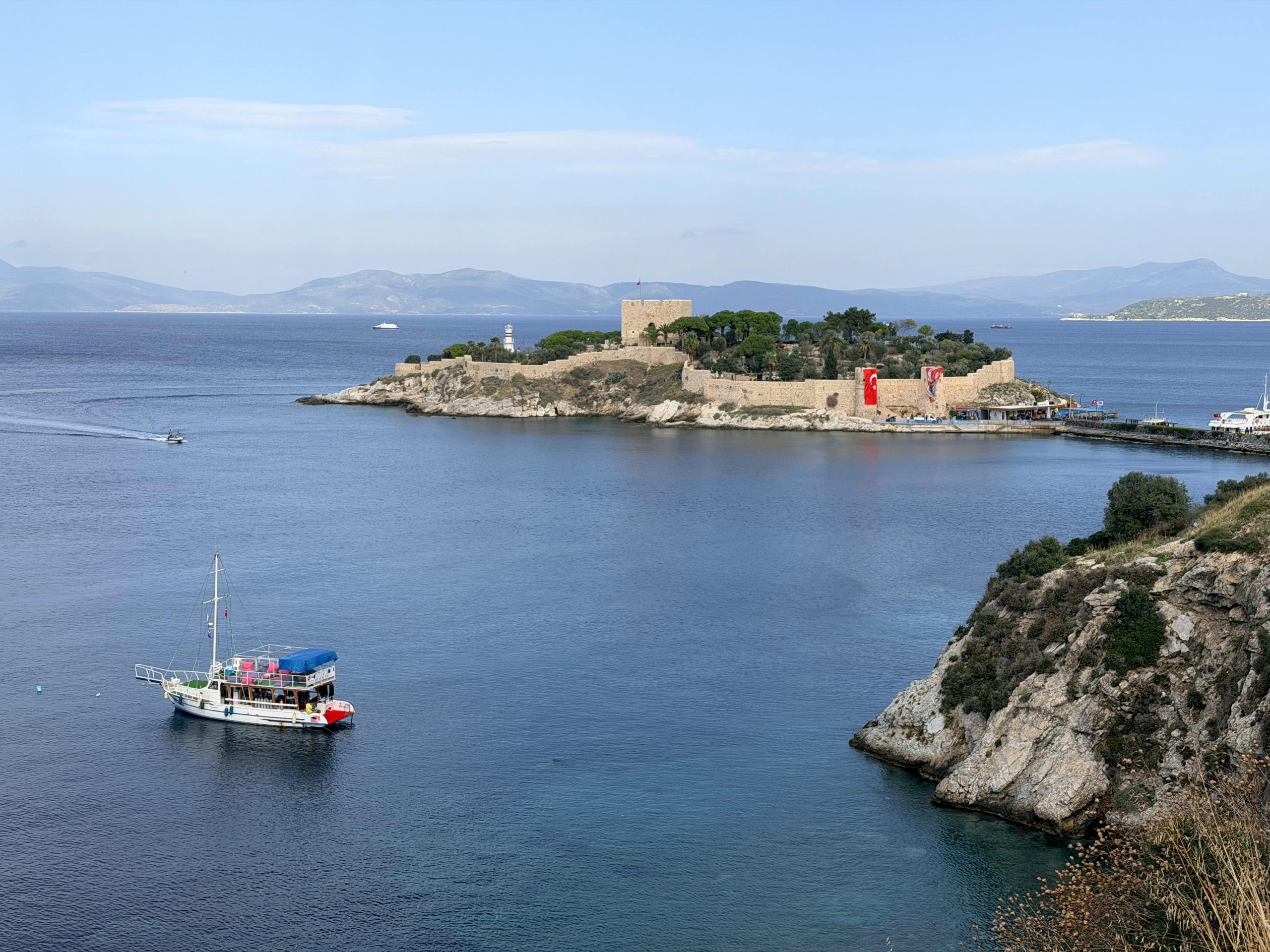
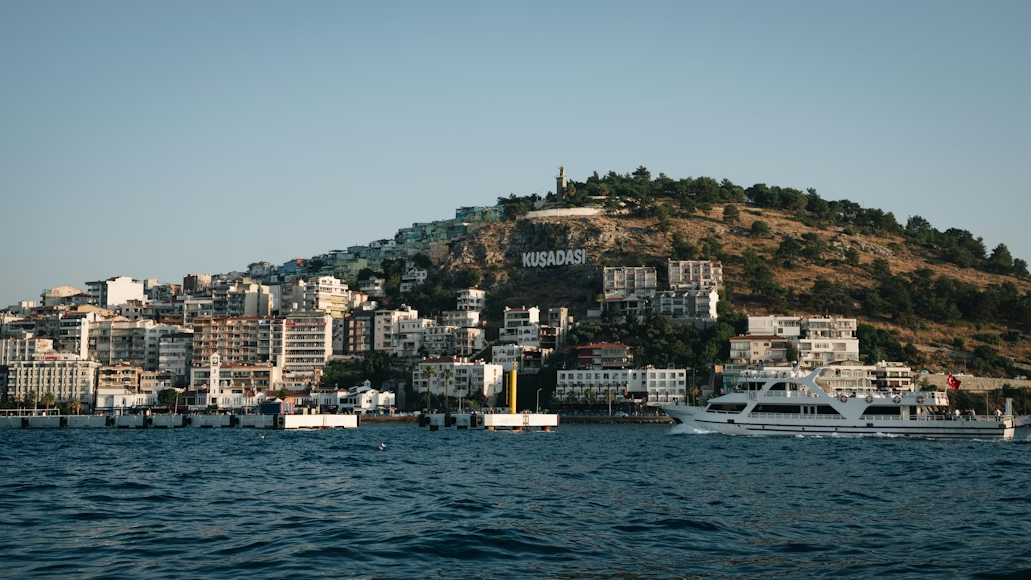
When friends ask me about the best things to do in Kusadasi Turkey, most expect a quick-stop cruise port rather than a destination worth staying for. Those visitors are missing one of the most rewarding stops on the entire Aegean coast. Kusadasi is the gateway to Ephesus, one of the best-preserved ancient cities on earth. It is also a town with its own castle island, its own beaches, its own bazaar streets, and a waterfront that feels completely different at 9 PM than it does at 9 AM.
Kuşadası sits on Turkey’s Aegean coastline in Aydın Province. In 2025 alone, the port handled 617 cruise calls and welcomed 995,303 cruise passengers, making it Türkiye’s busiest cruise port and the fourth busiest in the Eastern Mediterranean. Yet most of those visitors spend fewer than six hours here. After six years living in Turkey and visiting this coast every season, I can tell you that decision is one of the most consistent mistakes I see in Aegean travel. Staying even one night, ideally two or three, completely changes what Kusadasi gives you.This guide covers everything I would tell a friend planning a trip in 2026. The unmissable landmarks, the hidden corners, the day trips genuinely worth the detour, the best time to visit, and the practical tips that will save you money and frustration.
Your Quick Reference Guide to Things to Do in Kusadasi Turkey
| Step | The Roadmap (Chapter) | What’s Inside |
|---|---|---|
| 01 | Pigeon Island & Kusadasi Castle | It is the most iconic landmark in Kusadasi, a 16th-century island fortress sitting right in the bay. |
| 02 | The Ancient City of Ephesus | One of the best-preserved Roman cities in the world, it sits just 17 km from Kusadasi. |
| 03 | Ladies Beach & the Beaches of Kusadasi | A guide to every beach worth knowing, from the main strip to the quieter coves south of town. |
| 04 | Dilek National Park | A wild Aegean peninsula of empty beaches and forested trails right on Kusadasi’s doorstep. |
| 05 | The Kusadasi Bazaar & Shopping | How to navigate the bazaar, what is worth buying, and how to shop well without overpaying. |
| 06 | Boat Trips & Water Activities | Day trips by sea covering open-water swimming spots, hidden sea caves, and Aegean beaches. |
| 07 | The House of the Virgin Mary | The sacred hillside chapel above Ephesus that pilgrims and curious travellers visit together. |
| 08 | Day Trip to Şirince Village | A hilltop village of stone houses and wine cellars that most visitors to Kusadasi never find. |
| 09 | What to Eat in Kusadasi | The dishes worth ordering, the streets worth walking, and the restaurants worth the detour. |
| 10 | Best Time to Visit Kusadasi Turkey | A month by month breakdown of temperatures, sea conditions, and what to expect at each time of year. |
| 11 | Practical Tips & Getting to Kusadasi | Budget planning, transport options from the airport, and everything you need to prepare before you arrive. |
| 12 | Sample 3-Day Kusadasi Itinerary | A locally tested three-day plan that covers the best of Kusadasi without rushing a single stop. |
| 13 | Frequently Asked Questions | The most common questions from travellers planning a trip to Kusadasi in 2026, answered honestly. |
1. Pigeon Island and Kusadasi Castle: The Symbol of the City
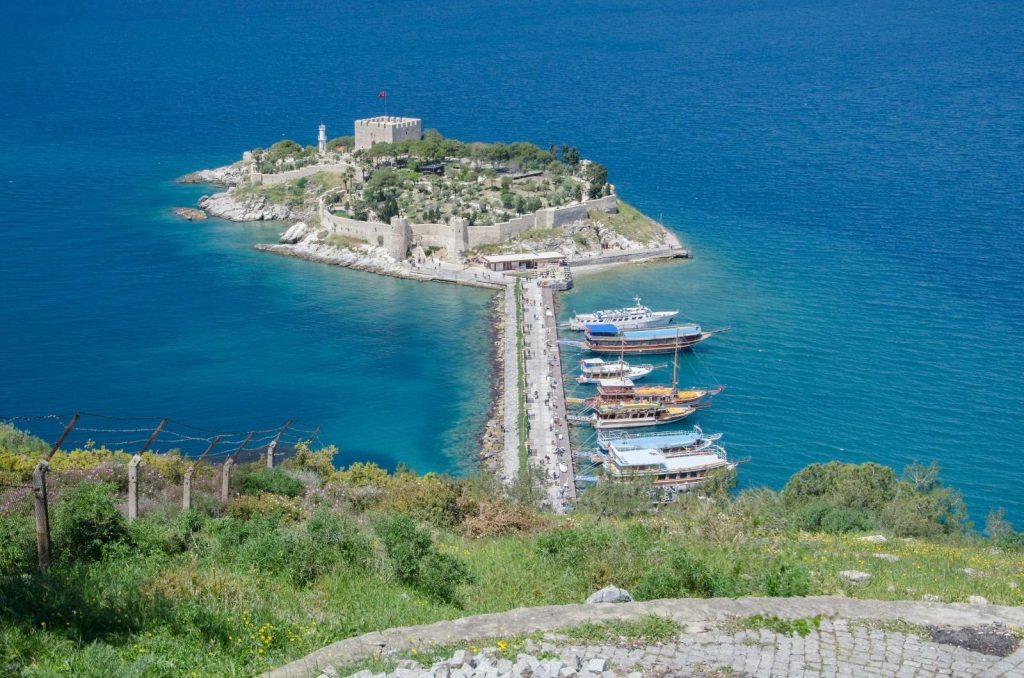
If you have ever seen a photograph of Kusadasi and wondered about the small fortified island connected to the mainland by a thin causeway, that is Pigeon Island, known locally as Güvercinada. It is the single most recognisable landmark in the city, sitting at the mouth of Kusadasi Bay. The walls were built by İlyas Agha in the 16th century, while the citadel itself was commissioned by the famous Ottoman admiral Hayreddin Barbarossa, the same Barbary corsair who terrorised Mediterranean shipping under the Ottoman flag. Outer walls were added later to defend against attacks during the Greek Orlov Revolt of 1770. In 2020, the castle was added to the UNESCO World Heritage Tentative List as part of the Genoese trade route file.
Today, Pigeon Island is a public park and entry is free. The causeway is 350 metres long and takes about ten minutes to walk at a casual pace. Inside the small castle museum you will find the skeleton of a 14.5-metre fin whale, which sounds odd until you realise this stretch of the Aegean used to host migrating whales. The grounds have tea gardens, cannon emplacements, and views over Kusadasi Bay that genuinely earn the cliché “panoramic.”
The island gets its name from the pigeons that used to nest here. Today the resident cat population has taken over. Every cat appears to have its own regular feeding spot, and the locals bring food daily. It is one of those small, slightly absurd details that makes a place feel real instead of staged.
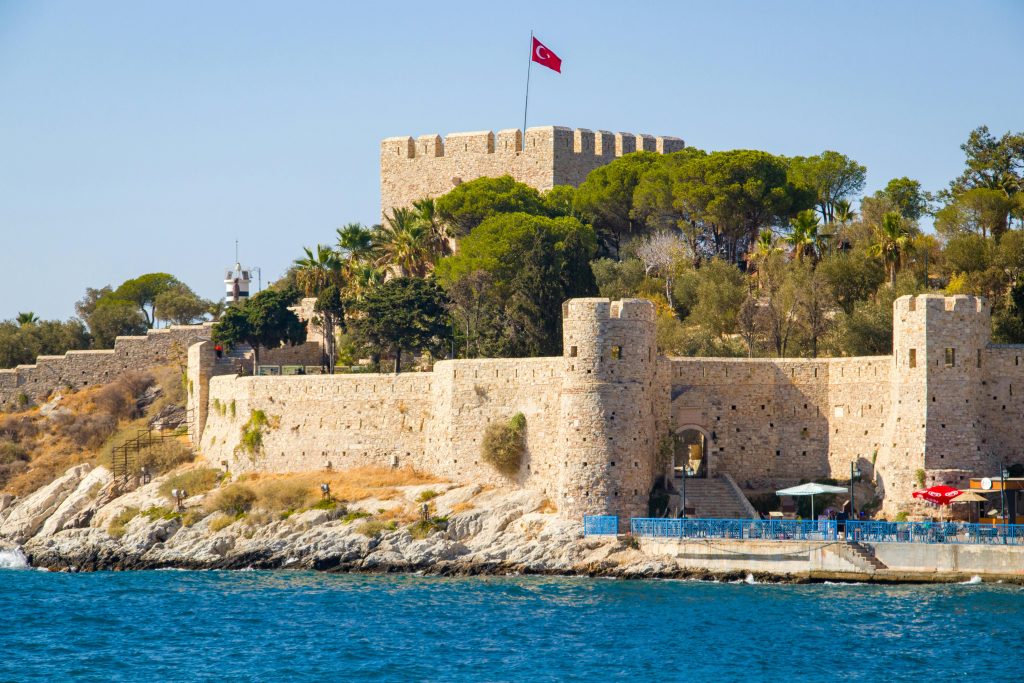
Practical info: Open daily, generally 08:00 to 22:00 in summer with shorter hours in winter. Park entry is free. The tea garden at the western end has some of the best sunset views in town at local prices.
Pro Tip: Visit at sunset. The western-facing café terrace catches the golden light directly over the Aegean horizon. Arrive 30 minutes before sunset to claim a table.
Turkey Travel HQ Insider Tip: Walk the causeway after 21:00 in summer. The castle walls are lit up, the sea is dark, and the crowd has thinned to almost nothing. The illuminated fortress over the water is one of the most atmospheric night scenes on this stretch of coast, and almost no guidebook tells you to go at this hour. While the castle museum itself closes at 22:00, the causeway and the lit-up perimeter paths remain the perfect spot for a late-night stroll.
2. The Ancient City of Ephesus: A Day Trip That Redefines What “Old” Means
No honest guide to what to do in Kusadasi, Turkey, can avoid placing Ephesus at or near the top of the list. Located 17 km from the centre of Kusadasi, Ephesus is one of the largest and best-preserved ancient cities in the Mediterranean. It was the capital of Roman Asia and one of the greatest cities in the eastern Roman world.
Modern population estimates range from around 70,000 inhabitants to as many as 250,000 at its peak during the 1st and 2nd centuries AD, depending on the methodology scholars use. Either way, this was a major Roman metropolis and a centre of trade, religion, and political power.
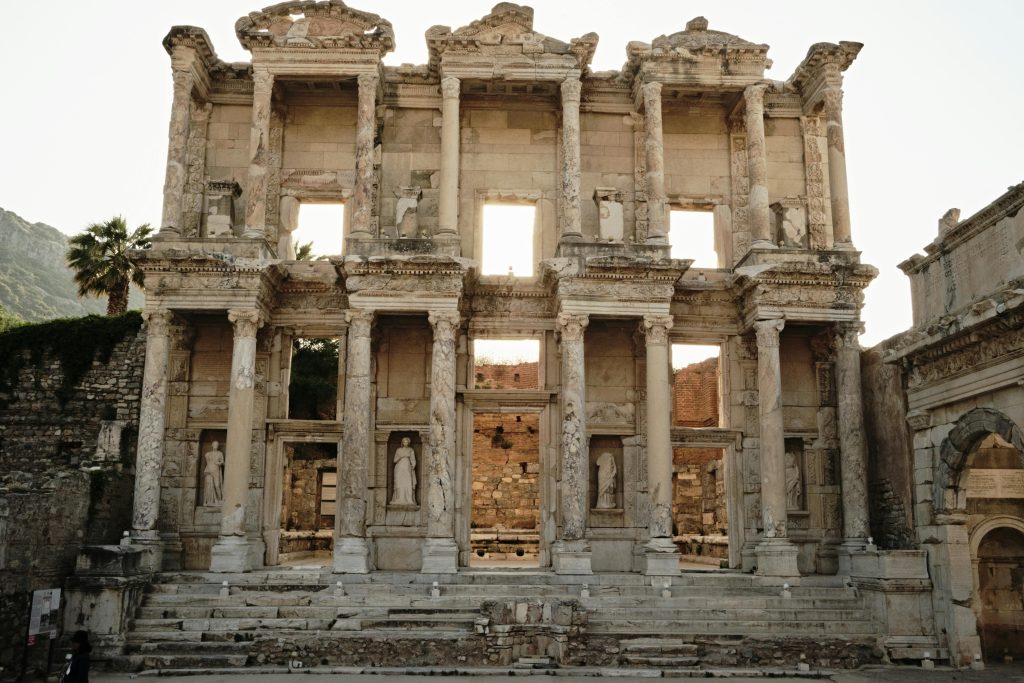
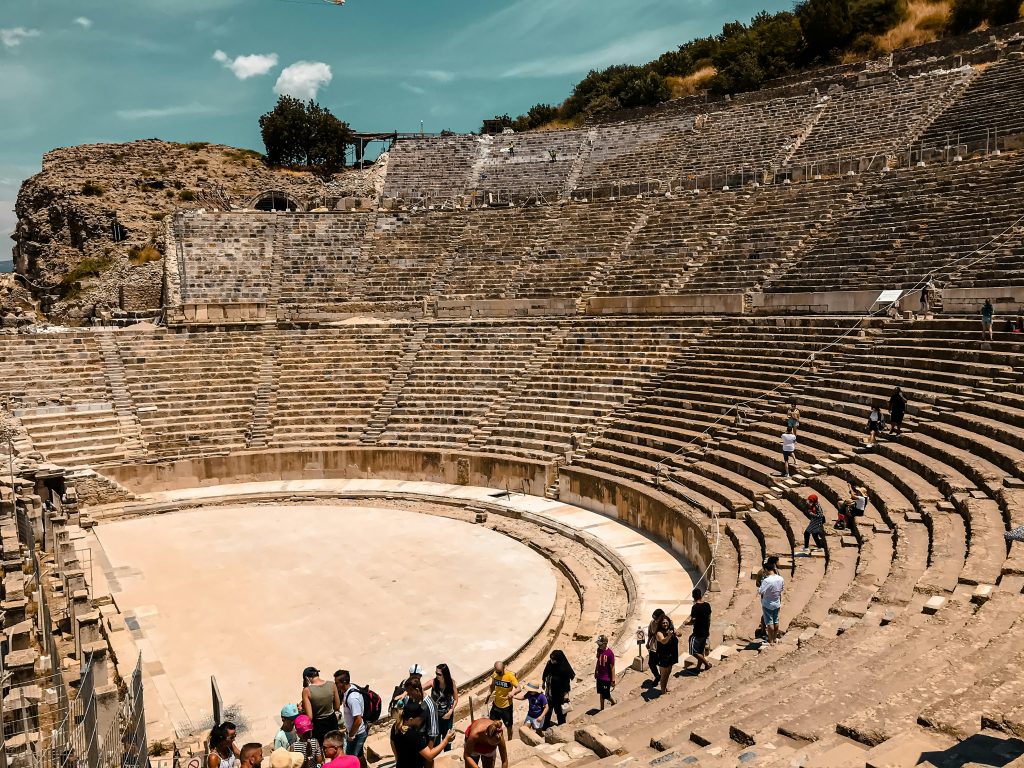
What makes Ephesus extraordinary is not just its age but also its remarkable state of preservation. The main street, the Curetes Way, is a marble-paved boulevard flanked by the ruins of temples, fountains, public latrines, and private villas. The Library of Celsus, a 2nd-century façade carefully reconstructed by archaeologists, rises two storeys high at the end of the street with extraordinary architectural detail. The Great Theatre, carved into the western slope of Mount Pion, seated up to 25,000 people at its peak. Sting performed there in 1993, and the site still hosts summer concerts today, with a current live-show capacity of around 8,000.
What you should not miss inside the site:
- The Library of Celsus, the most photographed structure in Ephesus and one of the finest surviving Roman façades anywhere.
- The Great Theatre, a 25,000-seat cavea carved into Mount Pion with acoustics still working today.
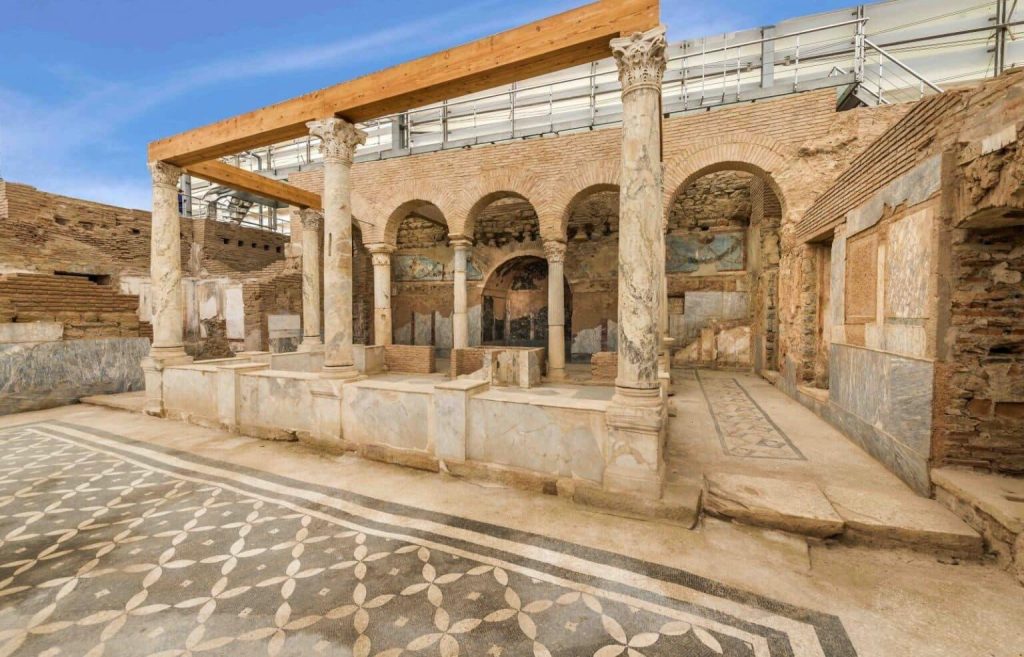
- The Terrace Houses, an extra €15 entry, but the best preserved Roman domestic interiors in the world. Original mosaics, original frescoes, walking through the ancient kitchens of wealthy Ephesians.
- The Temple of Hadrian, a beautifully decorated Corinthian temple on the Curetes Way.
- The Marble Road, paved with stones that Romans walked nearly 2,000 years ago.
Pro Tip: Arrive at opening time, 08:00 sharp. Cruise tours typically begin arriving between 09:30 and 10:30 in groups of 40 to 60 people, and the Library of Celsus quickly turns into a queue. The difference between 08:15 and 10:00 is the difference between a meditative walk through history and waiting your turn for a photograph.
Turkey Travel HQ Insider Tip: After visiting Ephesus, take a 15-minute dolmuş ride to Selçuk and visit the Ephesus Archaeological Museum. Entry costs €10. The museum houses the famous Artemis statues from the Temple of Artemis, one of the original Seven Wonders of the Ancient World, and provides historical context that the ruins themselves cannot. Cruise day-trippers in a hurry consistently skip it. They are wrong to do so.
Many travellers combine Ephesus with a two-day extension to Pamukkale.Money-Saving Tip: If your trip is focused on the Aegean coast, including Ephesus, Pamukkale, Pergamon, and Aphrodisias, consider the Museum Pass Aegean (€95 for 7 days) instead of the full Türkiye pass. It covers more than 40 sites across İzmir, Aydın, Muğla, and Denizli provinces and pays for itself within two days.
3. Ladies Beach and the Beaches of Kusadasi
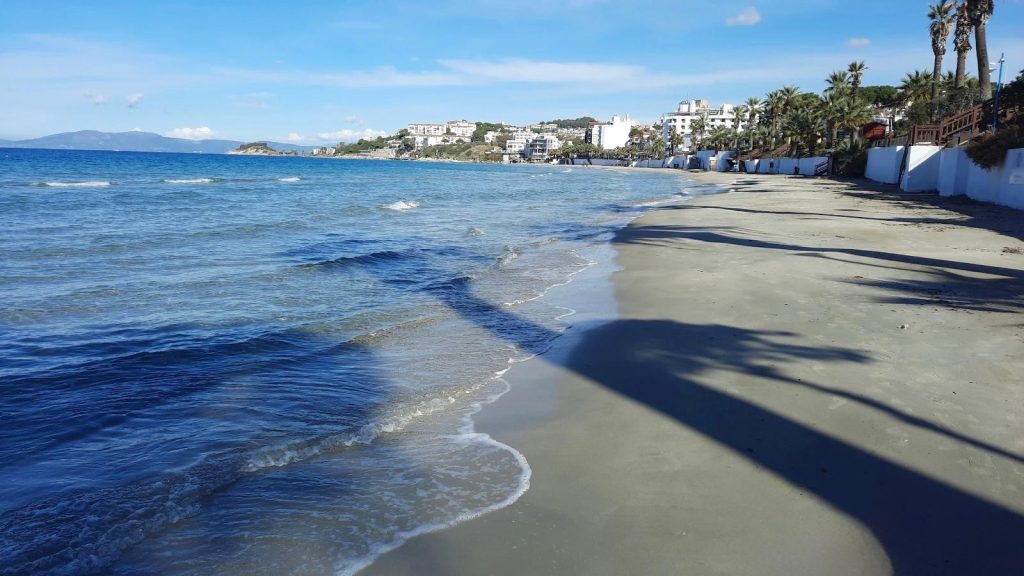
Kusadasi has a string of accessible beaches running north and south of the harbour, each with its own character. The Aegean water is warm, clear, and calm, and this stretch of coastline includes some of Turkey’s best beaches. The proximity of Dilek Peninsula provides genuinely wild alternatives for travellers willing to drive a little further south.
- Ladies Beach (Kadınlar Denizi) is the most central option, just 2.5 km south of the harbour and reachable by dolmuş in about ten minutes. The name dates back to the early 20th century, when the beach was reserved exclusively for women bathing. Today, despite the name, it is a fully mixed, family-friendly beach open to everyone with a long stretch of sand, beach clubs, sunbed rentals, and water sports. It gets busy in July and August, but mornings before 10:00 are perfectly manageable.
- Long Beach (Uzun Kumsalı) stretches several kilometres farther south and is home to many of Kusadasi’s resort hotels. It is wide, sandy, and protected from strong waves, making it ideal for families with small children.
- Pamucak Beach sits north of Kusadasi near the Ephesus turnoff. It is wide, natural, and almost undeveloped. A rare thing on this coast. If you have been to Ephesus in the morning, Pamucak is a logical afternoon swimming stop on the way back.
Pro Tip: The beaches inside Dilek National Park are significantly cleaner and less developed than any beach within Kusadasi itself. If water quality is your priority, the 30-minute drive south is completely worth it.
4. Dilek National Park: Kusadasi’s Wild Side
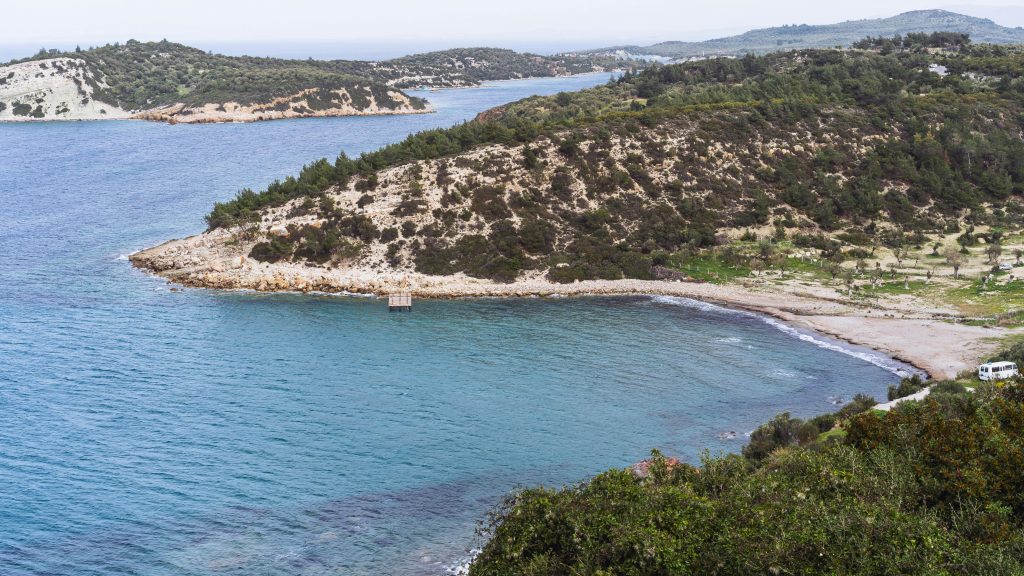
Most visitors to Kusadasi have no idea that one of the most beautiful national parks in western Turkey sits just 28 km south of the harbour. The official name is a mouthful. Dilek Peninsula-Büyük Menderes Delta National Park covers 27,598 hectares of protected Aegean peninsula. It was declared a national park in 1966 and is protected under the Ramsar Convention for its importance as a wetland habitat. Inside the park, you will find four designated public beaches, hiking trails, ancient limestone cliffs, dense Mediterranean pine forest, and one of the richest wildlife habitats in the Aegean region. The park is home to around 256 bird species and 804 plant species, with wild boar and fallow deer roaming freely.
The four park beaches, in order from the entrance, are İçmeler, Aydınlık, Kavaklı Burun, and Karasu. All four are significantly less crowded than the town beaches. Water clarity is exceptional, with cliffs and forest replacing concrete hotels as the backdrop.
The Cave of Zeus near the entrance is a cold-water spring that flows directly into the sea. The surrounding water is noticeably cooler and cleaner than the nearby coves, making it a bracing but unforgettable swim. Local legend claims Zeus himself bathed here. Other locals will tell you it was the Virgin Mary, since her house sits just a few kilometres over the hill.
Practical info: Park gates are open from 08:30 to 19:00 during summer. Entry costs approximately €1 to €2 per person, depending on the season, while children under 12 enter free of charge. The park does not close on a fixed weekday. A shuttle minibus runs between the more distant beaches inside the park.
5. The Kusadasi Bazaar: How to Shop Without Getting Hustled
The bazaar area around Öküz Mehmed Paşa Caravanserai, a beautifully preserved 17th-century Ottoman han, is one of the most atmospheric shopping zones on the Aegean coast. The caravanserai itself is now a hotel, but its courtyard is open to visitors and is worth a look regardless of whether you intend to shop.
The surrounding streets are lined with shops selling leather goods, carpets, jewellery, ceramics, spices, and Turkish delight. The key to getting value here is the same as in any Turkish bazaar. Never accept the first price. Never feel hurried by aggressive attention. Always be willing to walk away. A respectful counteroffer at 40 percent of the asking price is a standard starting point for most goods.
What is genuinely worth buying includes hand-painted ceramics, especially İznik-style plates, which travel well, locally produced olive oil soaps which are inexpensive and excellent quality, and regional honey from Aydın province. Leather goods and carpets can also be excellent, but you need more knowledge to assess quality, so do not buy those on impulse on day one.
Turkey Travel HQ Insider Tip: Visit the bazaar before 09:30. The further you walk from the harbour and into the residential backstreets, the more you find shops where locals actually shop, rather than the souvenir corridor designed exclusively for cruise passengers. As a local, this is the rule I follow in every Turkish bazaar town.
6. Boat Trips and Water Activities from Kusadasi
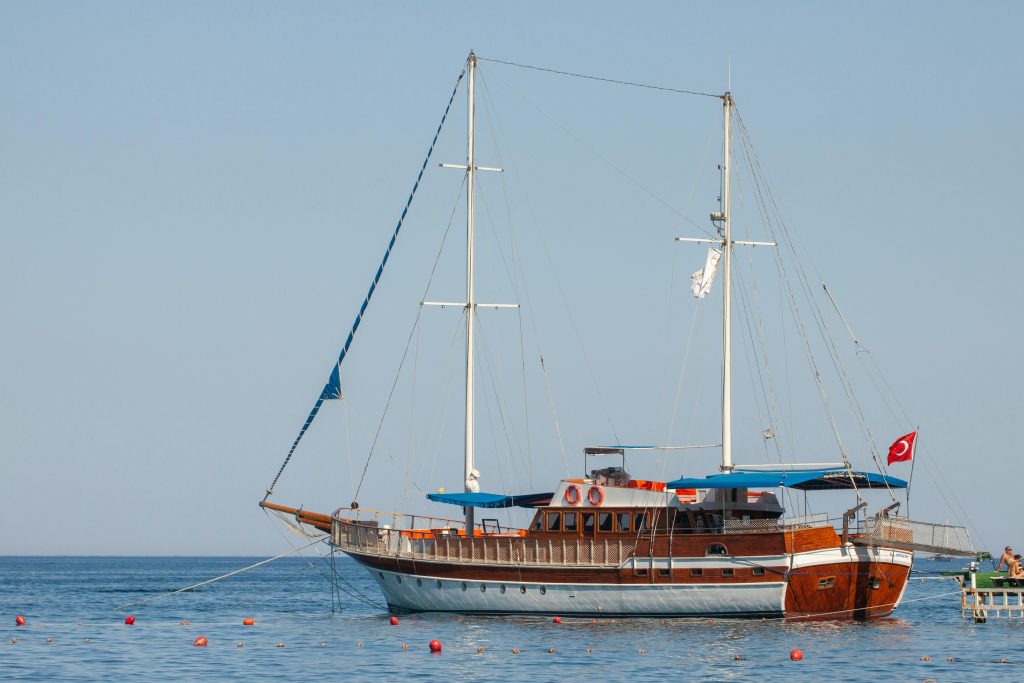
The bay around Kusadasi is best appreciated from the water. A half-day or full-day boat trip is one of the most enjoyable things to do in Kusadasi Turkey, especially in the heat of July and August. The standard tour visits five to seven bays along the Dilek Peninsula coastline south of the city, with stops for swimming at each one. Lunch on board, usually grilled fish or a mezze spread, is included in the price.
Departures are typically from Kusadasi Harbour between 09:00 and 10:00, returning at approximately 17:00. Shared tours cost between €25 and €35 ($27 to $38) per person, including lunch. Private gulet rentals for groups start at around €450 to €600 ($480 to $650) for a half-day (4 hours). Prices typically include fuel and a captain, though lunch may be an additional cost depending on the boat size.
Families with children spending multiple days should also consider Adaland Aquapark on the northern edge of town, the largest water park in Turkey. Standard 2026 entry is €35 for adults, €30 for children aged 4 to 9, and free for under-3s. The park also operates a dolphin show and a swim-with-dolphins programme at an additional cost.
Pro Tip: Book your boat trip the afternoon before, not at the harbour on the morning of departure. Agents on Atatürk Bulvarı, the main waterfront promenade, can often arrange the same trip for 20 to 30 percent less than the harbour-side touts when business is slow.
7. The House of the Virgin Mary
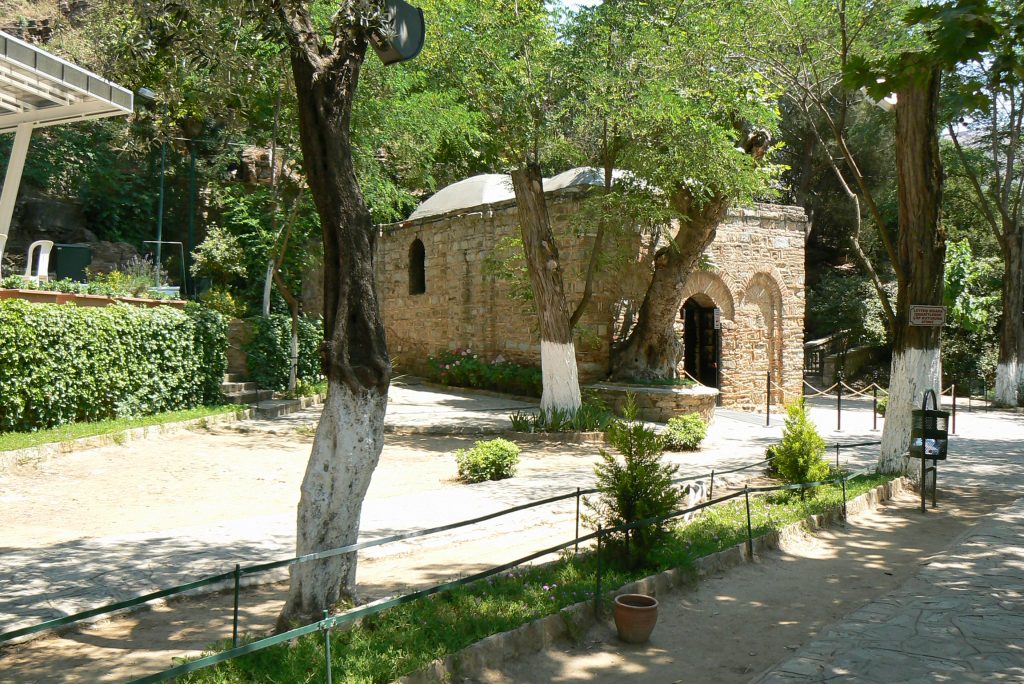
Located 9 km from Ephesus on the forested slopes of Bülbül Dağı, the House of the Virgin Mary, known locally as Meryem Ana Evi, is a small stone chapel marking the site where tradition holds that Mary spent her final years. The site has been visited by three popes, including Paul VI, John Paul II, and Benedict XVI, and is sacred to both Christians and Muslims.
What strikes visitors most is not the scale of the chapel, which holds perhaps 30 people at a time, but the atmosphere around it. The surrounding forest is ancient and silent. Spring water flowing from the site is considered holy. The wishing wall outside the chapel is covered in handwritten prayers tied to rope. It is one of the most moving places on this entire stretch of coast, regardless of your beliefs.
Practical info (verified for 2026): Entry costs €15 (approx. 800-850 TL). This site is managed by the local municipality, not the state, so prices can vary slightly from the national museum fees. Open daily, generally from 08:00 to 18:00. Most visitors combine it with a morning at Ephesus, since it is just 9 km from the upper Ephesus gate. Dress modestly. This is an active place of worship, and security staff will turn away visitors wearing shorts, tank tops, or beachwear. The Museum Pass Türkiye does not cover this site, so a separate ticket is required.
8. Day Trip to Şirince: The Hilltop Wine Village Most Visitors Miss
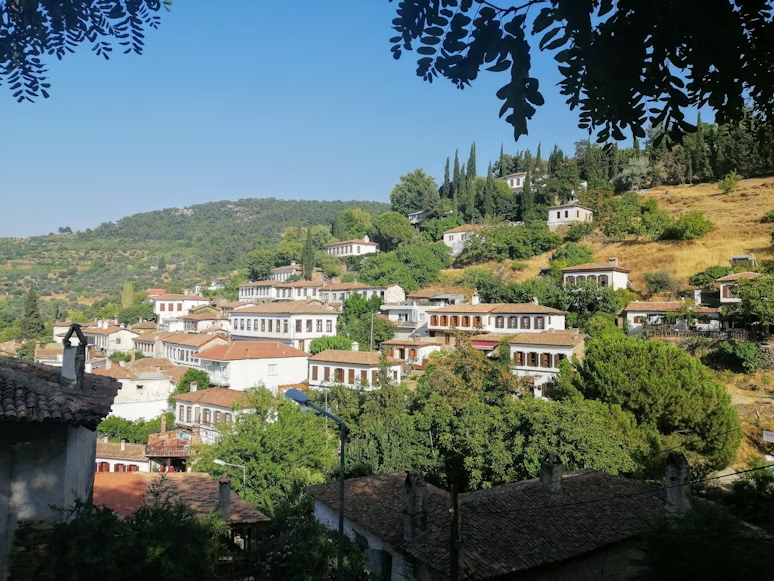
Most Kusadasi guides stop at Ephesus and the beaches, but the local move is to drive 30 minutes inland from Selçuk up into the hills to Şirince. The village has reinvented itself as one of Turkey’s most charming wine and craft destinations.
Şirince was settled by Greeks who built the stone houses you see today in the 19th century, before they left during the 1923 population exchange. After decades of decline, restoration efforts in the 1990s, spearheaded by writer Sevan Nişanyan, transformed the village into a tourist destination. The houses are now restored as boutique guesthouses, tasting rooms, and craft shops.
The village is famous for its fruit wines made from peach, blackberry, mulberry, melon, and pomegranate, alongside olive oil, sun-dried tomatoes, and cobblestone streets that climb the hillside between vine trellises.
Entry to the village itself is free. The drive from Kusadasi takes about 50 minutes, while from Selçuk it is just 12 km and 15 to 20 minutes. From Selçuk’s main bus station, dolmuş minibuses run to Şirince throughout the day. A morning at Ephesus followed by a long lunch in Şirince is one of the most rewarding day trips you can build from Kusadasi, and most cruise passengers will never know it exists.
Turkey Travel HQ Insider Tip: Avoid weekends in summer. Şirince has become popular with domestic tourists from İzmir, and Saturdays and Sundays in July and August can feel crowded. Tuesday or Wednesday morning, followed by a leisurely lunch on a vine-covered terrace, is the version of Şirince you want. There is also a quirky bonus just outside the village. The Nesin Mathematics Village, founded by mathematician Ali Nesin, hosts science and philosophy retreats in a beautiful stone-built campus that you can sometimes visit by appointment.
9. What to Eat in Kusadasi
The food culture of Kusadasi reflects its Aegean geography. Fresh seafood, excellent olive oil, and a light, vegetable-forward kitchen make it quite different from the meat-heavy cuisine of central Anatolia. The most interesting dining happens a few streets back from the water, not at the harbour-front restaurants where menus are in English and prices are often doubled.
What to try and where to find it:
1. Çiğ köfte: Spiced bulgur and tomato paste rolled into small kebab shapes, served with lettuce and pomegranate molasses. Sold from stalls throughout the bazaar, usually under 30 TL. Modern versions are vegetarian.
2. Midye dolma: Mussels stuffed with spiced rice, squeezed with lemon, and sold by street vendors on the waterfront. Quintessential Aegean street food. Sold per piece.
3. Balık ekmek: Grilled mackerel or sea bass in fresh bread. Often fresher in Kusadasi than in Istanbul due to the proximity to the open Aegean.
4. Zeytinyağlı dishes: This is the Aegean tradition of vegetables cooked slowly in olive oil and served at room temperature. Artichokes, broad beans, and stuffed grape leaves prepared this way are at the heart of Aegean home cooking.
5. Fresh figs: Aydın province is one of Turkey’s most important fig-producing regions. In late summer, fresh figs with local kaymak (clotted cream) are extraordinary. Buy them at the weekly pazar, not at souvenir shops.
Turkey Travel HQ Insider Tip: The Tuesday and Friday markets (pazar) in Kusadasi’s residential districts are where you find the real food culture of the region. Local farmers sell the famous Aydın grapes, figs, olives, and cheeses at a fraction of resort shop prices. The Tuesday market in the Türkmen neighbourhood is the better of the two. Ask any local for “Salı pazarı.”
10. Best Time to Visit Kusadasi Turkey
| Month | Air Temp | Sea Temp | Crowds | Verdict |
| April | 18 to 22°C | 17 to 19°C | Very Low | It is the quietest month on the coast, green from spring rains and ideal for visiting Ephesus and hiking the national park. |
| May | 22 to 27°C | 19 to 21°C | Low | May is the best all-round month to visit, with warm weather, low crowds, and the best value for accommodation. |
| June | 27 to 32°C | 21 to 24°C | Moderate | Swimming is excellent by June and crowds are still manageable, though prices begin to rise from mid-month onward. |
| July | 33 to 38°C | 25 to 27°C | Very High | This is full peak season with intense heat and fully booked hotels, so plan and book well in advance if you choose to come. |
| August | 33 to 38°C | 26 to 28°C | Peak | The busiest and hottest month of the year, when walking Ephesus in the midday sun becomes genuinely exhausting. |
| September | 28 to 33°C | 25 to 27°C | Moderate | September is the single best month to visit, with the warmest sea temperatures of the year and crowds beginning to ease noticeably. |
| October | 22 to 27°C | 22 to 24°C | Low | An excellent month for exploring Ephesus comfortably, with the sea still warm enough for swimming well into October. |
11. Practical Tips and Getting to Kusadasi
- Getting There: Flying Into İzmir
Kusadasi does not have its own airport. The nearest is İzmir Adnan Menderes Airport (ADB), between 75 and 87 km from Kusadasi, depending on the route, roughly 60 to 75 minutes by car. Three options work for the transfer.
- Havaş airport shuttle: The cheapest option at €9 per person takes 90 to 120 minutes and runs around the clock. The bus departs from right outside the Domestic Terminal exit (a 5-minute walk from the International arrival gate). You buy the ticket as you board, and it drops you off at the Kuşadası bus station (Otogar). From there, a short taxi or local dolmuş takes you to your hotel.
- Train and bus combination: TCDD trains run from Adnan Menderes station to Selçuk, where you switch to a Kuşadası dolmuş. Roughly €8 total, but the slowest option.
- Private transfer: Pre-booked private cars cost €50 to €80 for up to four passengers in 2026. Door to door in 60 to 75 minutes, and by far the most comfortable option for families or anyone with luggage.
- Getting Around: How to Move Between Towns
The city centre is fully walkable. For Ephesus, Dilek National Park, the House of the Virgin Mary, and Şirince, you will need a rental car, dolmuş, or an organised day tour. Dolmuş for Ephesus and Selçuk depart from the main terminal on Adnan Menderes Bulvarı, roughly every 30 minutes, all day.
For local updates on events, transport, and seasonal closures, the Kuşadası Municipality publishes information in English on its official website.
- Money: Cash, Cards, and Lira
Cash is still useful in markets and small restaurants. Cards work everywhere else. ATMs are abundant. State-run sites like Ephesus accept card or Turkish Lira cash only at the ticket counter, despite Euro pricing on the boards. Kusadasi is also one of the more affordable Aegean destinations for travellers on a budget.
- 2026 Budget Guide
| Category | Budget | Mid-Range | Comfort |
| Accommodation | €35 to €60 / night | €85 to €160 / night | €220+ / night |
| Meals per day | €18 to €30 | €45 to €80 | €110+ |
| Ephesus entry | €40 standard | €55 (inc. Terrace Houses) | €165 (Full Museum Pass) |
| Boat trip | €25 to €35 (Shared) | €450+ (Private half-day) | €900+ (Full-day charter) |
| Daily total estimate | €65 to €95 | €145 to €230 | €320+ |
12. Sample 3-Day Kusadasi Itinerary
Day 1: Arrival and the City
Morning at 11:00: Arrive in Kusadasi, settle in, walk along the waterfront promenade.
Afternoon at 15:00: Pigeon Island and Kusadasi Castle. Coffee at a tea garden inside the fortress.
Sunset around 19:00: Return to the western terrace of Pigeon Island for sunset.
Evening at 20:30: Dinner in the bazaar backstreets. Walk the lit-up causeway after 21:00.
Day 2: Ephesus and Şirince
Early morning at 08:00: Arrive at Ephesus at opening time, 08:00 sharp. Allow 2.5 to 3 hours to walk the site.
Late morning at 11:30: Lunch in Selçuk near the Ephesus Archaeological Museum.
Early afternoon at 13:00: Visit the Ephesus Archaeological Museum, around 1 hour.
Mid-afternoon at 15:00: Drive or dolmuş to Şirince. Wine tasting and a slow afternoon.
Evening at 19:30: Return to Kusadasi for dinner by the harbour.
Day 3: Beach Day in Dilek National Park
Morning at 09:00: Drive 30 minutes south to Dilek National Park.
Late morning at 10:00: Aydınlık or Kavaklı Burun Beach. Swim, picnic, and read.
Afternoon at 15:00: Cave of Zeus on the way out for a cold-water dip.
Evening at 19:30: Last dinner at a bazaar lokanta. Pack figs and olive oil for home.
13. Frequently Asked Questions
What is Kusadasi known for in Turkey?
Kusadasi is best known as the nearest coastal base to Ephesus, one of the best-preserved ancient Roman cities in the world. Beyond Ephesus, the city is famous for Pigeon Island Castle, its Aegean beaches, Dilek National Park, and as Turkey’s busiest cruise port, with 617 cruise calls and over 995,000 passengers in 2025.
Is Kusadasi worth visiting for more than a day?
Absolutely. Most cruise passengers spend six hours and leave without ever seeing what makes the region genuinely special. Two nights give you Ephesus, Pigeon Island, a boat trip, and Dilek National Park together, which is the complete picture of the destination. Three nights adds Şirince and a slower pace.
What is the best time to visit Kusadasi, Turkey?
May and September are the two best months. May is cooler, less crowded, and ideal for visiting Ephesus without the heat. September offers the warmest sea temperature of the year, noticeably fewer crowds than August, and significantly lower prices once peak summer ends.
How far is Ephesus from Kusadasi?
The main entrance to Ephesus is approximately 17 km from central Kusadasi, about 20 minutes by car or a 30-minute dolmuş ride. Dolmuş depart regularly from the main terminal throughout the day for an affordable fare.
Is Kusadasi safe for solo and female travellers?
Yes. Kusadasi is one of the safer tourist destinations on the Turkish coast. The main areas are well-policed and well-lit at night. Keep a hand on your belongings in the bazaar, as you would anywhere busy. Women travelling solo will find Kusadasi considerably less pressured than some other Aegean ports.
What is the nearest airport to Kusadasi Turkey?
İzmir Adnan Menderes Airport (ADB) is the nearest, between 75 and 87 km away depending on route, roughly 60 to 75 minutes by road. It is served by numerous direct European routes and frequent domestic connections from Istanbul, Ankara, and Antalya.
Can I visit Ephesus independently without a guided tour?
Yes, and for most travellers this is the recommended approach. The site has excellent signage in multiple languages. Walking it independently at your own pace gives a richer experience than rushing through with a group of 50. You can reach Ephesus by dolmuş from Kusadasi for a fraction of the cost of an organised tour.
How much does it cost to enter Ephesus in 2026?
Standard entry to Ephesus is €40 in 2026. The Terrace Houses are an additional €15. The Museum Pass Türkiye, priced at €165, covers Ephesus and most other state-run sites for 15 days. The Museum Pass Aegean at €95 is a better choice for travellers focused only on the Aegean coast.
How much is a boat trip in Turkey in lira?
For a standard shared boat trip in Kuşadası in 2026, expect to pay between 1,400 TL and 2,000 TL per person. This price typically includes a full day at sea (approx. 09:30 to 17:00) and a cooked lunch on board. While many operators quote prices in Euros (€25–€35) to stay consistent with inflation, they will happily accept Lira at the daily exchange rate.