

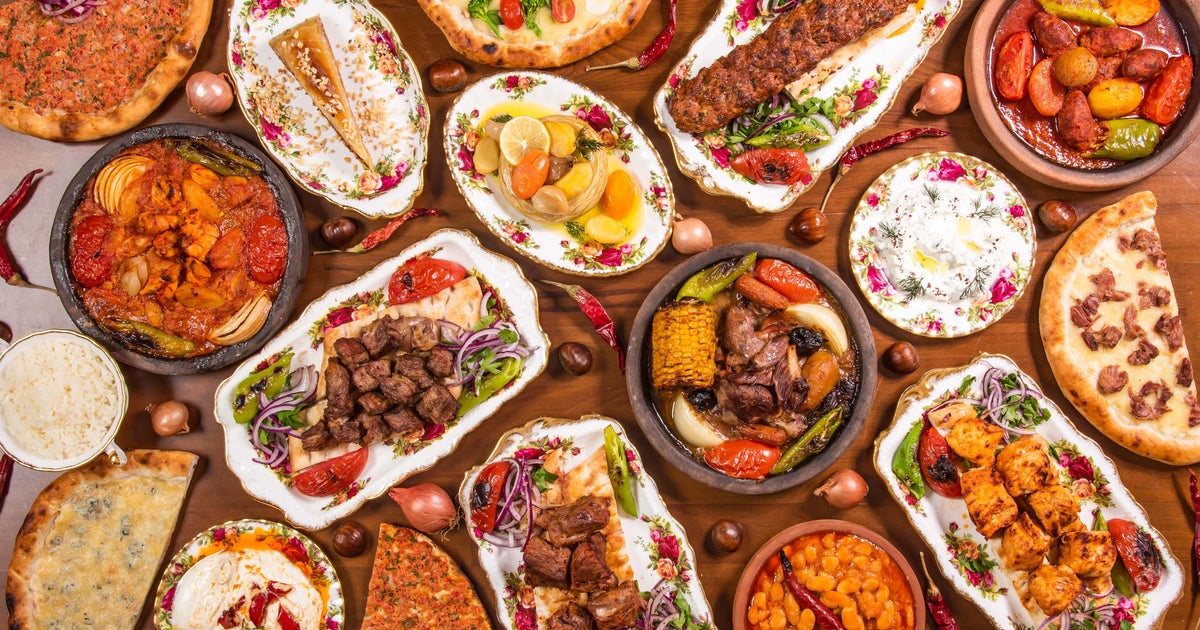
As someone who lives in Turkey and has personally tried every dish on this list, this guide covers the most famous Turkish foods you will actually encounter and love. I can say with confidence that Turkish cuisine is one of the most rewarding food cultures in the world. Everything here comes with a genuine recommendation — not from a guidebook, but from years of eating across this incredible country.
Turkey sits at the crossroads of Europe, Asia, and the Middle East, and its food tells that story better than anything else. Centuries of Ottoman imperial cooking, regional farming traditions, and bold Mediterranean flavors have combined into one of the world’s most celebrated cuisines. Whether you are planning a trip to Istanbul, exploring the Aegean coast, or simply curious about what makes Turkish food so beloved, this guide covers the 20 most famous Turkish dishes you absolutely must try.
These are not just tourist-friendly picks. These famous Turkish foods are the dishes that locals eat every day, the ones handed down through generations, and the ones that food lovers fly across the world to taste.
Famous Turkish Foods: Common Questions Answered
What is Turkey’s national dish?
While there is no single official national dish, lamb kebab and lentil soup are widely considered the most representative staples of Turkish home cooking.
What is Turkey’s signature dish?
Döner Kebab is the most globally recognized, but many culinary experts consider İskender Kebab (with its combination of sliced lamb, hot tomato sauce, and browned butter) to be the more refined signature version.
What are the top 10 Turkish dishes?
If you are short on time, the absolute essentials are: Döner Kebab, Baklava, Lahmacun, Menemen, İskender Kebab, Köfte, Pide, Mantı, Simit, and Künefe.
The Top 20 Dishes – A curated, one-by-one look at the must-try foods:
| # | THE DISH | WHAT’S INSIDE |
|---|---|---|
| 01 | İskender KebabMust-Try | The King of Turkish Kebabs |
| 02 | Mercimek ÇorbasıVegetarian | Red Lentil Soup |
| 03 | LahmacunStreet Food | Turkish Street Food at Its Best |
| 04 | BaklavaMust-Try | World’s Most Famous Turkish Dessert |
| 05 | Turkish Breakfast | Kahvaltı — A Spread Like No Other |
| 06 | MenemenVegetarian | The Turkish Breakfast Egg Dish |
| 07 | SimitMust-TryStreet Food | Turkey’s Beloved Street Bread |
| 08 | İmam BayıldıVegetarian | Classic Turkish Aubergine |
| 09 | Köfte | Turkish Meatballs Done Right |
| 10 | MantıVegetarian | Dumplings with Yogurt & Butter |
| 11 | Pide | The Turkish Flatbread Pizza |
| 12 | Balık EkmekStreet Food | Istanbul’s Iconic Fish Sandwich |
| 13 | Çiğ KöfteVeganStreet Food | The Vegetarian Street Snack |
| 14 | Ayran | Turkey’s National Drink |
| 15 | BörekVegetarian | Flaky Pastry — Cheese or Meat |
| 16 | GözlemeVegetarian | Thin Flatbread Pancake |
| 17 | Dolma & SarmaVegetarianVegan | Stuffed Vegetables & Grape Leaves |
| 18 | Künefe | The Hot Cheese Dessert |
| 19 | Döner KebabStreet Food | The Most Famous Turkish Street Food |
| 20 | Turkish Tea & Coffee | Çay & Türk Kahvesi |
1. İskender Kebab — The King of Turkish Kebabs
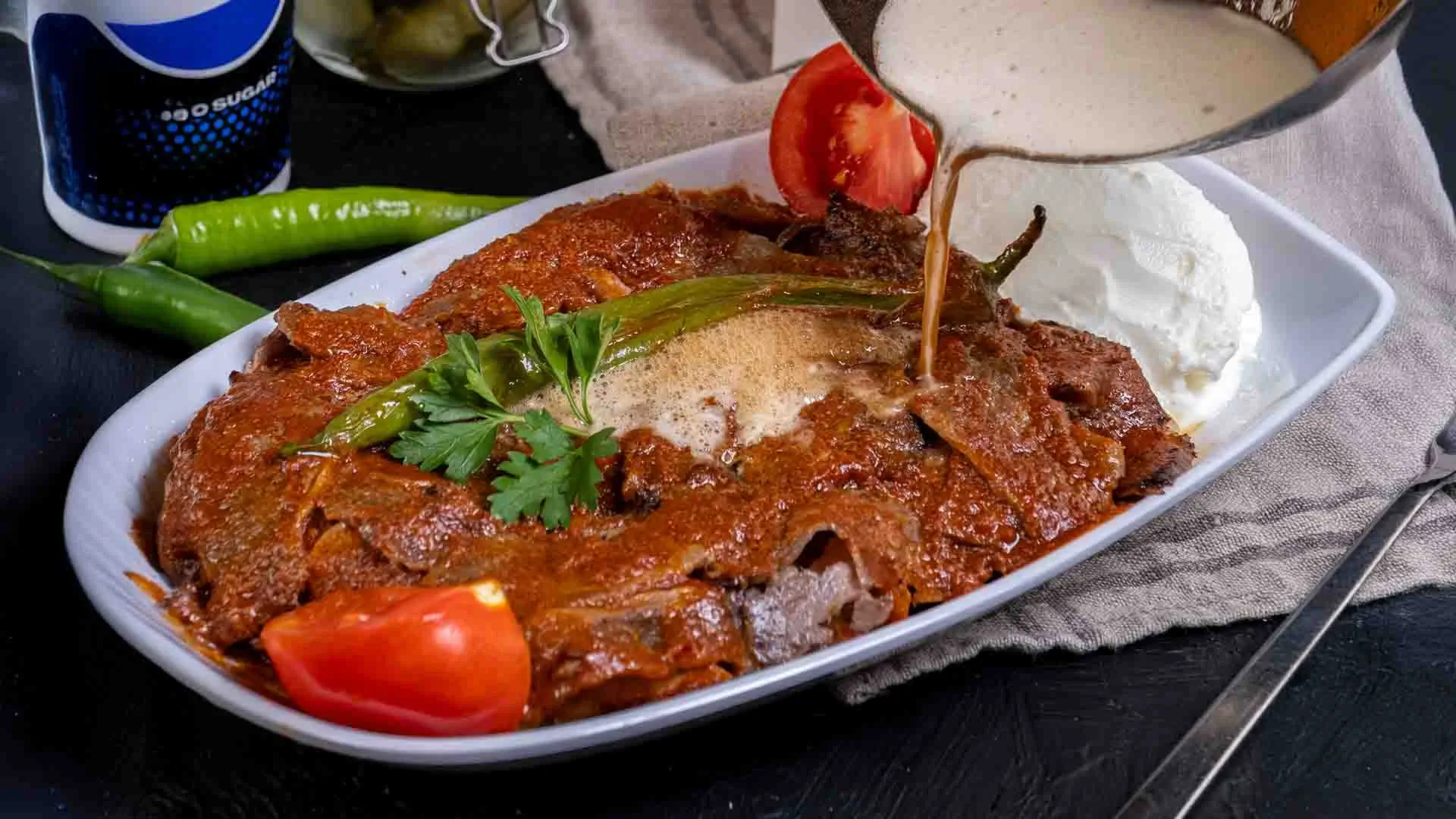
Created by İskender Efendi in Bursa in the late 1860s, İskender kebab is a more refined take on the classic döner. Thin slices of lamb are arranged over torn pieces of pide bread and drenched in a rich tomato sauce. The dish is finished with scorching hot melted butter poured tableside and served alongside thick, tangy yogurt.
The combination of crispy bread soaked in butter, tender lamb, and cool yogurt is one of the most satisfying eating experiences in the country. If you want to try the absolute original, head to Bursa, where restaurants still guard the original 19th-century family recipe.
Where to try it: Kebapçı İskender in Bursa. It is the original restaurant that has been serving this masterpiece for over 150 years.
Local Pro Tip: Do not mix the yogurt into the meat. Instead, take a small forkful of the yogurt with each bite of meat and bread to balance the richness of the butter and tomato sauce.
After starting with such a rich, buttery masterpiece, you might need something simpler to reset your palate. In Turkey, that “reset” comes in the form of a humble bowl of soup served at almost every meal, from dawn until long after midnight.
2. Mercimek Çorbası (Red Lentil Soup) (Vegetarian)
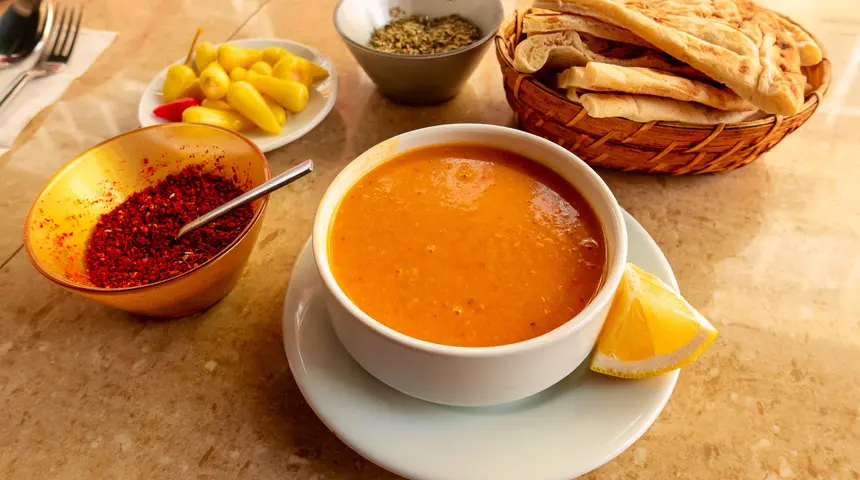
Red lentil soup is the everyday soul food of Turkey. Simmered with onions, carrots, and spices, then blended smooth and finished with a drizzle of butter and dried mint, it is warming, affordable, and deeply nourishing. Almost every lokanta in Turkey serves it, and it remains the standard starter at any traditional Turkish meal.
At the table, you season it with a squeeze of lemon and a shake of dried chili. It sounds simple because it is, but a well-made mercimek çorbası is one of the most comforting things you can eat on a cold day in Istanbul.
• Where to try it: Any lokanta (traditional tradesman restaurant) in Turkey; it is on virtually every menu in the country.
Local Pro Tip: Always squeeze a generous amount of fresh lemon into the bowl to brighten the lentils. Also, don’t ignore the basket of fresh bread on the table; dipping it into the soup is practically mandatory.
If the soup was about quiet comfort, this next dish is about vibrant, handheld energy. It is often called “Turkish pizza” by visitors, but as any local will tell you, lahmacun is nothing like pizza.
3. Lahmacun (Turkish Street Food at Its Best)
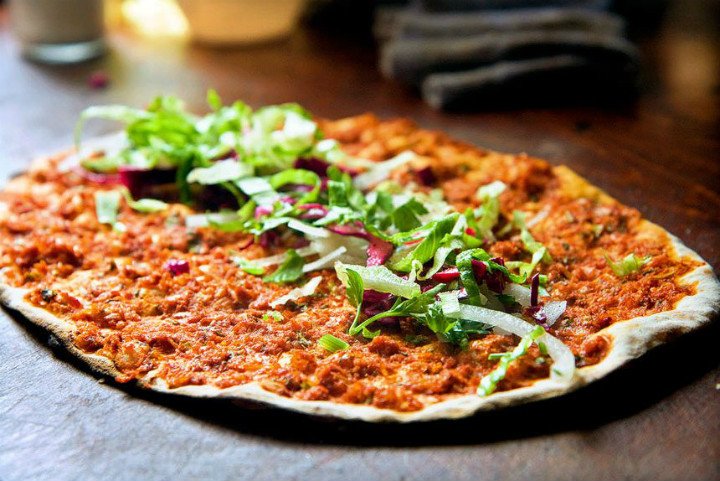
Lahmacun is a paper-thin round of flatbread topped with a savory mix of finely minced lamb or beef, onions, tomatoes, and parsley, seasoned with cumin and chili flakes. It is baked rapidly in a stone oven until the edges are charred and shattering-crisp. It is one of the most affordable and addictive street foods in the country.
What makes lahmacun truly special is the ritual of eating it. It is never served as a finished product; the final seasoning happens in your hands. To eat it properly, you must pile fresh parsley and sliced onions in the center, give it a heavy squeeze of lemon, and roll it tight.
• Where to try it: Any traditional fırın (bakery) in central Anatolia or southeastern Turkey. Cities like Gaziantep and Şanlıurfa take the recipe very seriously, but you can find incredible versions in Istanbul at places like Borsam Taşfırın.
Local Pro Tip: For the most authentic experience, pair your lahmacun with a cold glass of şalgam (turnip juice). The salty, spicy tang of the juice cuts through the richness of the meat perfectly. If you want a bit of sweetness, add a drizzle of pomegranate molasses before you roll it up.
After all that spice and crunch from the Lahmacun, your palate will be begging for something sweet. Fortunately, Turkey is home to a dessert so legendary that it has become a global symbol of indulgence.
4. Baklava (The World’s Most Famous Turkish Dessert)
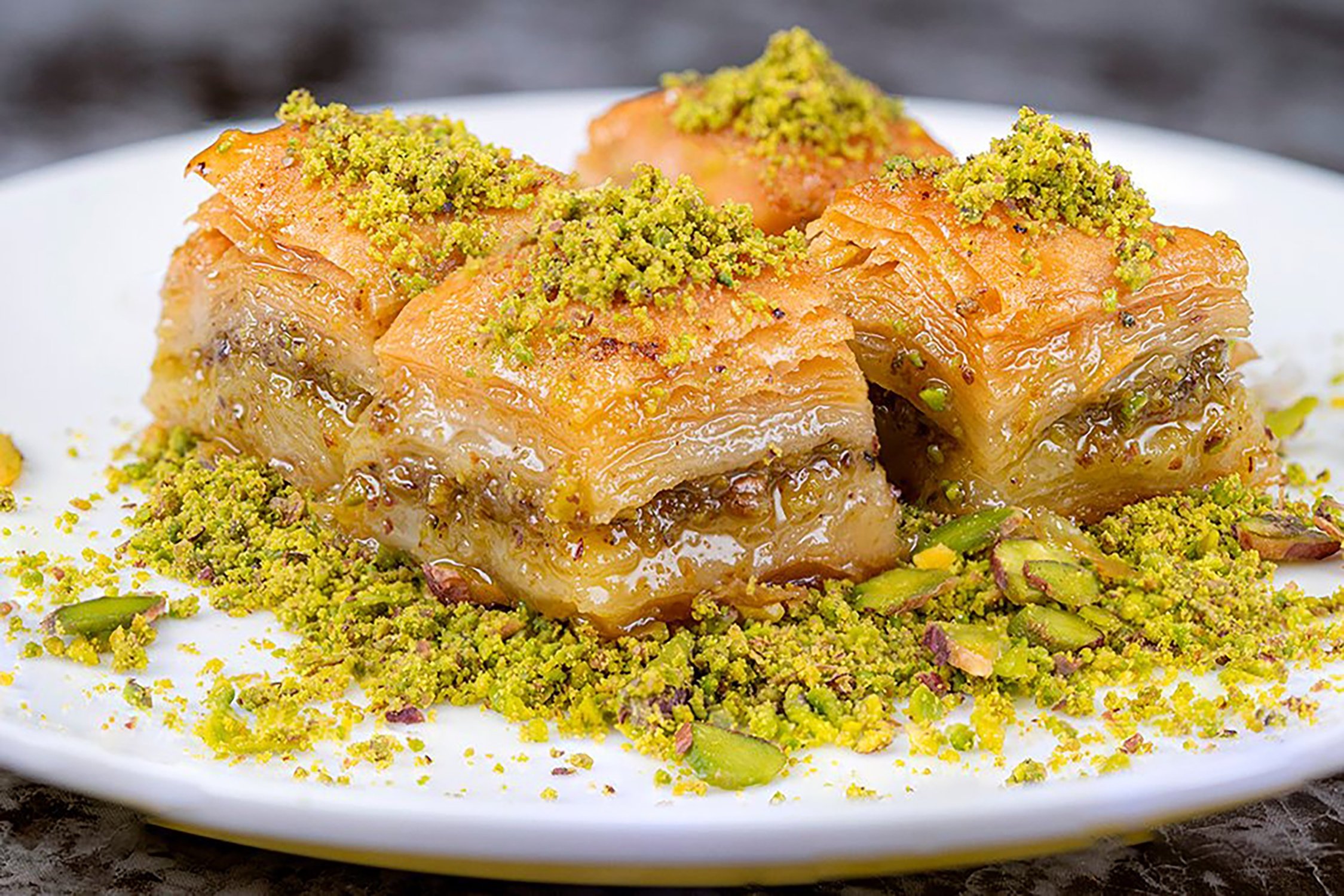
Baklava is Turkey’s gift to the world’s dessert table. Dozens of wafer-thin sheets of filo pastry are layered with chopped pistachios or walnuts, baked until golden, and then soaked in a sugar syrup flavored with a touch of lemon. The best baklava achieves a perfect balance between crisp and tender, with the syrup fully absorbed into the layers rather than pooling at the bottom of the tray.
The city of Gaziantep in southeastern Turkey is the undisputed baklava capital of the world. Gaziantep pistachios are uniquely rich and vivid green, and the local tradition is so distinct that it is protected as a geographical indication. A tray of freshly made Gaziantep baklava is easily one of the best food souvenirs you can bring home from Turkey.
• Where to try it: Güllüoğlu or İmam Çağdaş in Gaziantep, or Karaköy Güllüoğlu in Istanbul.
Local Pro Tip: To eat baklava like a pro, flip it upside down before you take a bite. This puts the syrup-soaked bottom of the pastry directly against your palate, allowing the flavors to hit your taste buds immediately while the crispy layers provide the crunch on top.
After treating your sweet tooth to some Baklava, it’s time to talk about the most important—and most social—meal of the day. In Turkey, breakfast isn’t just a way to start the morning; it’s a marathon event that defines the entire culture.
5. Turkish Breakfast (Kahvaltı) — A Spread Like No Other
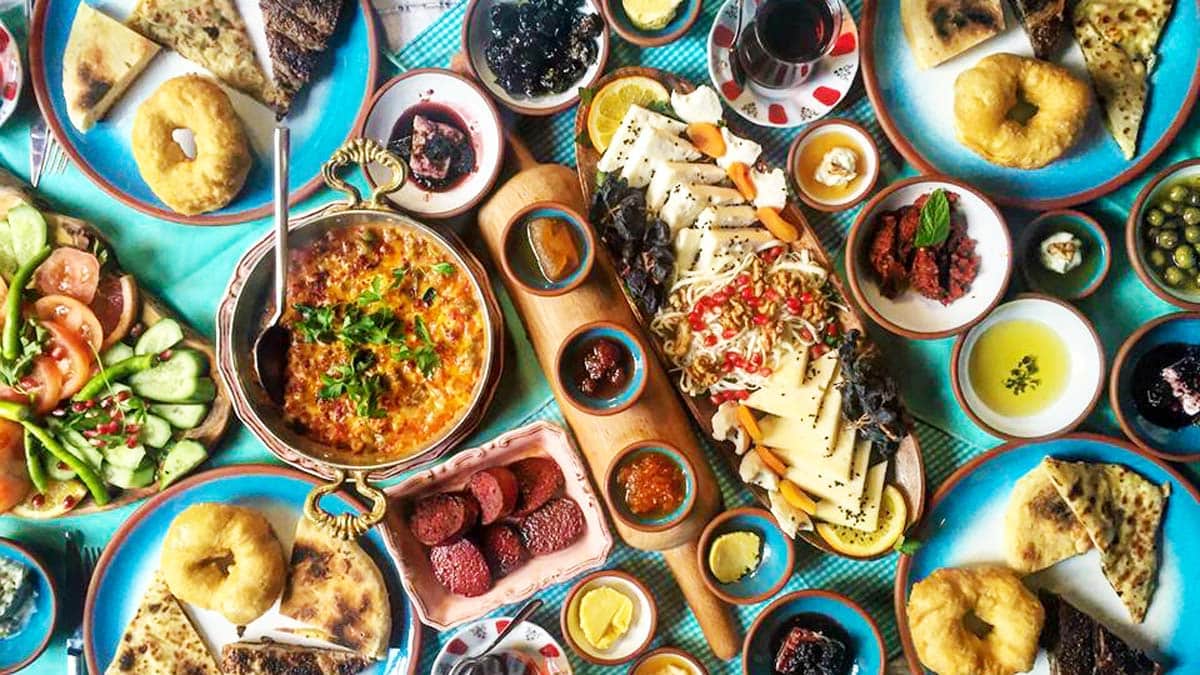
Turkish breakfast, known as kahvaltı, is not a single dish. It is an entire ritual. A proper traditional Turkish breakfast includes olives, white cheese (beyaz peynir), kaşar cheese, sliced tomatoes, cucumber, honey, clotted cream (kaymak), a soft-boiled egg, fresh bread, and multiple jams—all served at once with a constant flow of black tea in small tulip-shaped glasses.
In Istanbul, weekend breakfast culture is enormous. Neighborhoods like Karaköy and Cihangir are filled with café terraces on Sunday mornings where groups of friends spend two or three hours over a single breakfast spread. In southeastern Turkey, particularly in Van, the local breakfast adds even more to the table, featuring local herbs, dried fruits, and a distinctive Van otlu peyniri (herb cheese).
• Where to try it: Van Kahvaltı Evi in Istanbul’s Karaköy area, or any local café in Van city itself for the authentic eastern version. For something truly special, visit Sapanca, a small lakeside town near Istanbul, where many cafés serve full kahvaltı spreads with stunning lake views.
Local Pro Tip: Never order coffee first. The word kahvaltı literally translates to “under-coffee” (the meal you eat before coffee). Start with tea—and lots of it. Save your Turkish coffee for the very end of the meal to aid digestion and signal that the ritual is complete.
While the breakfast spread is about variety, there is usually one steaming copper pan at the center of the table that everyone fights over. If you see a group of locals dipping crusty bread into a pool of eggs and melted peppers, you’ve found the Menemen.
6. Menemen (The Turkish Breakfast Egg Dish)
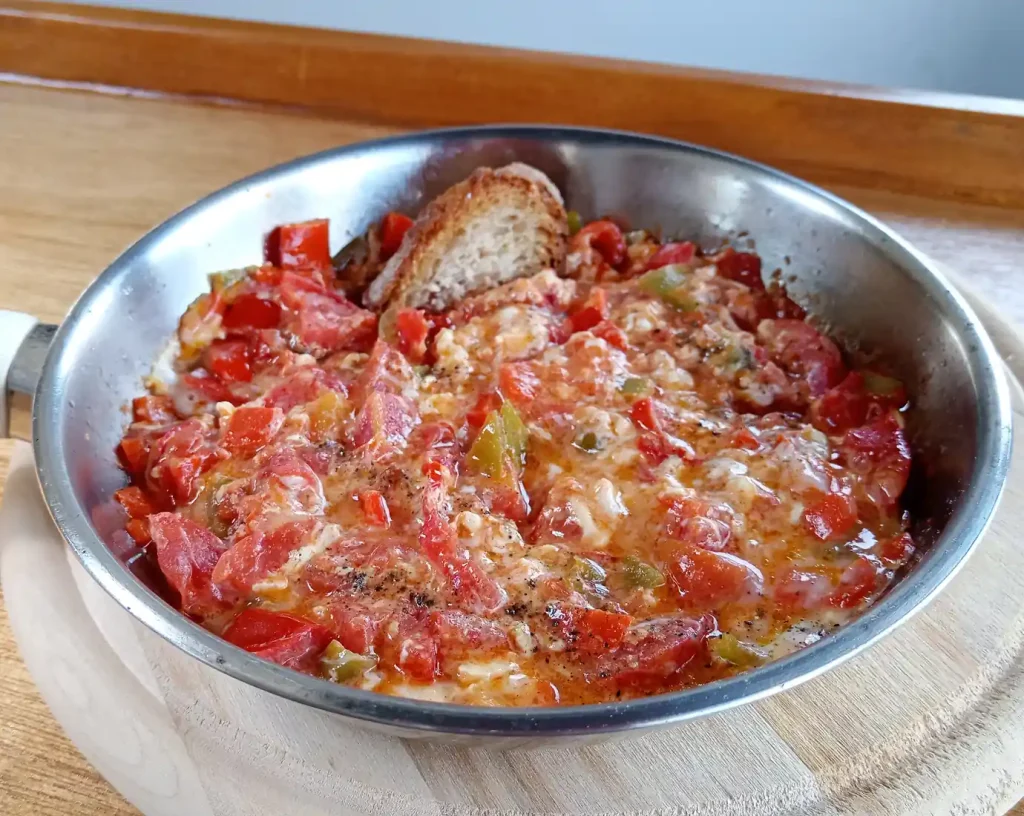
Within the broader Turkish breakfast tradition, menemen deserves its own special mention. It is a scrambled egg dish made by cooking eggs directly in a pan with sautéed tomatoes, green peppers, and optional onions, all seasoned with black pepper and sometimes dried chili.
The result is a loose, saucy, slightly runny mixture designed to be scooped up with chunks of crusty bread. There is a long-running national debate in Turkey about whether onions actually belong in menemen—it’s a topic that can spark heated discussions at any table. Wherever you stand on the issue, the dish itself is outstanding as a quick, filling breakfast.
• Where to try it: Any traditional kahvaltı café or local lokanta. It is especially famous in Aegean towns like İzmir, where it originated.
Local Pro Tip: Do not use a fork to eat this. To do it like a local, you must use the bread as your “utensil.” Break off a piece of fresh ekmek (bread), pinch a portion of the eggs and sauce, and eat it straight from the pan while it’s still sizzling.
If Menemen is the star of a slow Sunday morning, this next item is the heartbeat of a busy Monday. You’ll hear it before you see it—vendors shouting its name on street corners, carrying towers of these sesame-crusted rings through the bustling crowds.
7. Simit (Turkey’s Beloved Street Bread)
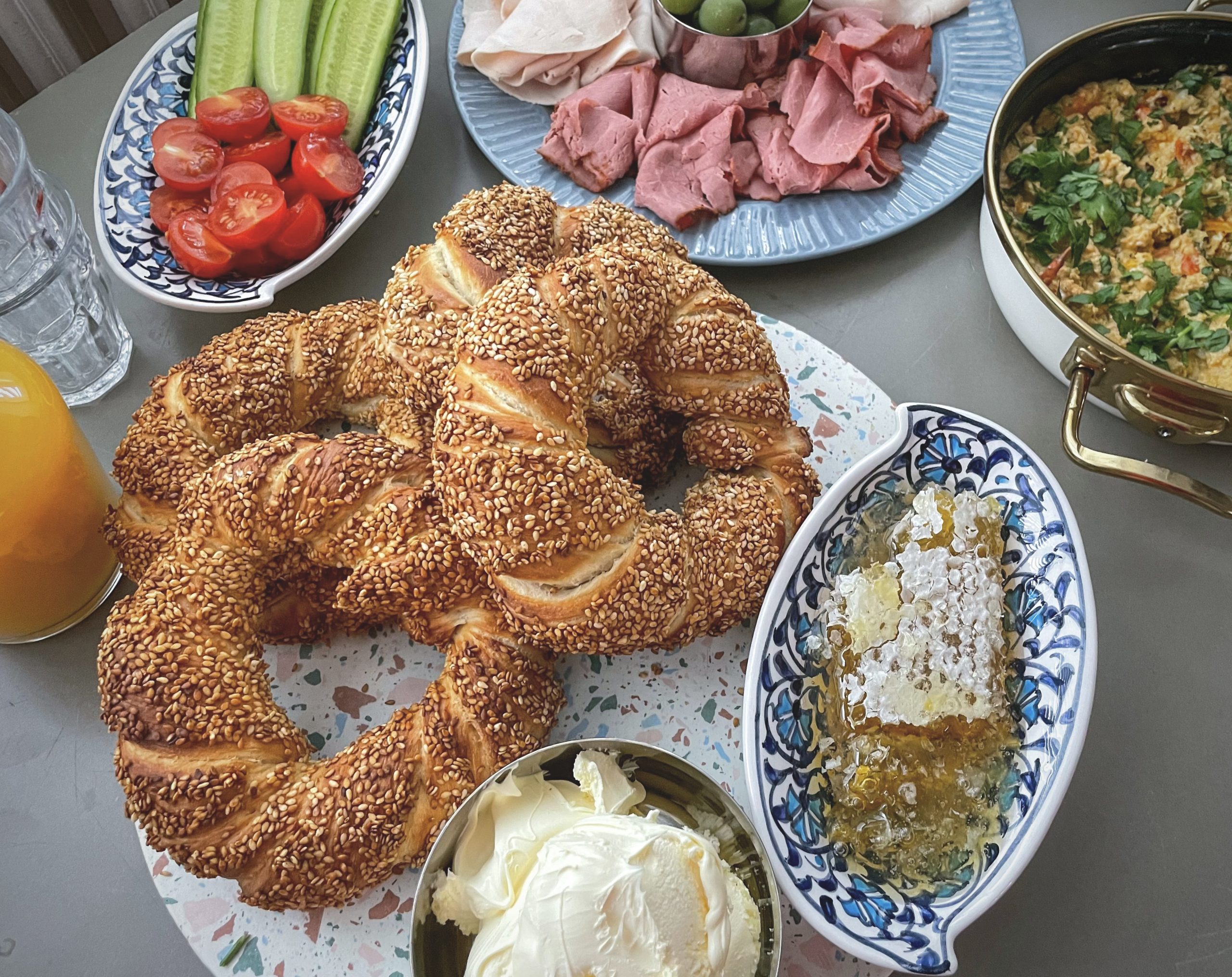
Walk anywhere in Turkey and within five minutes you will see a simit seller. Simit is a circular, sesame-crusted bread ring with a slightly chewy interior and a crisp, nutty exterior. It is sold from iconic red carts on street corners, from local bakeries, and in every café alongside a glass of tea.
Simit is eaten plain, with cheese and tomatoes, or dipped into tea for a quick breakfast on the move. Every city, town, and village has its own simit culture, and it remains the most affordable and reliable snack in the country. Do not leave Turkey without trying at least one freshly baked ring.
• Where to try it: Any street cart or fırın (bakery) nationwide. The Karaköy and Eminönü waterfronts in Istanbul are classic spots to grab one while watching the ferries.
Local Pro Tip: While simit is perfect on its own, you will often see vendors selling small triangles of creamy cheese to go with it. If you enjoy cheese, it is a delicious combination, but you can try it plain and warm to fully appreciate the crunch of the toasted sesame seeds. Also, if you’re near the water, it’s a local tradition to toss a small piece to the seagulls following the ferries.
After grabbing a quick snack on the street, it’s time to sit back down for a dish with a story as rich as its flavor. This next one is a classic of the ‘Olive Oil’ category—dishes served cold or at room temperature that prove Turkish cuisine is just as brilliant with vegetables as it is with meat.
8. İmam Bayıldı (The Classic Turkish Aubergine Dish) (Vegetarian)
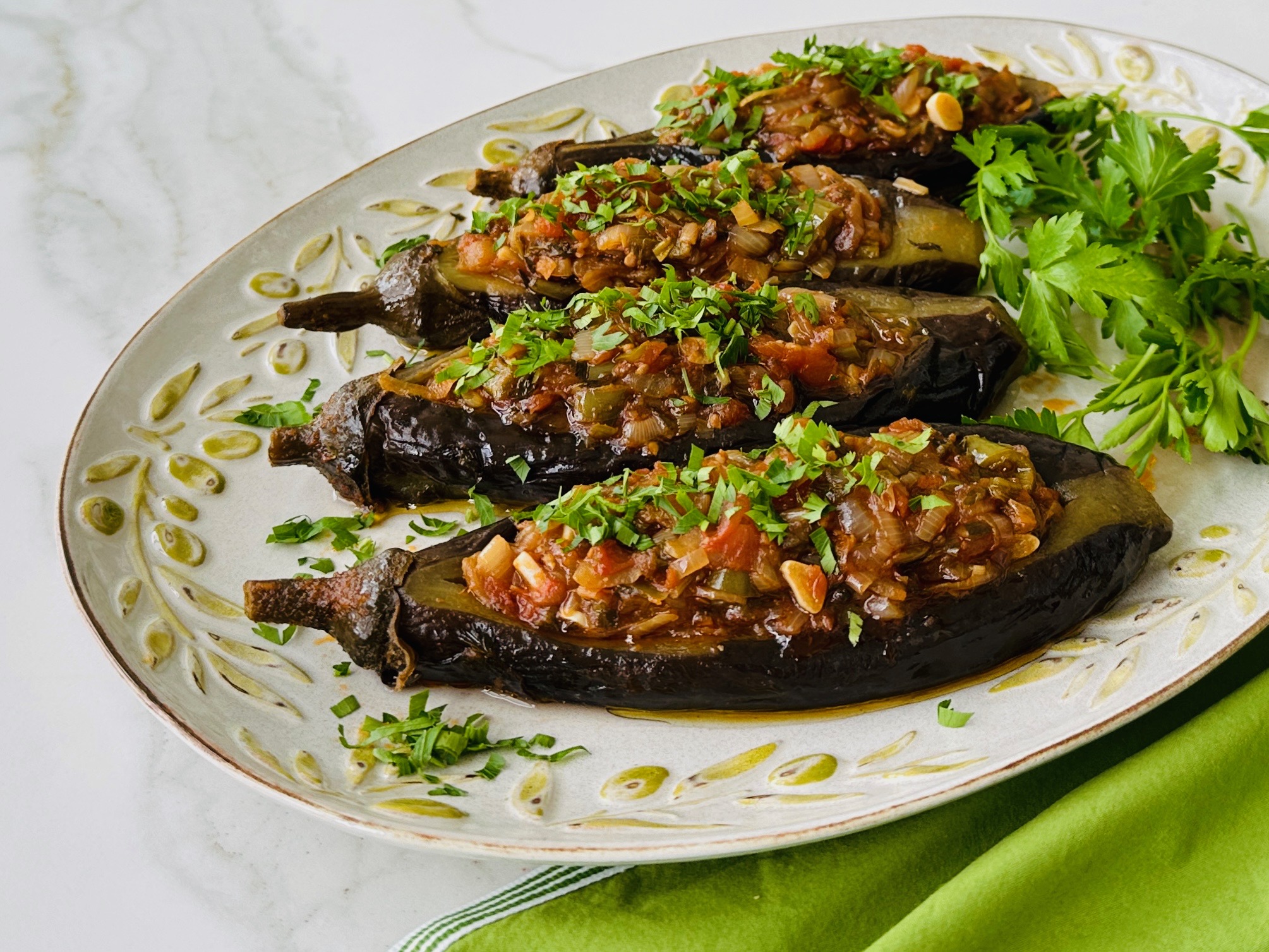
The name of this dish translates to “the imam fainted,” allegedly from the pleasure of tasting it for the first time. To prepare it, whole aubergines are roasted or fried, then stuffed with a fragrant mixture of sautéed onions, garlic, tomatoes, and olive oil, and slow-cooked until they are completely tender.
İmam bayıldı is traditionally served at room temperature, making it the perfect summer meal. It is one of the greatest examples of Turkish zeytinyağlı cooking—dishes cooked in generous amounts of olive oil and served chilled. This style of cooking is a pillar of Turkish cuisine and is often deeply underrated by visitors who focus solely on the famous grilled meats.
• Where to try it: Meyhanes (Turkish taverns) and zeytinyağlı restaurants; it is widely available and especially delicious across the Aegean and Mediterranean coasts.
Local Pro Tip: Don’t be afraid of the oil! In this category of cooking, the olive oil is essentially the “sauce.” Use a piece of fresh bread to soak up the juices at the bottom of the plate—that’s where all the garlic and tomato flavors have concentrated.
After that silky, vegetable-focused experience, you’ll likely be craving something with a bit more smoke and sizzle. That brings us to the most versatile staple of the Turkish grill—a dish that exists in hundreds of variations but is always a crowd-pleaser.
9. Köfte (Turkish Meatballs Done Right)
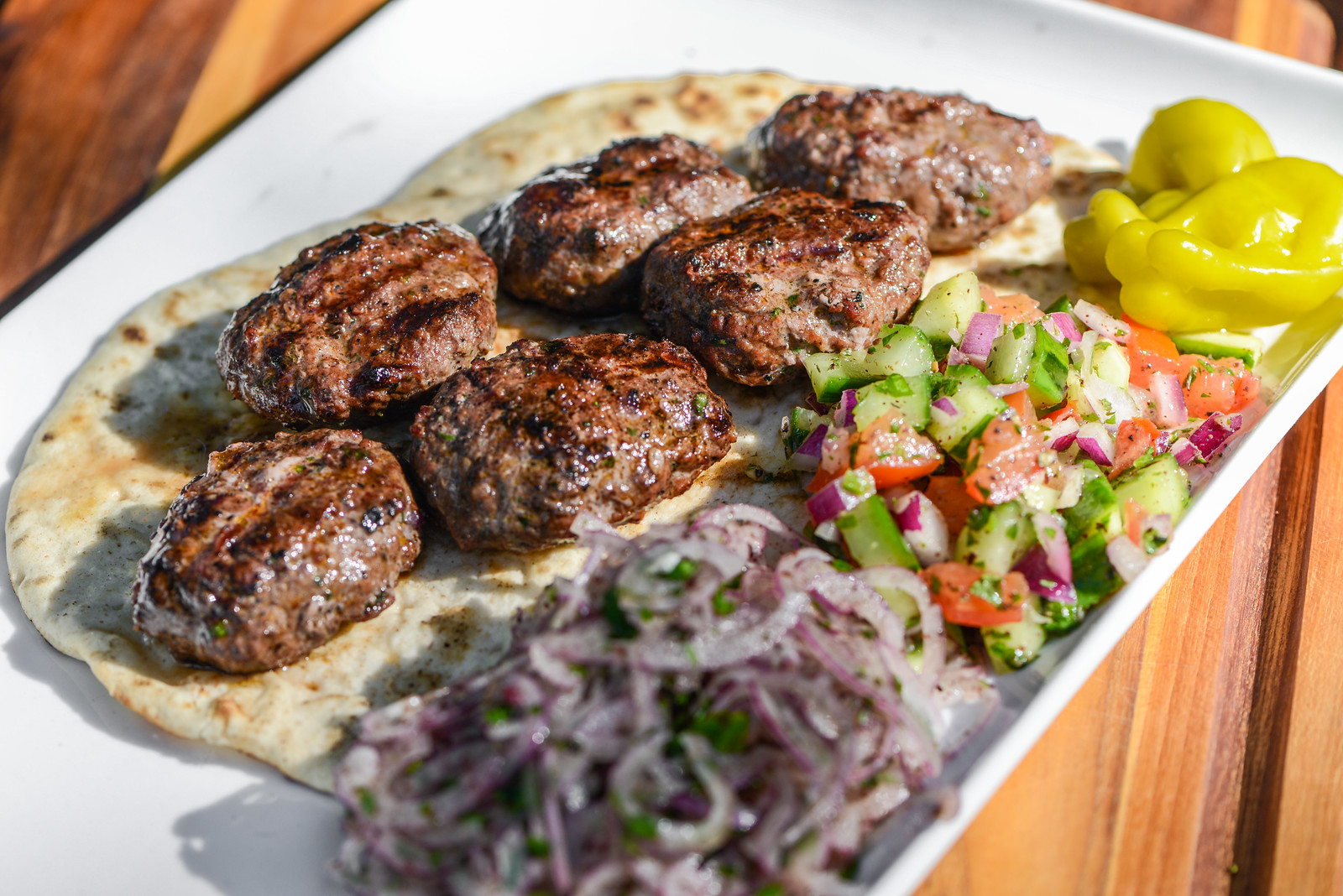
Köfte is the Turkish word for any shaped or formed ground meat preparation, and there are dozens of regional varieties across the country. The most common version is a simple mixture of ground lamb and beef with onion, breadcrumbs, and spices, shaped into small oval patties and grilled over charcoal until juicy.
From the famous İnegöl köfte of Bursa province to the tomato-stewed İzmir köfte and the garlic-heavy Akçaabat köfte from Trabzon, each region offers a distinct character. Köfte is typically served as a full plate with grilled tomatoes, roasted peppers, sliced onion seasoned with sumac, flatbread, and cold yogurt on the side.
• Where to try it: Neighborhood lokantas across Turkey. Sultanahmet Köftecisi in Istanbul is one of the oldest and most famous dedicated köfte restaurants in the country.
Local Pro Tip: To eat this like a local, skip the ketchup. The meat is already perfectly seasoned, and the acidity should come from the sumac-onions and the creaminess from the yogurt. Try making “mini-wraps” with the flatbread, adding a bit of meat, a slice of onion, and a dollop of yogurt in each bite.
After the charred intensity of the meatballs, we move to a dish that is all about delicate craftsmanship and contrasting temperatures.
10. Mantı (Turkish Dumplings with Yogurt and Butter)
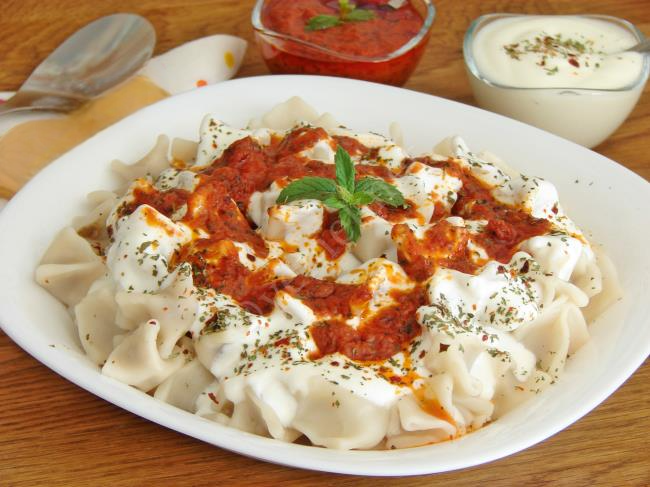
Mantı are tiny dumplings stuffed with spiced minced lamb or beef, boiled to perfection, and served under a blanket of garlic yogurt. The dish is finished with a pour of sizzling melted butter and a sprinkle of dried mint or red pepper flakes.
Traditional mantı from Kayseri in central Anatolia is famously small; a sign of a skilled cook is the ability to fit forty of these tiny dumplings onto a single spoon. The contrast of the cold, tangy yogurt against the hot, buttery dumplings is one of the most satisfying flavor profiles in the world.
• Where to try it: Traditional home-style restaurants (ev yemeği) or dedicated mantıcı shops. Kayseri is the spiritual home of the authentic, small-dumpling version.
Local Pro Tip: While you can find larger “social” mantı elsewhere, always ask if they have Kayseri Mantısı. Also, don’t be afraid of the garlic in the yogurt—it’s essential for cutting through the richness of the butter.
If the dumplings were about delicate precision, this next dish is about rustic, wood-fired heartiness. Often mistaken for its thinner cousin, the Lahmacun, this ‘boat’ of bread is a meal in itself.
11. Pide (The Turkish Flatbread Pizza)
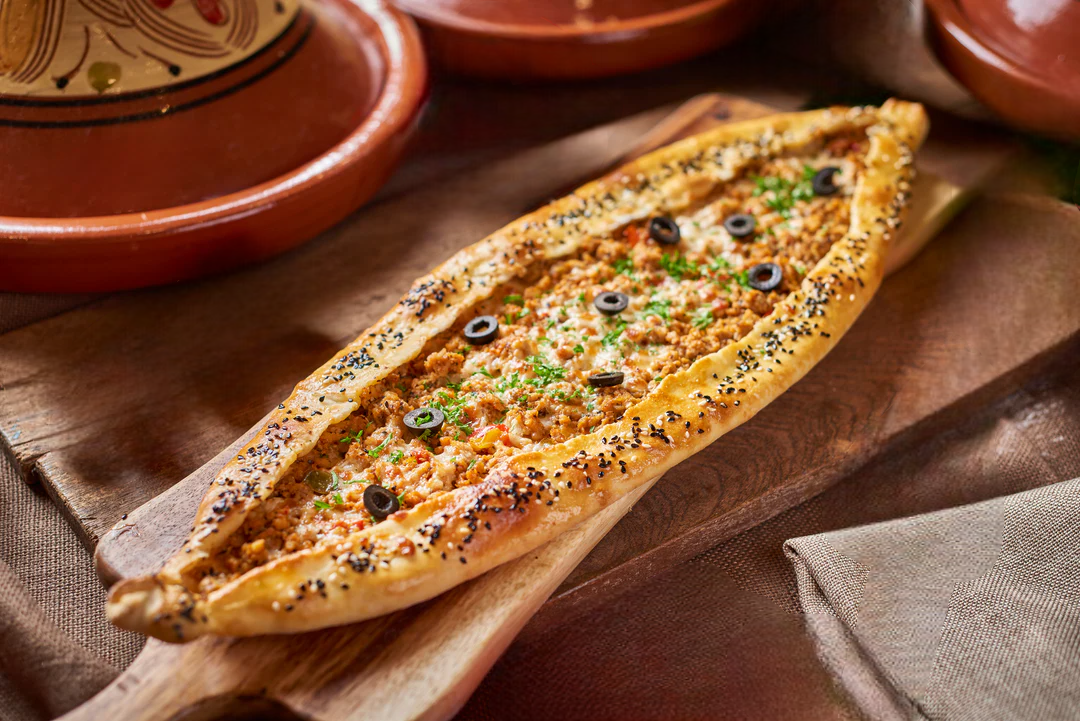
Pide is a boat-shaped flatbread baked in a wood-fired stone oven and topped with an endless variety of fillings. Popular versions include ground meat with tomatoes (kıymalı), diced lamb with cheese (kuşbaşılı kaşarlı), or just simple, melty cheese (kaşarlı). The bread itself is soft and pillowy on the inside, with a slightly charred, crispy bottom from the stone.
While visitors often call it “Turkish Pizza,” pide is thicker and more filling than a pizza or a lahmacun. The Black Sea region is considered the heartland of this dish, where the butter is richer, and the dough is legendary.
• Where to try it: Any wood-fired pideci. If you are traveling north, Trabzon and Samsun are world-famous for their regional styles.
Local Pro Tip: Many pidecis will offer to crack a raw egg (yumurtalı) over the hot toppings just before it comes out of the oven. The residual heat cooks the egg perfectly, creating a rich sauce for dipping the crusts.
After all that heavy dough and meat, let’s head to the water. In Istanbul, the salt air of the Bosporus calls for a meal that is as simple as it is iconic.
12. Balık Ekmek (Istanbul’s Iconic Fish Sandwich)
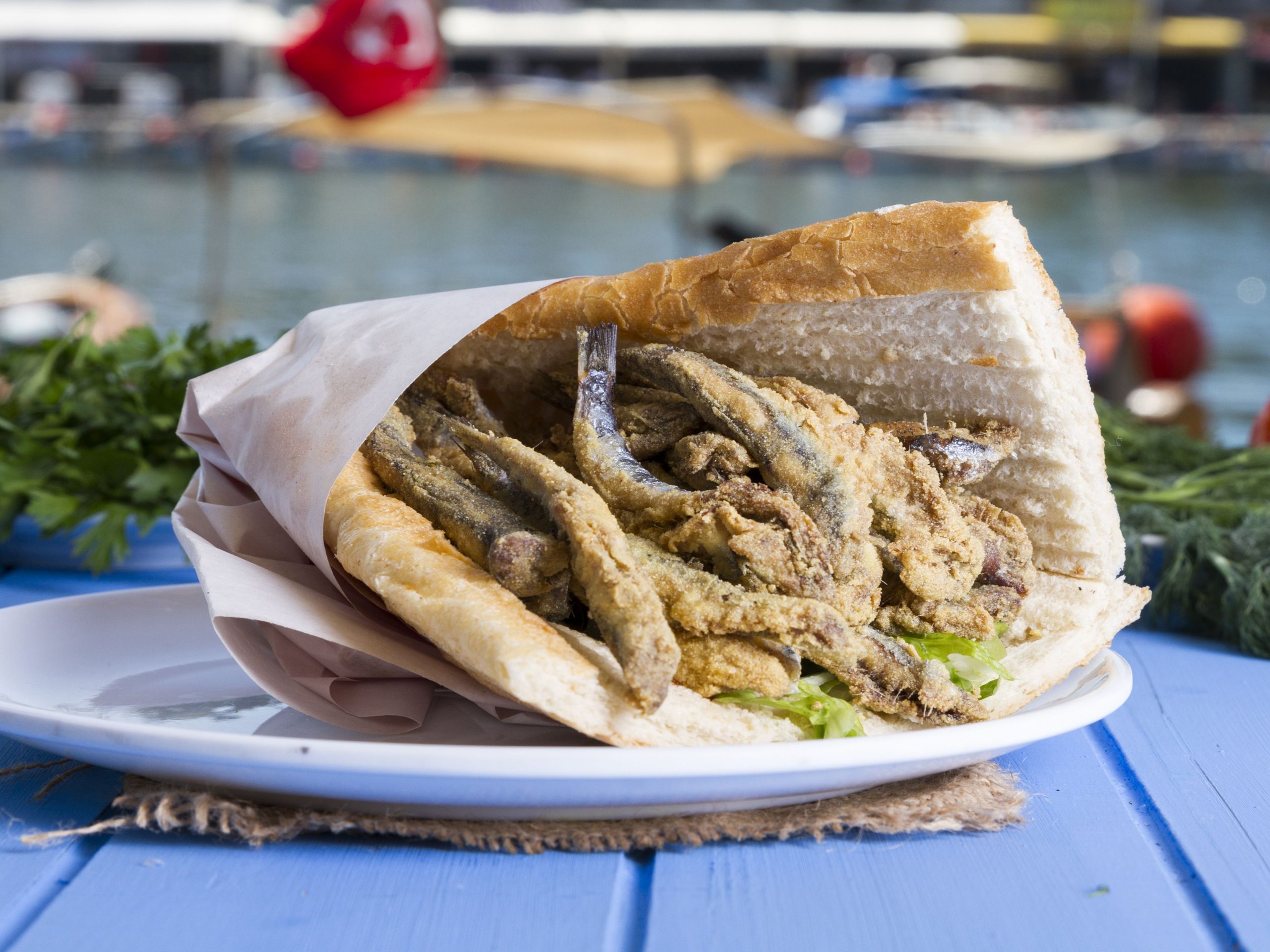
Standing on the Eminönü side of the Galata Bridge and eating a balık ekmek from one of the ornate, rocking boats is a must-do while exploring the top places to visit in Istanbul. Freshly grilled mackerel is stuffed into a half baguette with crisp lettuce, sliced white onions, and a heavy squeeze of lemon.
It is a modest meal, but the setting—the smell of the sea, the shouting of the vendors, and the smoke from the charcoal grills—makes it unforgettable. It’s the ultimate “fast food” for anyone exploring the historic peninsula.
• Where to try it: The floating boats beneath Galata Bridge in Eminönü.
Local Pro Tip: Mackerel is at its absolute best in the winter months when it is in peak season. Also, look for the vendors selling small cups of bright pink pickle juice (turşu suyu) on the side; it’s the traditional (and very sour) way to wash down the oily fish.
Moving from the shores of the Bosporus to the bustling street corners, we find a snack that is surprisingly vegan, incredibly spicy, and strangely addictive.
13. Çiğ Köfte (The Vegetarian Street Snack) (Vegan)
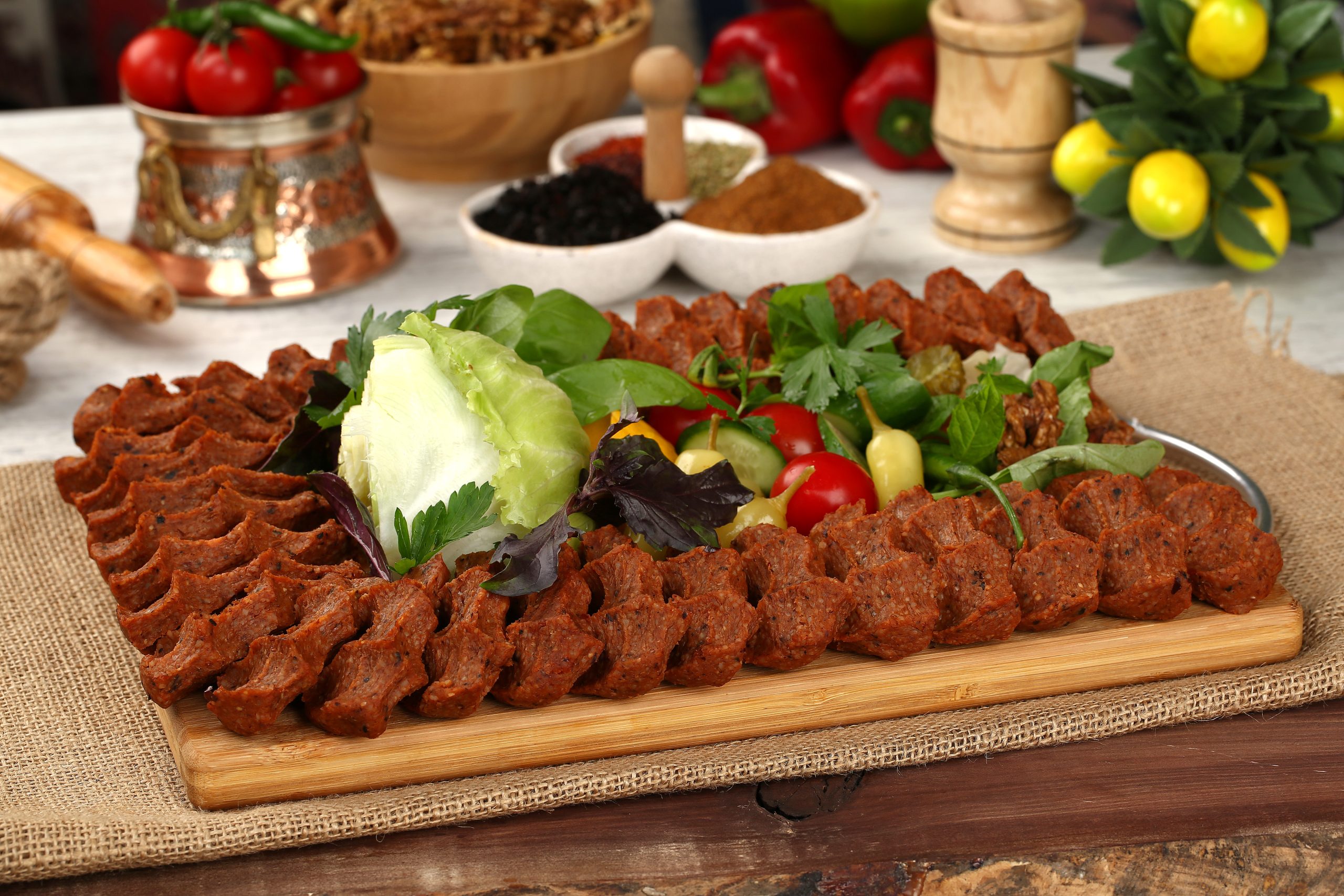
Despite the name literally translating to “raw meatball,” the version you see sold on almost every street corner today is entirely meat-free. The traditional raw-meat version, still made at home in southeastern Turkey, has been banned from commercial sale since 2009 for food safety reasons. Fine bulgur wheat is kneaded for hours with tomato paste, chili, pomegranate molasses, and a complex blend of spices until it becomes a firm, savory paste.
It is typically served as a wrap (dürüm) packed with fresh lettuce, mint, and a drizzle of tart pomegranate sauce. It is tangy, spicy, and the best friend of any vegetarian or vegan traveler navigating Turkey.
• Where to try it: You will see small Çiğköfteci shops on nearly every high street. Chain outlets like Öz Urfa are reliable and found everywhere.
Local Pro Tip: When they ask if you want it acılı (spicy), be careful—Turkish chili heat builds up quickly! If it gets too hot, the traditional way to cool your palate is with a glass of Ayran.
To balance out that spicy kick, you’ll need Turkey’s national ‘extinguisher.’ It isn’t a food, but you’ll rarely see a meal without it.
14. Ayran (Turkey’s National Drink)
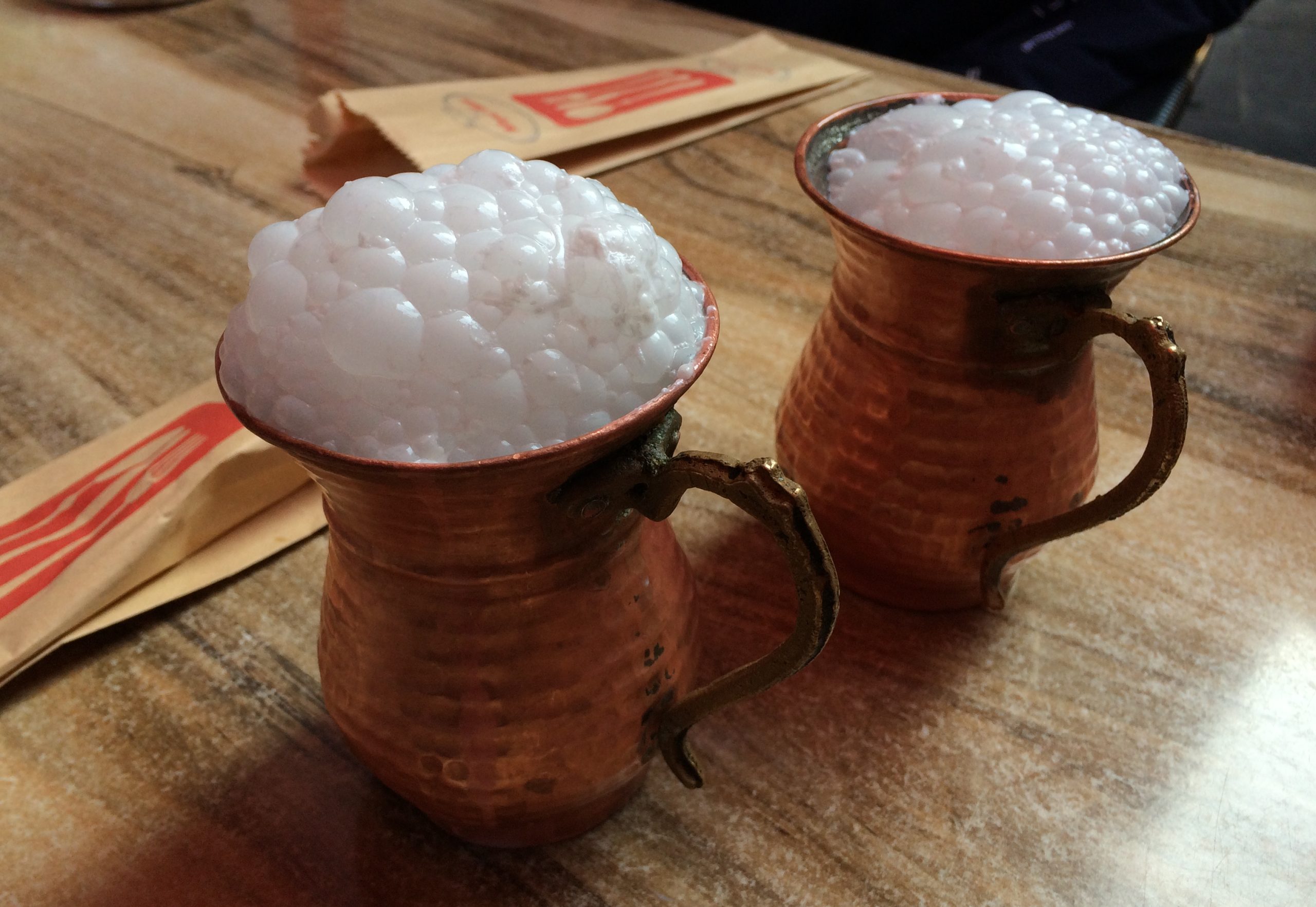
No discussion of Turkish food is complete without Ayran. This cold yogurt drink is made by thinning yogurt with water and adding a pinch of salt until it becomes frothy and refreshing. It is the perfect companion to grilled meats and spicy foods because the dairy instantly neutralizes the heat of the peppers.
• Where to try it: Available at every kebab shop in the country.
Local Pro Tip: Whenever possible, ask for açık (open) or taze (fresh) ayran. It is served in a metal copper cup with a thick head of foam on top and tastes far superior to the pre-packaged plastic cups.
Now, let’s pivot back to the mastery of dough. If you see someone in a window rolling pastry so thin you can see through it, you’ve found the heart of the Turkish bakery.
15. Börek (Flaky Pastry Filled with Cheese or Meat)
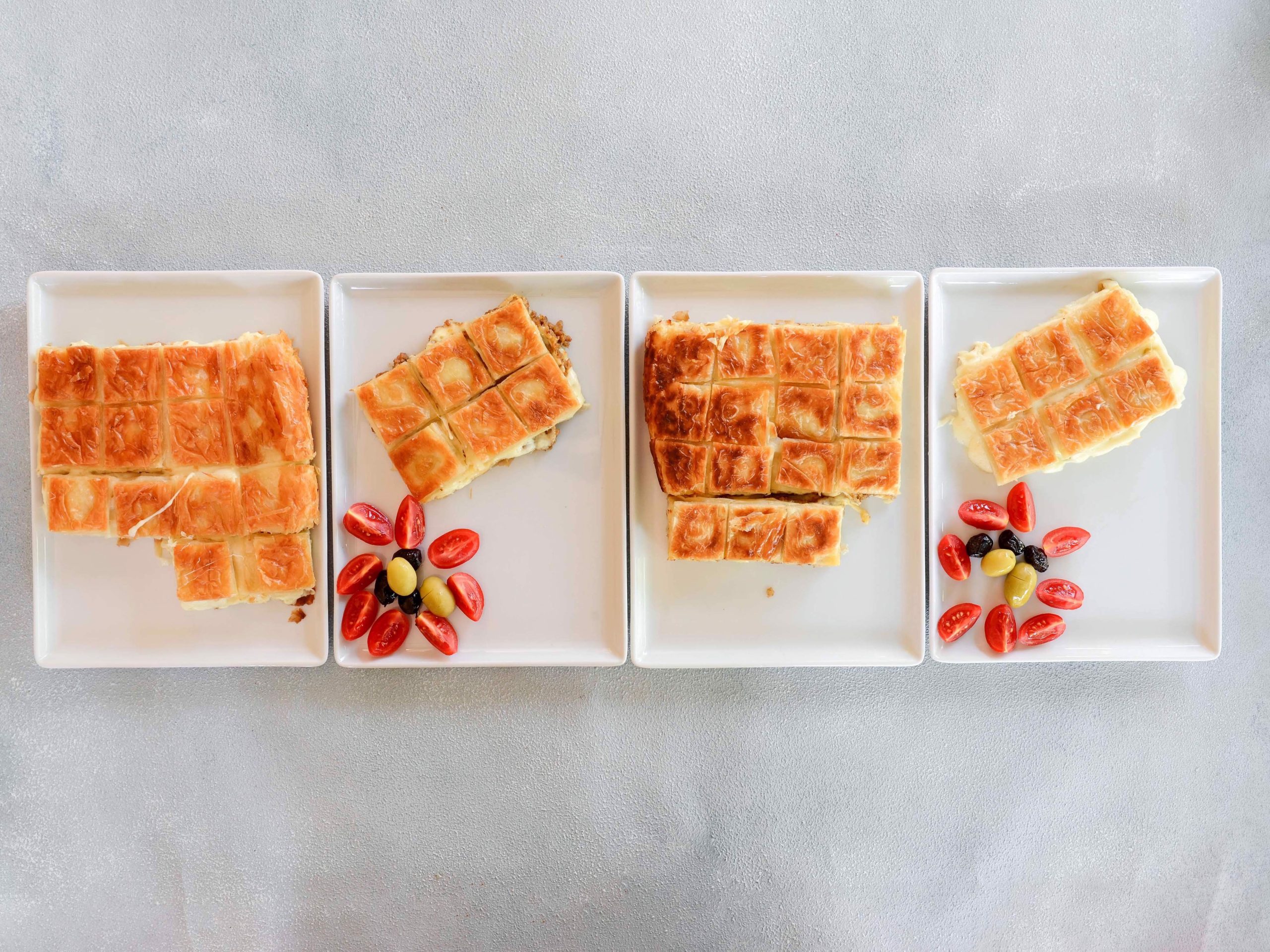
Börek is a family of pastries made from yufka, a paper-thin dough. While there are many styles, the most beloved is peynirli börek (cheese börek). A generous filling of crumbled white cheese and parsley is folded into golden, crispy layers.
The undisputed “King” of the family is Su Böreği (Water Börek), where the dough sheets are boiled before being baked, resulting in a texture that is part-pastry, part-lasagna, and entirely delicious.
• Where to try it: Any neighborhood börekçi. The best time to go is 8:00 AM, right when the pans come out of the oven.
Local Pro Tip: Börek loses its magic as it cools. If you see a tray that looks like it’s been sitting for a while, wait for the next fresh one. A truly great börekçi will always have a line in the morning for the hot stuff.
While we are on the subject of pastries, let’s look at one that is usually made by hand in village markets and roadside stops.
16. Gözleme (Thin Flatbread Pancake)
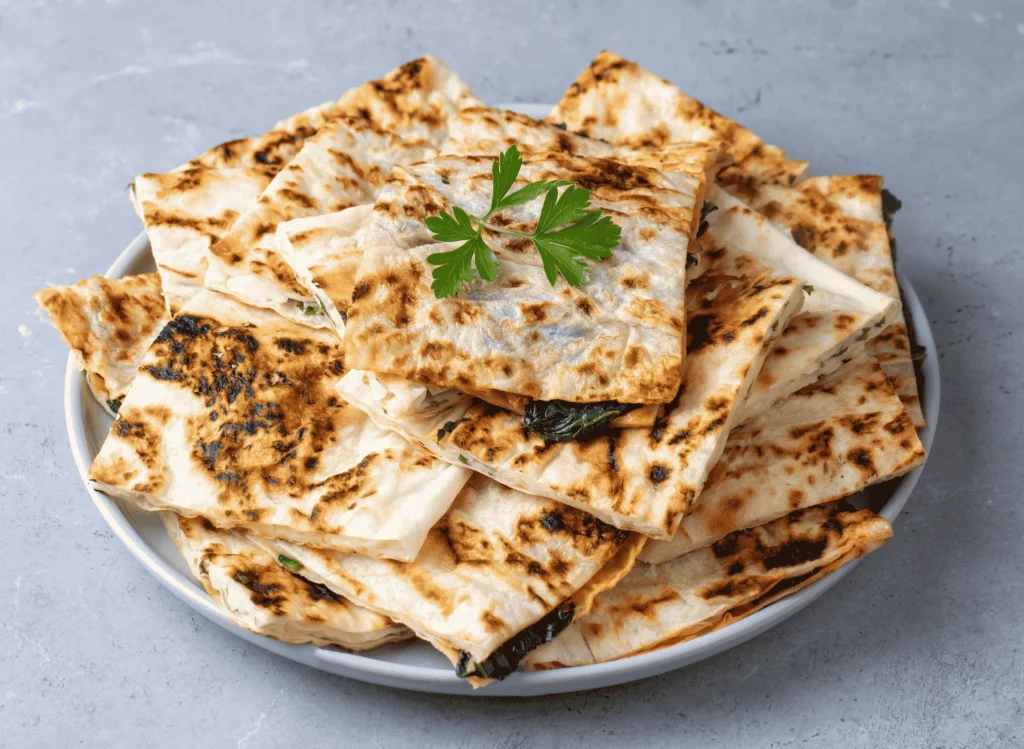
Gözleme is a handmade flatbread filled with spinach and feta, potato, or spiced meat, then cooked on a large domed griddle called a sac. Watching a village woman roll the dough to translucent thinness at a local bazaar is a timeless Turkish experience.
• Where to try it: Village markets and roadside rest stops. The Beypazarı market near Ankara is a legendary spot for this.
Local Pro Tip: Gözleme is best enjoyed with a simple glass of black tea. Because it’s cooked on a dry griddle, it’s less oily than other pastries, making it a perfect light lunch.
We’ve covered meat, bread, and snacks, but Turkish cuisine has another essential side: the art of stuffing. This is where Dolma and Sarma come in.
17. Dolma and Sarma (Stuffed Vegetables)
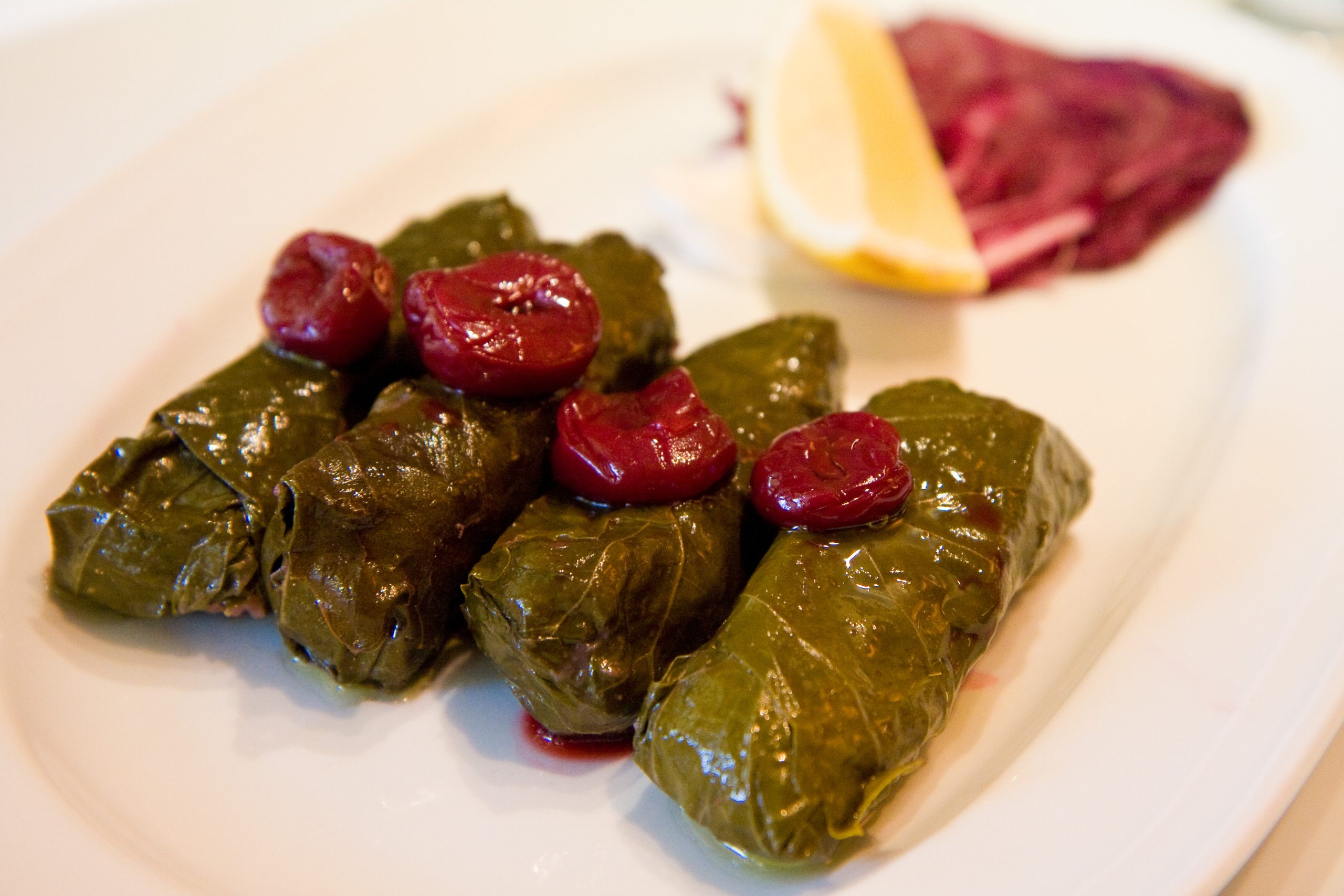
Dolma means “stuffed,” while Sarma means “wrapped.” This category covers everything from grape leaves stuffed with spiced rice, currants, and pine nuts (yaprak sarması) to bell peppers and aubergines stuffed with meat. The vegetarian versions are usually served cold as a meze, while the meat versions are a warm main course.
• Where to try it: Any Meyhane or home-style lokanta.
Local Pro Tip: For the cold grape leaf version, always ask for an extra slice of lemon. A heavy squeeze of citrus brings out the sweetness of the currants and the earthiness of the leaves.
As we head toward the end of our list, we must return to the world of sweets—but this time, with a dessert that defies logic: hot cheese and sugar.
18. Künefe (The Hot Cheese Dessert)
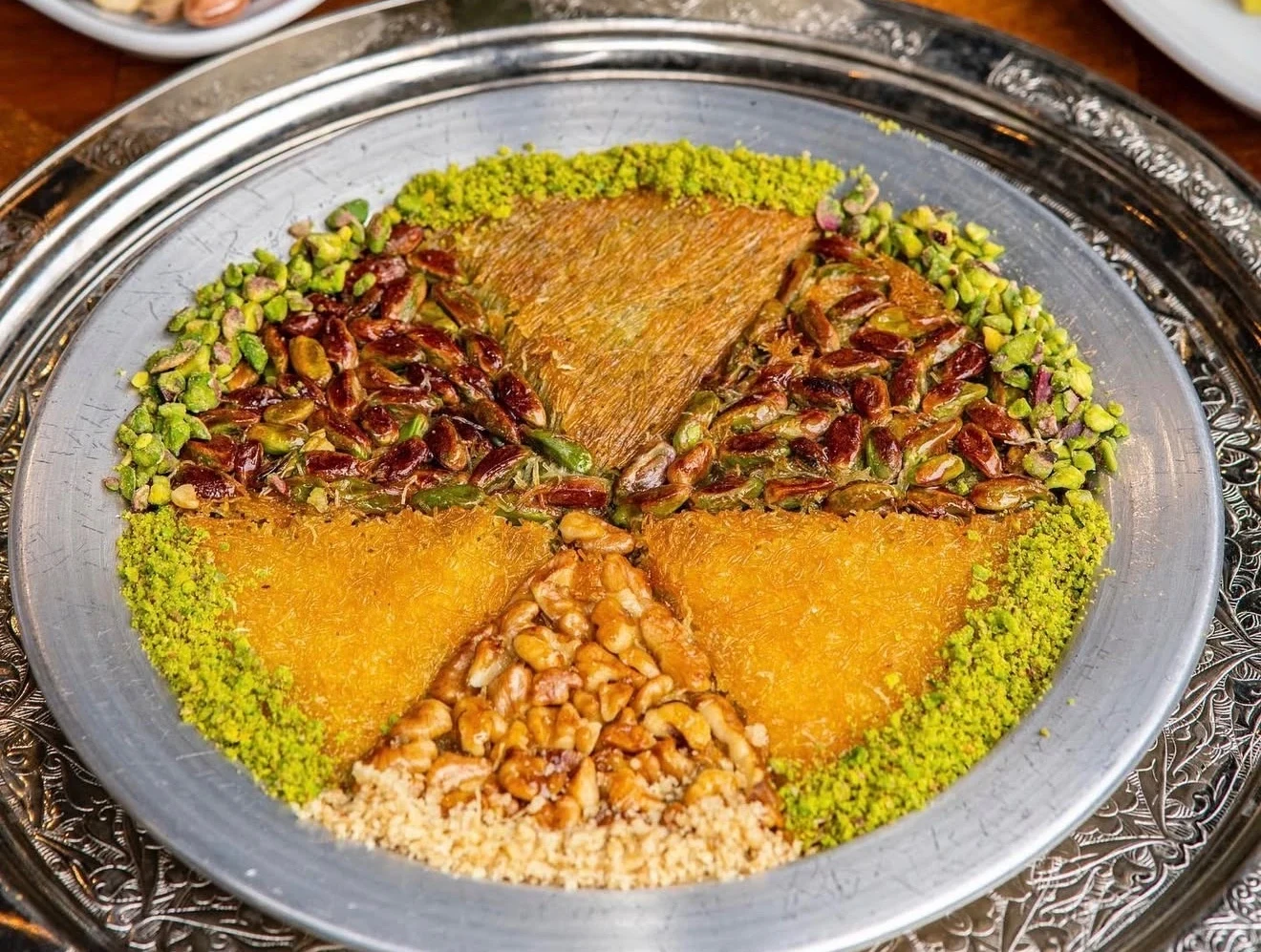
Künefe is a showstopper. Shredded wheat pastry (kadayıf) is layered around a core of unsalted cheese, baked until it sizzles, and then drenched in sugar syrup and topped with pistachios. When you pull a piece away, the cheese stretches just like mozzarella.
• Where to try it: Antakya (Hatay) is the home of the original, but you can find great versions in specialized dessert shops in Istanbul.
Local Pro Tip: Always eat this immediately. As it cools, the cheese loses its stretch and the pastry loses its crunch. Most shops will serve it with a small glass of milk on the side to help balance the intense sweetness.
We cannot finish without the dish that started it all for the rest of the world. But forget what you know about the ‘late-night’ versions you’ve seen elsewhere—the real thing is an art form.
19. Döner Kebab (The Most Famous Turkish Dish)
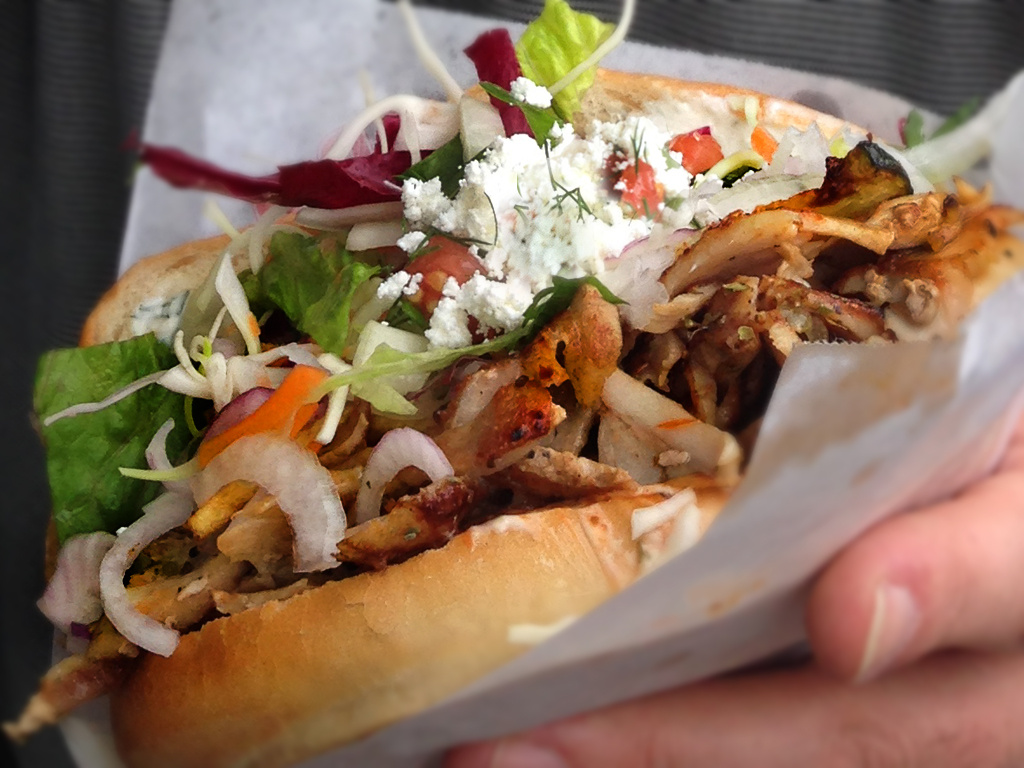
This is the dish that put Turkey on the global map. High-quality seasoned meat is stacked on a vertical rotisserie and slow-roasted for hours. In Turkey, the meat quality is the star—the seasoning is subtle, and it is served with fresh lavash or pide bread rather than heavy sauces.
• Where to try it: Look for high-turnover stalls in Beyoğlu or Kadıköy. If the meat “cone” is rotating and shrinking quickly, you know it’s fresh.
Local Pro Tip: Try ordering a Pilav Üstü Döner (Döner over rice). It allows you to appreciate the quality of the meat without the bread filling you up too quickly.
Finally, we end not with a dish, but with the two drinks that hold the entire country together. Without these, no meal in Turkey is truly finished.
20. Turkish Tea and Coffee (The Essential Social Glue)

Turkish çay (tea) is the heartbeat of the country, brewed double-strength and served in iconic tulip-shaped glasses with two small sugar cubes on the side. It is the ultimate sign of hospitality; you’ll be offered it in shops, banks, and homes alike.
Turkish Coffee is a more ceremonial affair. It is thick, intense, and served unfiltered in a small cup, almost always accompanied by a single, velvety piece of Turkish Delight (lokum) to balance the bitterness. After you finish, it is a local tradition to turn the cup upside down and have your fortune read from the grounds—a practice called tasseography.
Local Pro Tip: Never stir your Turkish coffee after it is poured, or you will disturb the grounds at the bottom. And remember: tea is for conversation; coffee is for contemplation.
Turkish Delight is another story entirely—we will have to explore that tiny but amazing world in a separate blog post. Just writing about these has me craving them all over again! These twenty dishes are absolute must-haves, but trust me, there are loads and loads more that will make your mouth water just by looking at them.
But before we get too emotional over the food, let’s get practical. To make sure your culinary journey is as smooth as a spoonful of kaymak, you need to know the “unwritten rules.”
Common Mistakes Tourists Make (And How to Avoid Them)
Even well-intentioned visitors make avoidable mistakes when eating their way through Turkey. Many of these dishes are simple, but the difference between a good version and a great one often comes down to where and how you eat them. Use this quick reference to avoid the most common mistakes travelers make with these famous Turkish dishes.
| ❌ The Mistake | ⚠️ Why It’s a Problem | ✅ The “Pro” Way |
|---|---|---|
| Ordering coffee with breakfast | Turks drink tea (çay) during the meal; coffee is strictly for after eating. | Start with tea. Save the Turkish coffee (served in a fincan) for the final ritual. |
| Using a fork for street food | Dishes like Lahmacun, Pide, or Simit are designed for hands. | Roll it, wrap it, and dive in. No cutlery required. |
| Adding ketchup to Köfte | Ketchup masks the quality of the meat and the master’s spice blend. | Taste the meat first. Use lemon, sumac-onions, or yogurt for that perfect tang. |
| Only eating at tourist “hubs” | Places right next to major landmarks are often overpriced and less authentic. | Walk two streets away into a neighborhood lokanta for the real deal. |
| Assuming all kebab is the same | There are hundreds of regional styles with very different flavor profiles. | Pay attention to the city names (e.g., Adana vs. Urfa) to find your favorite. |
| Skipping the “Olive Oil” dishes | If you only eat meat, you are missing half of the Turkish kitchen. | Always order at least one zeytinyağlı (cold vegetable) dish. |
Final Thoughts: Why Turkish Food Deserves a Spot on Your Bucket List
The famous Turkish foods on this list represent a cuisine considered a true major culinary tradition, alongside French, Chinese, and Japanese cooking. In fact, UNESCO has recognized Turkish coffee culture as an Intangible Cultural Heritage, a testament to how deeply food and drink are woven into daily life here. The depth of flavor, the range from light, vegetable-forward dishes to rich, meat-heavy meals, the remarkable dessert culture, and the importance of sharing food all come together to make eating in Turkey a genuinely special experience.
Every dish on this list can be enjoyed either as cheap street food or as part of a slow, sit-down meal. That accessibility is one of the defining strengths of Turkish food culture. You do not need a reservation or a large budget to eat exceptionally well in Turkey.
If you are planning a trip, use this guide to famous Turkish foods as your starting point, but be prepared to go far beyond it. Turkish food rewards curiosity, and the best meals are often the ones you discover unexpectedly.
Which of these 20 dishes are you adding to your bucket list first, or did I miss your favorite Turkish specialty? Let me know in the comments!
Frequently Asked Questions About Turkish Food
Here are the most common questions travellers and food lovers ask about Turkish cuisine — answered honestly from a local’s perspective.
What is the most famous Turkish food?
Döner Kebab is the most globally recognised Turkish dish — you will find it from Berlin to Bangkok. But within Turkey itself, İskender Kebab is often considered the more refined and celebrated version. If you want to eat what locals consider a true classic, order İskender at a proper sit-down restaurant in Bursa, where the dish was invented.
Is Turkish food spicy?
Not typically. Turkish cuisine is aromatic and richly spiced — using cumin, sumac, dried mint, and red pepper flakes — but it is not blow-your-head-off hot the way Indian or Thai food can be. The spiciest dishes tend to come from the southeastern regions, like Adana Kebab or Urfa Biber dishes. Most food across Istanbul, Izmir, and the coastal areas is very mild and approachable for visitors who cannot handle heat.
Is all food in Turkey halal?
The vast majority of food sold in Turkey is halal by default, as Turkey is a predominantly Muslim country and most restaurants do not serve pork or alcohol. However, larger cities like Istanbul, Izmir, and Bodrum have plenty of meyhanes (taverns) and restaurants that serve wine, beer, and even pork-based dishes for international visitors. Always check the menu or ask if you have specific dietary requirements.
What are the best vegetarian options in Turkish food?
Turkish cuisine is actually one of the most vegetarian-friendly in the Mediterranean. Some standout meat-free dishes include: Mercimek Çorbası (red lentil soup), Menemen (egg and vegetable dish), İmam Bayıldı (olive oil-braised aubergine), Börek with cheese filling, Gözleme with spinach or cheese, Dolma stuffed with seasoned rice, and Çiğ Köfte (a completely vegan bulgur snack). You will never go hungry as a vegetarian in Turkey.
What does a typical Turkish breakfast look like?
A traditional Turkish breakfast — called kahvaltı — is an elaborate spread rather than a single dish. Expect a table covered with olives, white cheese (beyaz peynir), cucumbers, tomatoes, honey, butter, eggs (usually menemen or fried), simit, and multiple jams. It is a deeply social meal meant to be enjoyed slowly over strong tea. Weekend brunches at a proper Turkish breakfast salon are a cultural experience in themselves — you could easily spend two hours at the table.
Is street food in Turkey cheap?
Yes — Turkish street food is some of the best value eating you will find anywhere in Europe or the Middle East. A simit from a street cart costs less than €1. Balık Ekmek (fish sandwich) by the Bosphorus is around €3. Lahmacun and Çiğ Köfte are similarly affordable. Even sit-down kebab restaurants are remarkably inexpensive by Western standards. Budget travellers will be very happy eating in Turkey.
What is the most popular Turkish dessert?
Baklava is undoubtedly Turkey’s most famous dessert internationally — layers of thin filo pastry filled with pistachios or walnuts, soaked in sugar syrup or honey. But locals are equally passionate about Künefe (a hot, melted-cheese dessert topped with pistachios) and Sütlaç (rice pudding). For the best Baklava in the country, visit a Güllüoğlu or İmam Çağdaş branch — these are the benchmark everyone else is measured against.
What do Turks say before eating?
Turks say “Afiyet olsun” (pronounced ah-fee-yet ol-soon), which loosely translates to “may it be good for your health” or “enjoy your meal.” It is said both before and after a meal, and also when someone is eating and you pass by — similar to the French “bon appétit.” Using this phrase as a visitor will always earn you a warm smile and genuine appreciation from your hosts.