

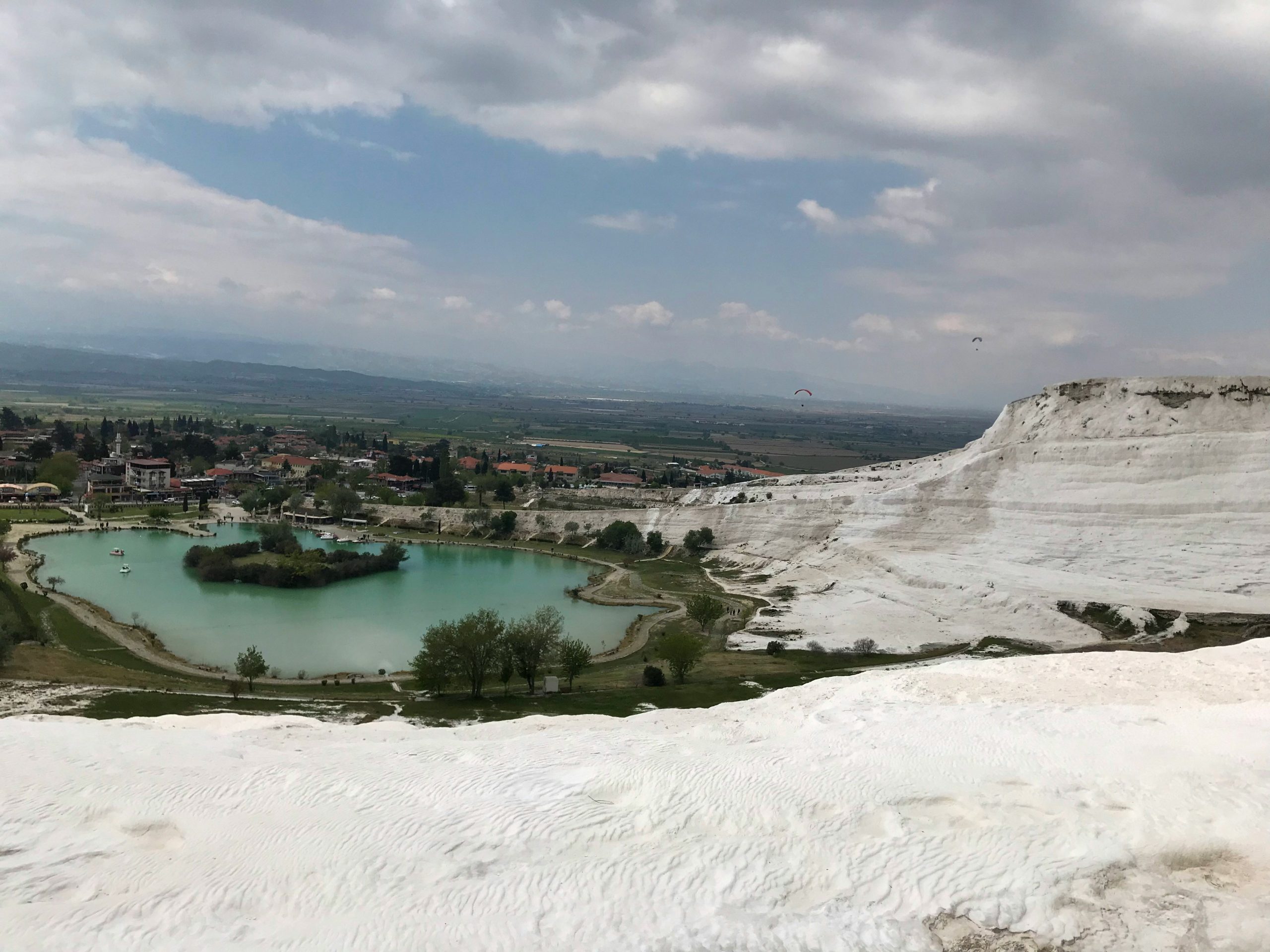
Pamukkale, meaning “Cotton Castle” in Turkish, is one of the most jaw-dropping places on earth. Most visitors take one look at the white terraces in pictures or from the road below, and think they already understand what it is. Trust me, they don’t. The terraces from a distance are impressive. Standing barefoot inside one of the warm turquoise pools at 7 AM, with mist rising off the calcium formations and the ruins of Hierapolis spread silently above you, that’s a completely different experience.
Whether you’re planning a quick day trip from Antalya or a longer stay in the region, this guide to the best things to do in Pamukkale covers everything: the top things to do, exact entrance prices, insider tips, a full 1-day itinerary, where to stay, and how to get there. Bookmark this page. It’s the only Pamukkale travel guide you’ll need.
What Is Pamukkale? A Brief Background
Pamukkale sits in the Denizli Province of Turkey’s Aegean region, roughly 20 kilometres north of the city of Denizli. For thousands of years, calcium-rich thermal water has flowed down the hillside and solidified into the brilliant white terraces you see today. The Turkish name captures it well: pamuk (cotton) + kale (castle).
At the top of these terraces lies Hierapolis, an ancient Greco-Roman spa city founded in the 2nd century BC. Together, the natural terraces and ancient ruins form a UNESCO World Heritage Site that receives more than 2 million visitors a year.
Quick Facts: Pamukkale at a Glance
| What You Need to Know | The Answer |
|---|---|
| Location | Denizli Province, Aegean Region, Turkey |
| Distance from Denizli City Centre | ~20 km |
| Nearest Airport | Denizli Çardak (DNZ), ~65 km from Pamukkale |
| UNESCO Status | World Heritage Site (since 1988) |
| Entry Fee (2026) | €30 per adult (covers Pamukkale + Hierapolis) |
| Cleopatra’s Antique Pool | Approximately €10–€13 extra to swim (closed for swimming until June 2026) |
| Opening Hours (Summer) | South Gate: 6:30 AM, North Gate: 8:00 AM, Both close 9:00 PM |
| Opening Hours (Winter) | 8:00 AM to 6:00 PM |
| Best Time to Visit | April to June and September to October |
| Time Needed | Half day minimum; full day recommended |
| Getting There | Dolmuş from Denizli Bus Station (Platform 76), 30 min, ~₺50 |
| Children | Under 8 enter free; ages 8–12 reduced rate (foreign nationals) |
| Barefoot Walking | Mandatory on travertines. Bring a bag for your shoes |
Top Things to Do in Pamukkale
Pamukkale packs more into a single visit than most destinations manage in a week. Here is everything worth doing, from the unmissable to the overlooked.
1. Walk the Travertine Terraces (Cotton Castle)
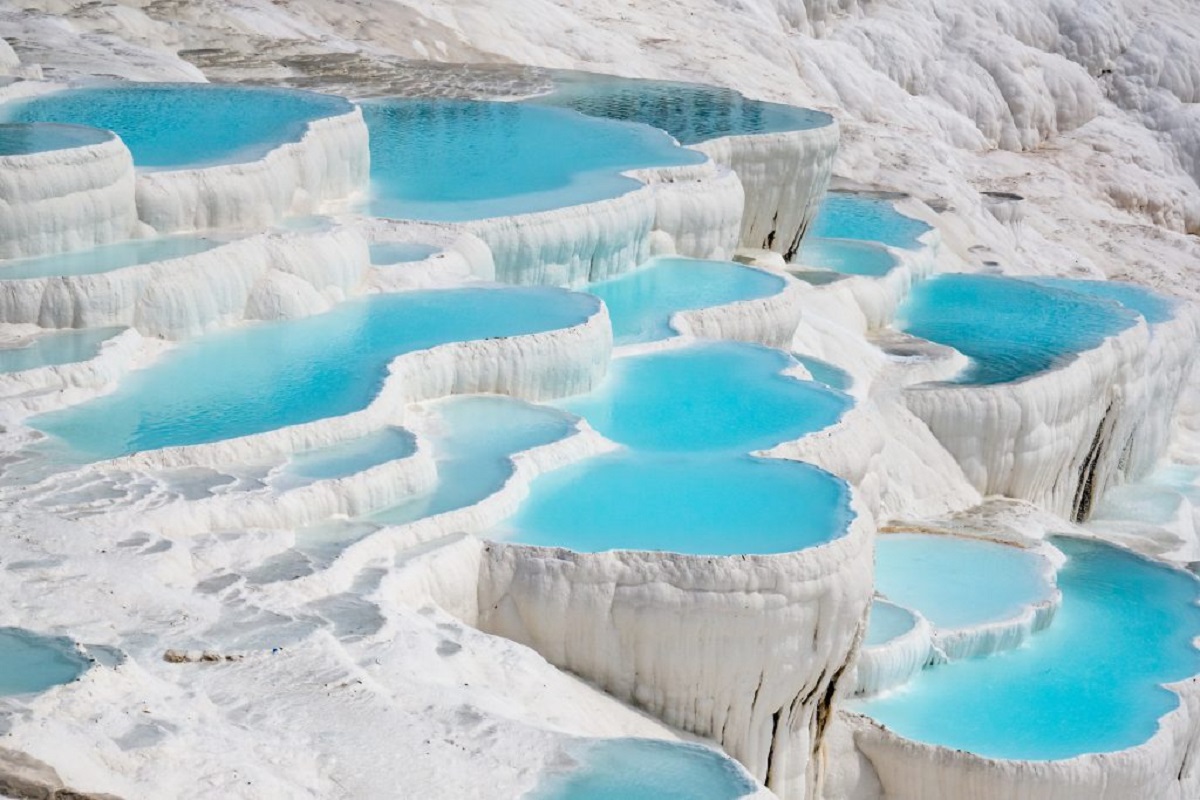
This is the iconic image of Pamukkale: white limestone pools cascading down the hillside, filled with warm, turquoise-blue mineral water. Walking barefoot across these terraces is not just allowed, it’s mandatory. Shoes are not permitted on the travertines to protect them.
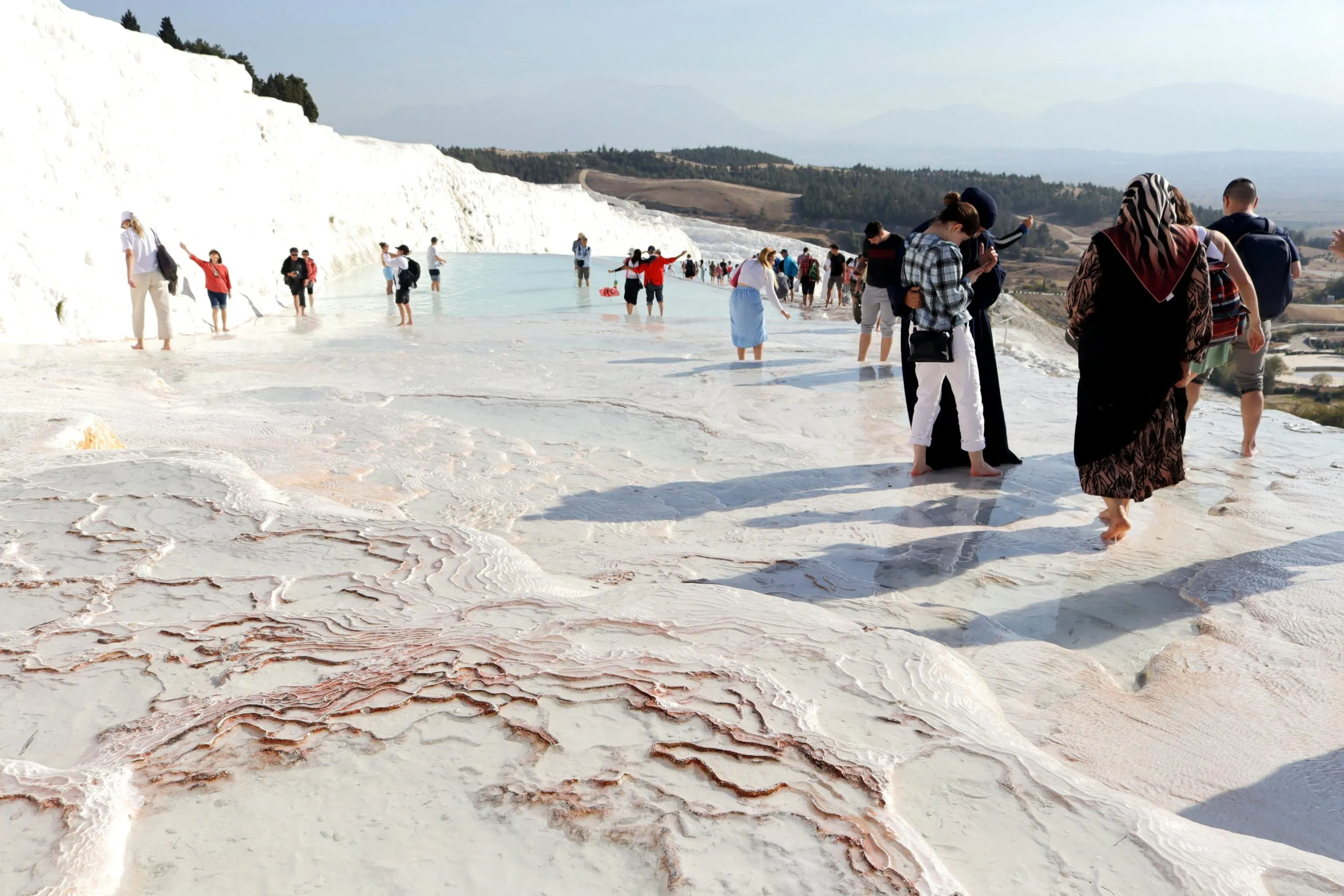
A word of honest expectation: due to conservation efforts, water flow is now managed and rotated across sections of the terraces. You won’t find every pool overflowing, but the designated walking areas are well-maintained and still spectacular, especially early in the morning when the light hits the white calcium formations and the pools are quieter.
Pro tip: Enter through the South Gate, which opens at 6:30 AM. This gate gives you the quickest route to the terraces and avoids the tour bus crowds that flood in later. The North Gate opens at 8:00 AM and is typically much busier.
2. Explore the Ancient City of Hierapolis
Rising above the travertines is Hierapolis, a Greco-Roman spa city that rivals Ephesus for sheer scale and atmosphere, yet sees a fraction of the crowds. Founded in the 2nd century BC, it became one of the ancient world’s most important health and healing destinations.
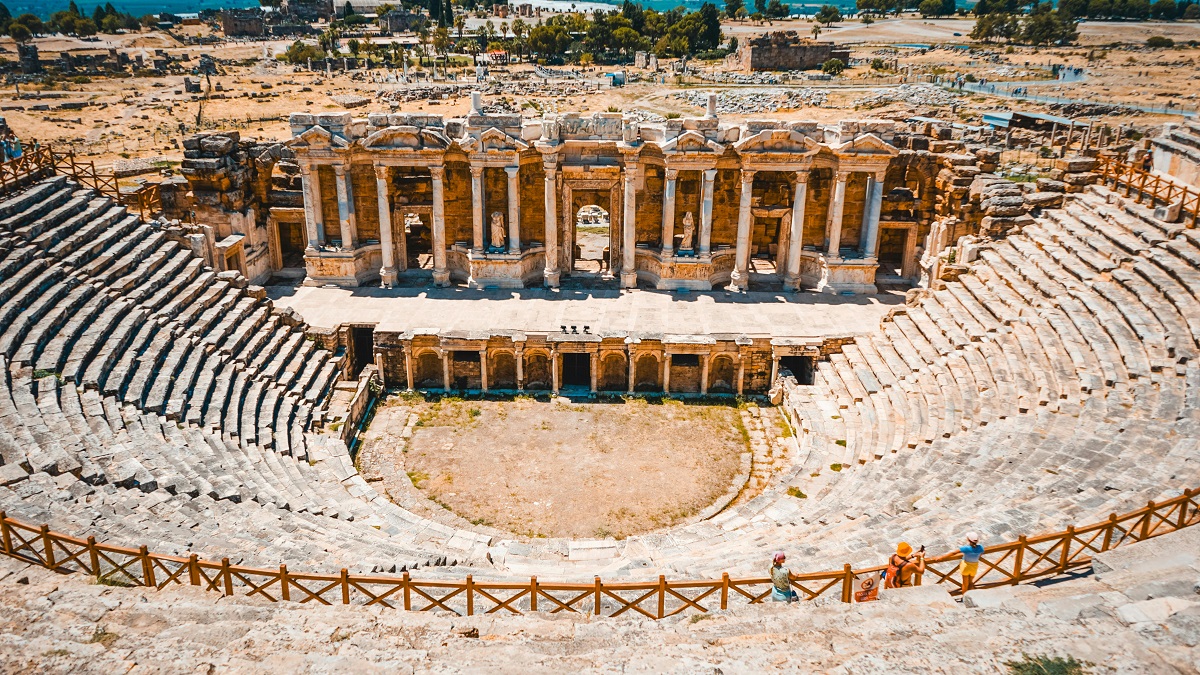
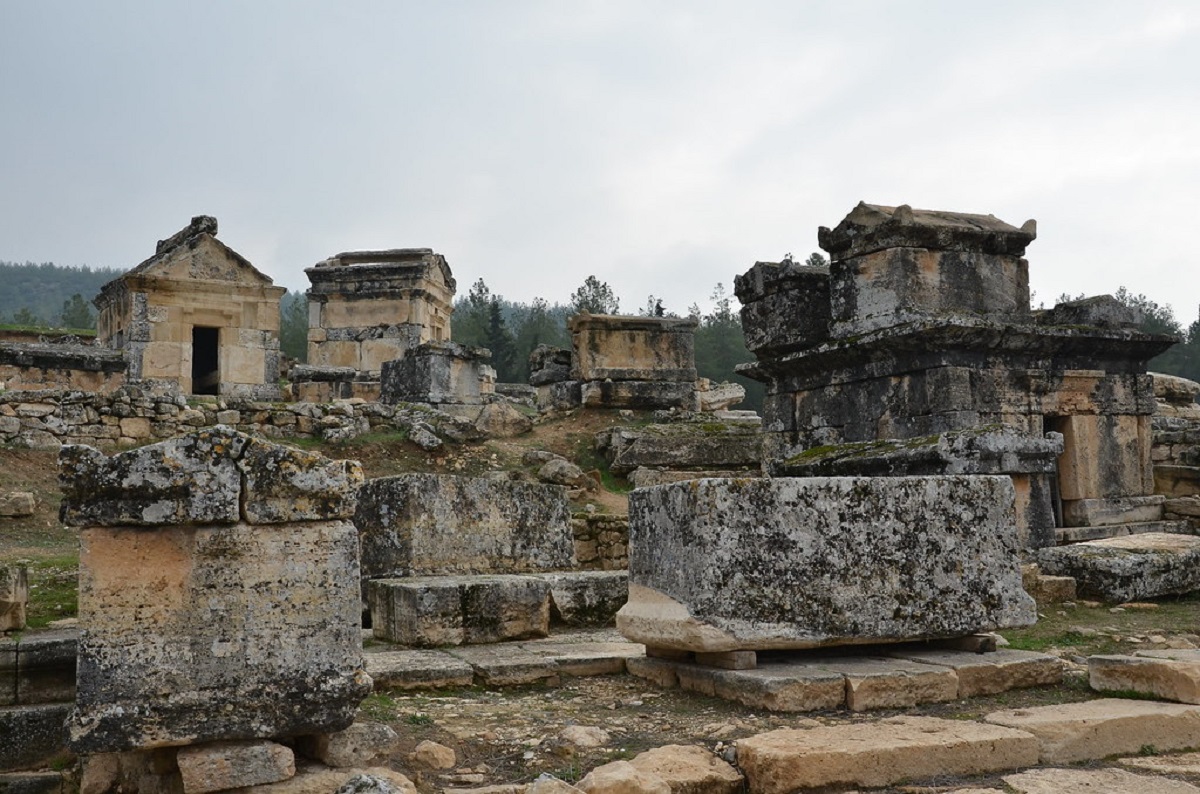
The highlights of Hierapolis include the Roman Theatre, built in the 2nd century AD under Emperor Hadrian, one of the best-preserved in the entire Mediterranean, seating up to 12,000 spectators. The Necropolis stretches for over 2 kilometres, one of the largest ancient cemeteries in the world. The Frontinus Gate and Colonnaded Street form the main entrance arch leading into the ancient city. And then there is the Plutonium, which deserves its own section entirely.
3. The Plutonium: Hierapolis’ Gate to the Underworld
One of the most unsettling features of Hierapolis is the Plutonium, a cave opening in the hillside that ancient priests believed was the literal entrance to the underworld. The cave emits carbon dioxide gas so concentrated that birds and small animals that stray too close drop dead within seconds. Ancient priests would bring animals to the cave entrance to demonstrate divine power over life and death, while they themselves held their breath or stood above the deadly gas layer.
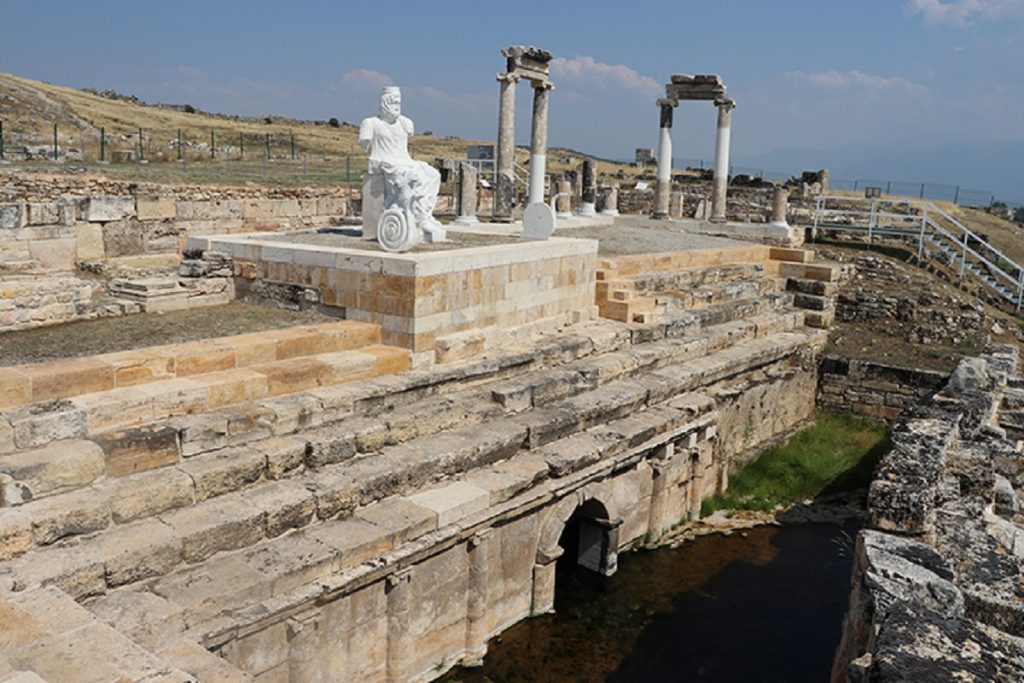
The exact location of the cave entrance described by ancient writers remained uncertain for centuries. In 2013, an Italian team led by archaeologist Francesco D’Andria precisely identified and excavated the shrine complex, confirming descriptions written by the Greek geographer Strabo nearly 2,000 years earlier. Today, you can stand at the entrance and watch steam rising silently from the ground. It is one of the eeriest archaeological sites in Turkey, and almost nobody who visits Pamukkale knows it exists.
4. Swim in Cleopatra’s Antique Pool
Cleopatra’s Pool (officially the Antique Pool or Sacred Pool) is the single most unique swimming experience in Turkey, arguably in the world. You swim in warm mineral-rich thermal water at a constant 36°C, among the submerged marble columns and ancient ruins of a Roman temple that collapsed into the pool during one of the major earthquakes that have shaped this region.
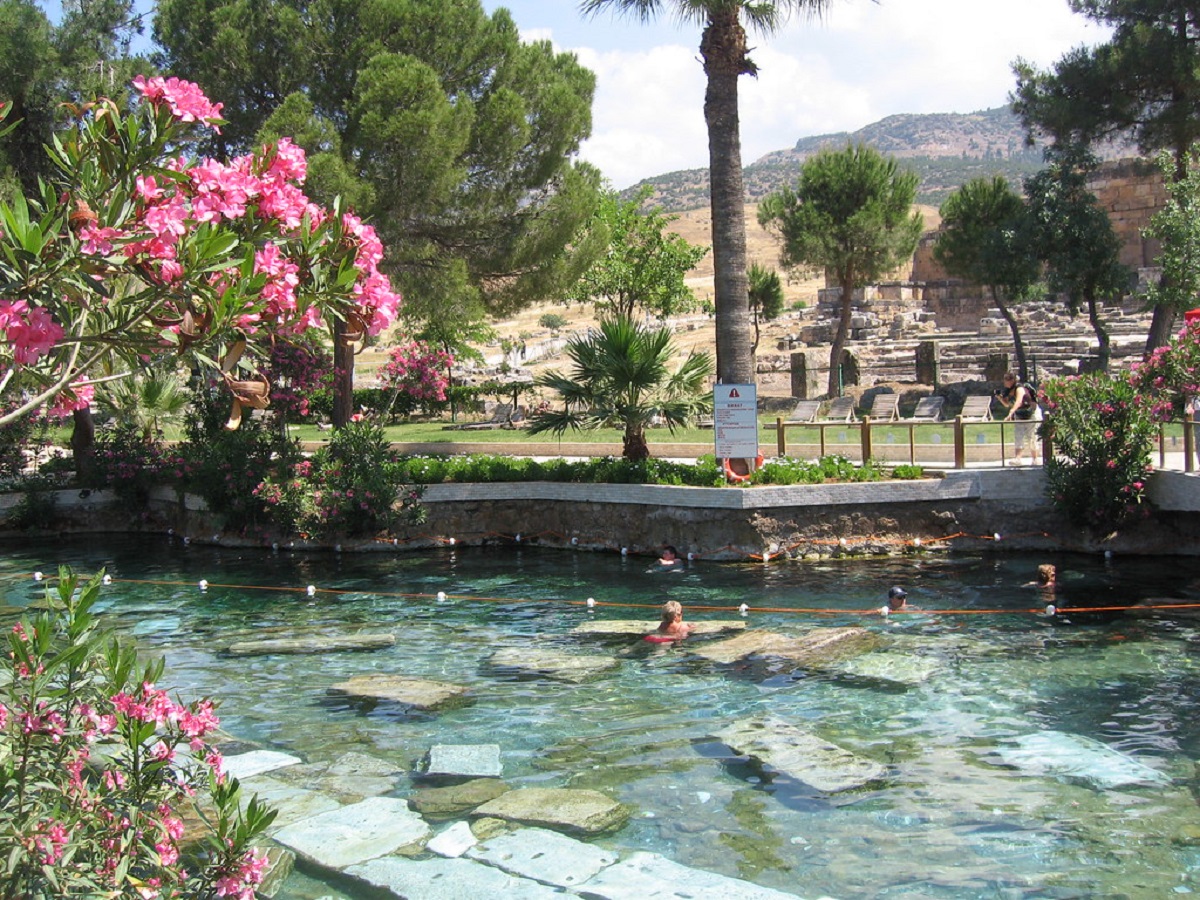
The water is naturally carbonated, with tiny bubbles constantly rising to the surface. Locals call it “champagne water.” The ruins below your feet date back nearly 2,000 years. Your main €30 ticket covers access to the poolside area; swimming costs approximately €10–€13 extra. Operating hours: 8:00 AM to 8:00 PM.
Important Update: Cleopatra’s Antique Pool is closed for swimming until June 2026 for maintenance. The poolside area may still be visible, but swimming is unavailable until then. If you are visiting before June 2026, plan your itinerary around this. Verify the latest status on muze.gov.tr before your trip.
5. Visit the Hierapolis Archaeology Museum
Housed inside the beautifully restored ancient Roman baths of Hierapolis, this museum is one of the most underrated in Turkey. It displays an impressive collection of sarcophagi, marble reliefs, statues, friezes, coins, and jewellery unearthed from Hierapolis and the surrounding ancient cities of Laodicea, Tripolis, and Colossae. Included in your standard €30 Pamukkale entry ticket. Allow 45–60 minutes. Air-conditioned, making it a welcome refuge in summer heat.
6. Soak in the Karahayıt Red Hot Springs
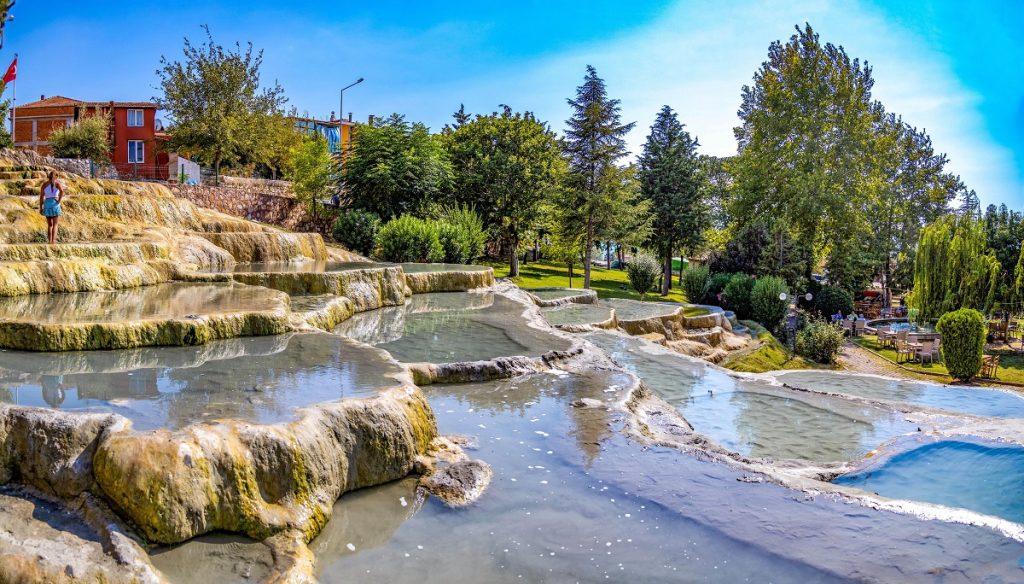
Just 5 kilometres from Pamukkale, the village of Karahayıt offers a completely different hot spring experience. The thermal waters here are rich in iron, which gives them a distinctive reddish-orange hue. Over time, these iron-rich waters have created rust-coloured travertine formations that create a striking visual contrast to Pamukkale’s snow-white terraces. Bathing in Karahayıt’s thermal pools is believed to help with skin conditions, rheumatism, and circulation.
7. Hot Air Balloon Ride and Paragliding
The hot air balloon floats up just before sunrise. Below you, the white terraces catch the first light and the entire Meander Valley opens up. Hierapolis sits quietly on the hilltop to your left. It is the kind of view that justifies the early alarm. If balloons are not your thing, tandem paragliding is available over the same terrain, cheaper, faster, and gives you a more physical sense of the landscape below.

Pro tip: Flights last around 45 to 60 minutes and cost roughly €80 to €120 per person. Book in advance, especially in summer. Your hotel can arrange it, or search GetYourGuide or Viator.
8. Explore the Pamukkale Natural Park
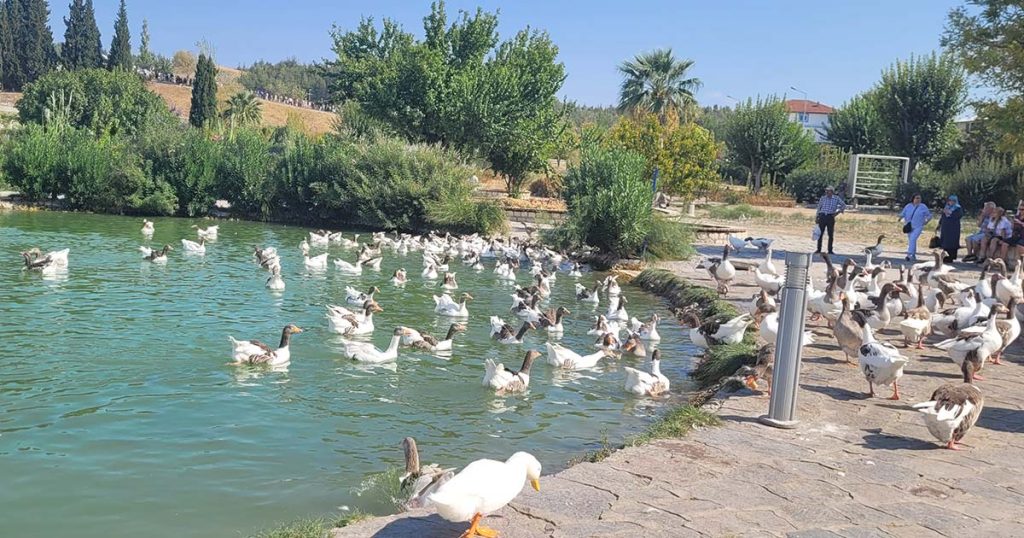
At the foot of the travertines lies a small but lovely free park with ponds, café terraces, and shaded picnic spots. It’s a good place to rest before or after your main visit, take some wider-angle photos of the white hillside, and grab a snack. Entry is free.
9. Watch Sunset from the Travertine Viewpoint
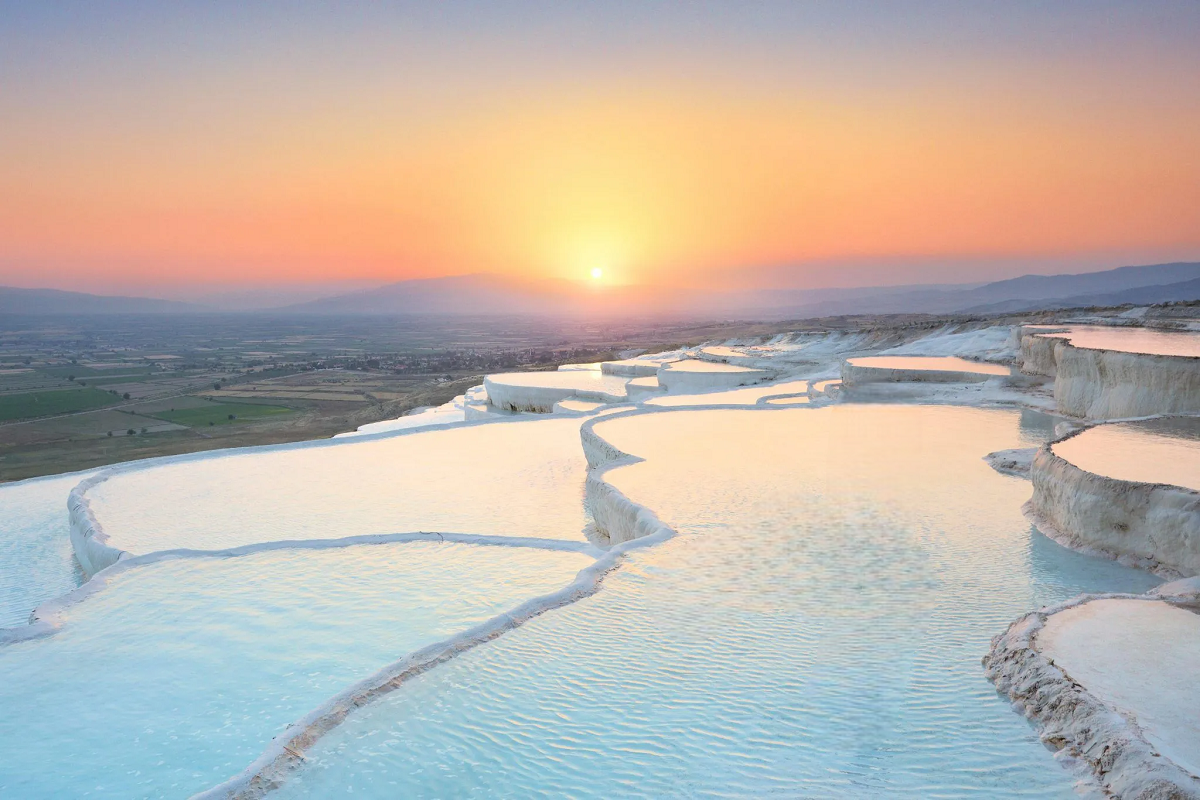
One of the most photogenic moments in all of Turkey is watching the sun set over Pamukkale’s white terraces. The calcium formations turn golden, then pink, then a deep amber as the light drops. If you time your visit to be at the top of the terraces around 6–7 PM in summer, you’ll get light that professional photographers dream about. Popular sunset viewpoint coordinates: 37.922866, 29.125222.
Day Trips from Pamukkale: Beyond the Terraces
Pamukkale sits at the heart of one of Turkey’s richest archaeological regions. Each of these day trips adds a completely different dimension to your visit, from ancient cities to natural wonders. All four are within 2 hours of the site.
1. Laodicea (Laodikeia) — 10 km Away
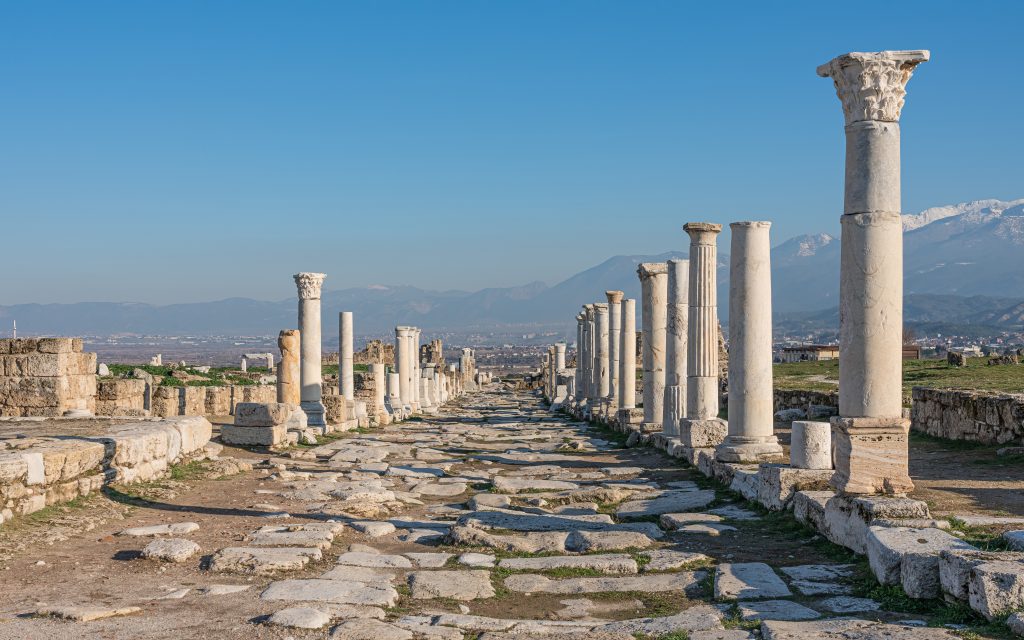
Laodicea is an ancient city that deserves far more attention than it gets. Founded by the Seleucid king Antiochus II in the 3rd century BC, it grew into one of the wealthiest cities in the Roman Empire. Laodicea is also one of the Seven Churches of Revelation mentioned in the New Testament. Today, the ruins are extensive and well-preserved, two theatres, the first known stadium in Anatolia, a temple to Zeus, a gymnasium, a monumental fountain, and largely intact aqueduct pipes. Because it’s far less visited than Hierapolis, you’ll often have sections of this ancient city entirely to yourself.
2. Kaklık Cave — 40 km Away
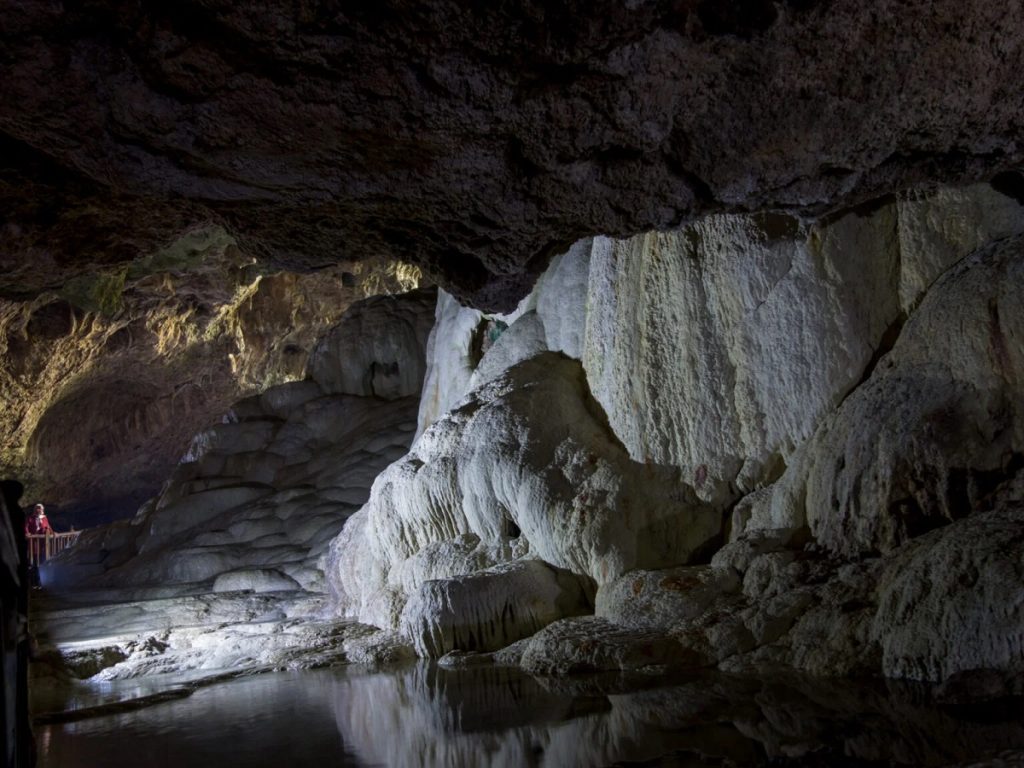
Known locally as “Underground Pamukkale,” Kaklık Cave is a place unlike anything above ground. It formed over 2 million years ago as a subterranean stream eroded limestone and sulfurous rock. When the cave roof eventually collapsed, it opened to reveal white travertine formations within the cave, including stalactites, stalagmites, thermal springs, and cascading mineral terraces. The entrance fee is modest (approximately €2–€5; check on arrival, as Turkish lira prices change frequently). Best combined with a Laodicea day tour.
3. Salda Lake (“Turkish Maldives”) — 80 km Away
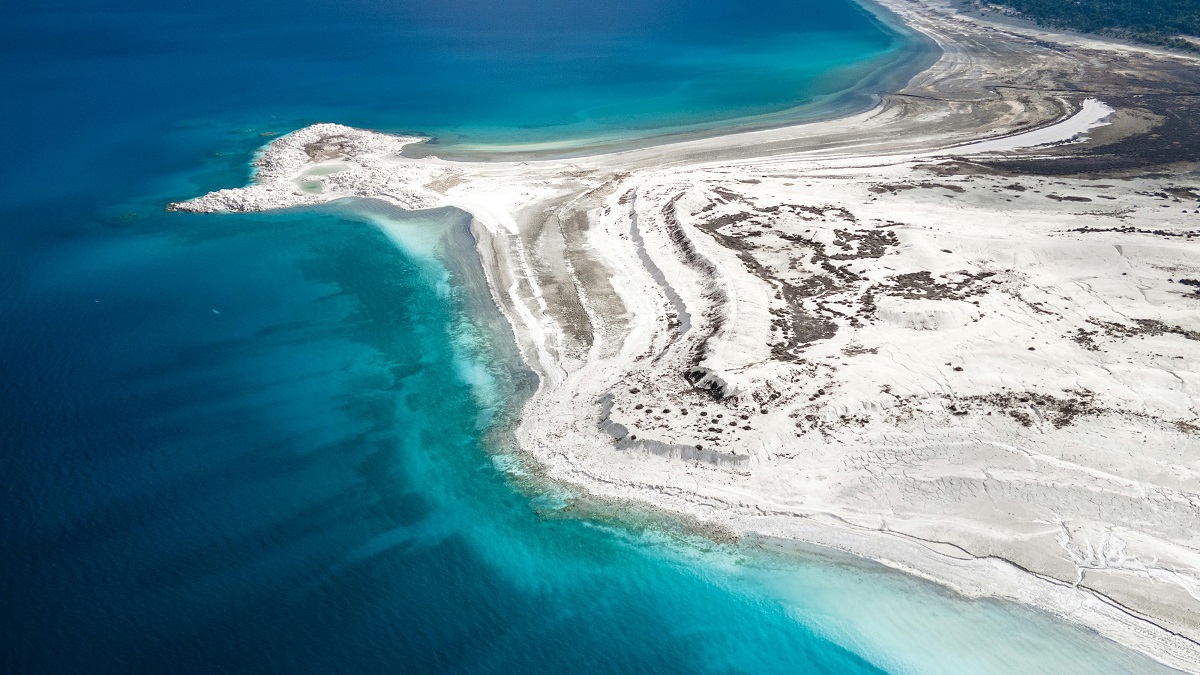
Lake Salda is Turkey’s answer to the Maldives: a crater lake in Burdur province with impossibly white sandy beaches made of hydromagnesite minerals and crystal-clear turquoise water. NASA has actually studied Salda Lake because its geological composition resembles ancient lake environments found on Mars. About 1.5 hours’ drive from Pamukkale. Best visited in summer (June–September). Several tour operators in Pamukkale offer combined Salda Lake + Laodicea + Kaklık Cave day trips.
4. Aphrodisias — 100 km Away
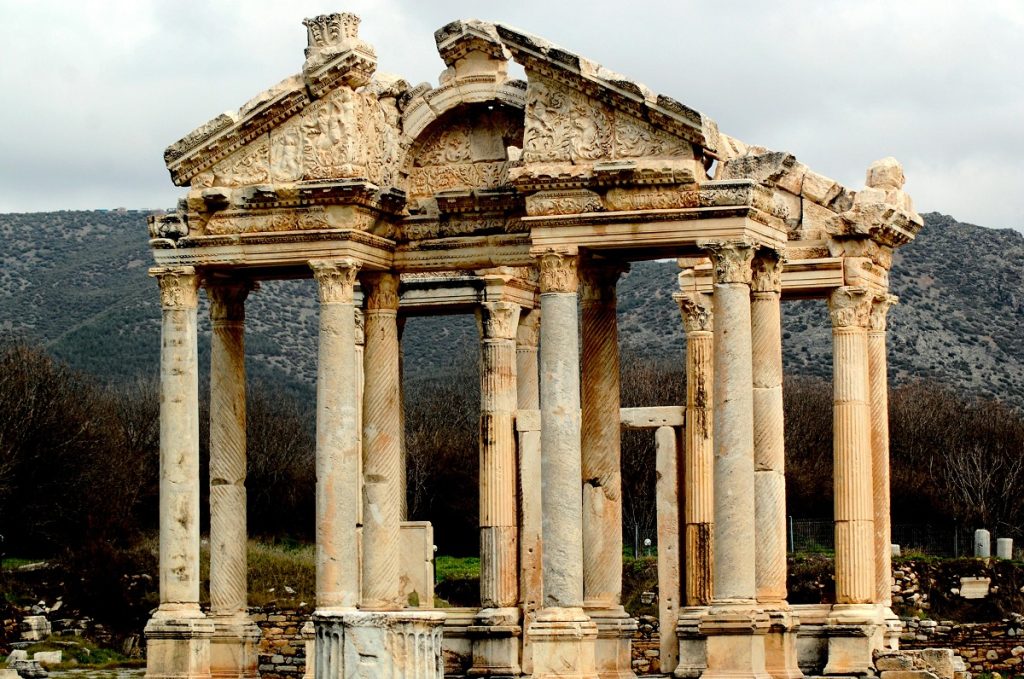
For serious archaeology lovers, Aphrodisias is a must. This ancient city was dedicated to Aphrodite, goddess of love, and contains some of the finest marble sculpture of the ancient world. The UNESCO-listed site includes an immense stadium that once held 30,000 spectators and remains one of the best-preserved in antiquity.
Pamukkale 1-Day Itinerary
This itinerary is designed to cover all the highlights in a single day, starting at sunrise and finishing at golden hour. It works best if you stay in Pamukkale village the night before.
| Time | Activity |
|---|---|
| 6:30 AM | Arrive at the South Gate as it opens. Walk up through the travertine terraces barefoot. The morning light on the white formations is spectacular, and you will have the terraces almost entirely to yourself. |
| 8:30 AM | Reach the top and enter the Hierapolis ancient city. Walk the Colonnaded Street, climb through the Roman Theatre, and walk through the Necropolis. |
| 10:30 AM | Head to Cleopatra’s Antique Pool. Have a swim among the ancient columns before the midday rush. |
| 12:30 PM | Stop for lunch at one of the café-restaurants inside or just outside the site. Try a traditional Turkish set lunch: grilled meat (ızgara), salad, bread, and ayran. |
| 2:00 PM | Visit the Hierapolis Archaeology Museum (air-conditioned). Spend 45 to 60 minutes exploring the sarcophagus gallery and Roman artifacts. |
| 3:30 PM | Take a taxi or dolmuş to Karahayıt (5 km) for a soak in the red thermal springs. |
| 5:30 PM | Return to Pamukkale town for a Turkish tea at a local café. |
| 6:30 PM | Head back up to the travertine viewpoint for the golden hour sunset. |
Pamukkale Entrance Fees & Tickets (2026)
| Ticket | Price |
|---|---|
| Combined Pamukkale + Hierapolis (adult) | €30 (~$33 USD) |
| Combined ticket (children under 8, foreign nationals) | Free |
| Combined ticket (children ages 8–12, foreign nationals) | Reduced rate |
| Cleopatra’s Antique Pool (swimming) | Approximately €10–€13 extra |
| Museum Pass Türkiye (15 days, 350+ sites) | €165 |
| Museum Pass Aegean (7 days, 40+ sites) | €95 |
| Museum Pass Mediterranean (7 days) | €90 |
Opening Hours
- Summer (April to October): South Gate opens 6:30 AM, closes 9:00 PM. North Gate opens 8:00 AM, closes 9:00 PM.
- Winter (November to March): Both gates open 8:00 AM, close 6:00 PM.
- Cleopatra’s Antique Pool: 8:00 AM to 8:00 PM (last entry 7:00 PM). Winter closes at 5:00 PM.
- Peak crowd times: 11:00 AM to 4:00 PM. Avoid if possible.
Best Time to Visit Pamukkale
- April to June and September to October are the sweet spots. Temperatures are mild (20 to 28°C), the crowds are thinner than in summer, and the travertine pools tend to have more water flowing through them. The spring wildflowers around Hierapolis in April are a bonus.
- July and August are scorching (often 38 to 42°C), extremely crowded, and the queues at peak hours can be 45 minutes long. The heat on the white terraces, with no shade, is intense. Go early, by 6:30 AM, if visiting in summer.
- November to March is quiet and much cheaper for accommodation, but some travertine pools may have reduced water flow, and the shorter days limit your exploring time.
How to Get to Pamukkale
Pamukkale is well connected to Turkey’s main tourist routes. Here are the most common approaches depending on where you are coming from.
1. From Istanbul
Fly to Denizli Çardak Airport (DNZ) with Turkish Airlines (about 1 hour, multiple daily flights). From the airport, take the BayTur shuttle bus directly to Pamukkale. Alternatively, fly to Izmir (ADB) and take an onward bus. An overnight bus from Istanbul to Denizli takes roughly 8–9 hours and is a budget-friendly option.
Also Read: Top 10 Best Places to Visit in Istanbul (2026 Guide)
2. From Antalya
Pamukkale is about 3.5 to 4 hours from Antalya by road. Many day trip tours run from Antalya, picking you up at your hotel and returning in the evening. These cost approximately €40–50 per person including transport, guide, and lunch.
Also Read: Best Things to Do in Antalya: Your Essential 2026 Travel Guide
3. From Izmir / Kusadasi / Ephesus Area
About 3 hours by road. Day trips from Kusadasi/Selcuk are widely available and make sense if you’re combining Ephesus and Pamukkale on a Turkey itinerary.
4. From Denizli City
Minibuses (dolmuş) run every 15 to 20 minutes from Platform 76 at Denizli Bus Station directly to Pamukkale village. The journey takes about 30 minutes and costs approximately 50 TL (roughly €1.50). No booking needed.
Where to Stay in Pamukkale
Where you sleep shapes the whole experience. Staying inside Pamukkale village gives you sunrise access before the day-trippers arrive. Here are the three main options by budget and style.
1. Pamukkale Village — Best for Convenience
Staying in the village gives you walking-distance access to the terraces and the ability to visit at sunrise before day-trippers arrive. Budget options start from around $25 to $35 per night; mid-range hotels from $50 to $80.
| Hotel | Best For | Why We Like It | Book |
|---|---|---|---|
| Venus Suite Hotel | Solo travelers and couples | Family-run, outdoor pool, free shuttle to terraces, excellent breakfast | Check prices |
| Bellamaritimo Hotel | Value seekers | Well-located, clean rooms, good breakfast, central to village | Check prices |
| Melrose Viewpoint Hotel | Views and comfort | 3-minute walk from Travertine Street, pool, panoramic views over the terraces | Check prices |
2. Karahayıt Village — Best for Thermal Spa Experience
5 km from Pamukkale, Karahayıt has a quieter, more local feel. Hotels here have their own thermal pools fed directly by the red springs, making it a better choice if thermal bathing is your main reason for visiting.
| Hotel | Best For | Why We Like It | Book |
|---|---|---|---|
| Pam Thermal Hotel and Clinic Spa | Families and spa seekers | Indoor and outdoor thermal pools, full spa, hammam, sauna, free breakfast buffet, 5 km from Pamukkale terraces | Check prices |
3. Luxury Option — Richmond Pamukkale Thermal
The only 5-star option in the area, set among pine trees in Karahayıt, about 3 km from the terraces. Better suited to guests who want full resort comfort and do not mind a short drive to the site.
| Hotel | Best For | Why We Like It | Book |
|---|---|---|---|
| Richmond Pamukkale Thermal | Luxury and full resort | 315 rooms, indoor and outdoor thermal pools, spa, hammam, fitness centre, free breakfast, pine gardens, 3 km from Pamukkale | Check prices |
Practical Tips for Visiting Pamukkale
A few things will make the difference between a rushed visit and one you remember properly. Read these before you go.
- Footwear: You will walk barefoot on the travertines. The calcium surface is uneven and can be rough. Pack a small bag for your shoes.
- What to wear: Light, comfortable clothing. A swimsuit under your clothes if you plan to swim in Cleopatra’s Pool. Do NOT apply sunscreen before walking on the travertines.
- Water: Carry a bottle. Bottled water costs around €1–€2 on-site (cheaper at village shops outside the gates).
- Photography: Best light is 7–8 AM and 6–7 PM. Golden hour on the white terraces is magical.
- Crowds: Arrive at opening time. 11 AM to 4 PM is peak madness, especially in July and August.
- Currency: Turkey uses the Turkish Lira, but entry is priced in euros. Cards are widely accepted.
- Visa: Most nationalities require an e-Visa. Apply at evisa.gov.tr before travel.
What to Eat in Pamukkale
The food around Pamukkale reflects the Denizli region’s agricultural richness. Skip the overpriced tourist menus at the site entrance and seek these out instead.
- Köfte — Turkish meatballs with spiced minced lamb or beef, served with rice and salad. Almost every lokanta in Pamukkale village does a solid version.
- Gözleme — Thin flatbread filled with white cheese and spinach, or minced meat, cooked fresh on a griddle. Find women making it by hand at village stalls near the site entrance.
- Tandır Kebab — Slow-cooked lamb shoulder, a Denizli regional speciality. The meat is cooked in a sealed clay oven for hours until it falls off the bone. Order it at a proper lokanta, not a tourist grill.
- Mantı — Turkish dumplings filled with spiced meat, served with garlicky yoghurt and red pepper butter. The version in this region tends to be smaller and more delicate than Istanbul-style.
- Ayran — Cold, slightly salty yoghurt drink. After two hours walking barefoot on sun-baked white calcium, nothing else comes close.
- Denizli Pomegranate Juice — The Denizli region produces exceptional pomegranates. Fresh juice squeezed at the entrance stalls costs around 30 to 50 TL and is worth every lira.
Common Mistakes to Avoid at Pamukkale
Most visitors leave Pamukkale with at least one regret. Here are the mistakes that come up again and again, and how to avoid them.
- Arriving too late. Showing up at 10 or 11 AM puts you in the middle of the peak crowd window (11 AM to 4 PM). The light is harsh, the terraces are busy, and the experience suffers. Arrive at 6:30 AM when the South Gate opens.
- Applying sunscreen before the terraces. This is not just a request, it damages the calcium formations. Apply sunscreen after you leave the travertines, not before. Bring a long-sleeved shirt instead for sun protection while walking.
- Skipping Hierapolis entirely. Many day-trippers see the terraces and leave. Hierapolis is included in your ticket and takes 2 to 3 hours. The Roman Theatre alone is worth the extra time.
- Not bringing a bag for your shoes. Shoes must come off at the terrace entrance. Without a bag, you carry them in your hands for the entire walk. A small drawstring bag solves this completely.
- Missing Kaklık Cave. The vast majority of visitors have never heard of it. If you have a half-day spare, this underground cave with its own travertine formations is one of the most unusual sites in Turkey.
- Eating directly at the site entrance. The restaurants at the main gates are overpriced and ordinary. Walk five minutes into Pamukkale village and the quality and value improve considerably.
Final Thoughts: Is Pamukkale Worth It?
Absolutely, without hesitation. Pamukkale is unlike anywhere else on earth. The combination of natural geological wonder, ancient history, and thermal wellness in one place is rare. Go early. Stay at least one night if you can. Swim in Cleopatra’s Pool. Wander Hierapolis until the tour buses leave. Watch the sunset from the viewpoint. Pamukkale in 2026 is as magnificent as it has ever been. Don’t miss it.
Planning your Turkey trip? Explore more guides on Turkey Travel HQ, your home for honest, detailed travel content about Turkey’s best destinations.
Frequently Asked Questions
Can you swim in the travertine pools?
You can walk barefoot through shallow sections (typically 2–10 cm deep), but full swimming is not permitted in the travertines themselves. Swimming is only available in Cleopatra’s Antique Pool, where an extra fee applies. Note: Cleopatra’s Pool is closed for swimming until June 2026 for maintenance. Plan accordingly if you’re visiting before then.
How long do you need in Pamukkale?
A half-day covers the travertines and a quick walk through Hierapolis. A full day (6–8 hours) lets you explore Hierapolis properly, swim in Cleopatra’s Pool, and visit the museum. An overnight stay lets you experience both sunrise and sunset on the terraces.
Is Pamukkale suitable for families with children?
Yes, very. Children under 8 (foreign nationals) enter free, and ages 8–12 get a reduced rate. The pools are shallow and warm. The ruins are impressive for older kids. Just be careful on the slippery travertine surface with small children.
Is it worth visiting in winter?
Yes, if you prefer solitude and lower prices. The travertines are beautiful in cooler light, the crowds are almost non-existent, and you can still swim in Cleopatra’s Pool. However, some pool sections may have reduced water flow.
Do I need to book tickets in advance?
Tickets are sold at the gate and you can generally walk in. During peak season (July–August), a Museum Pass with skip-the-line access saves time. Some guided tours include entry in the price.
Is Pamukkale accessible for people with mobility issues?
The travertines involve barefoot walking on an uneven surface and are difficult for people with limited mobility. However, the Hierapolis ruins, Archaeology Museum, and Cleopatra’s Pool area are more accessible. A small shuttle vehicle operates between the entrance gates.