

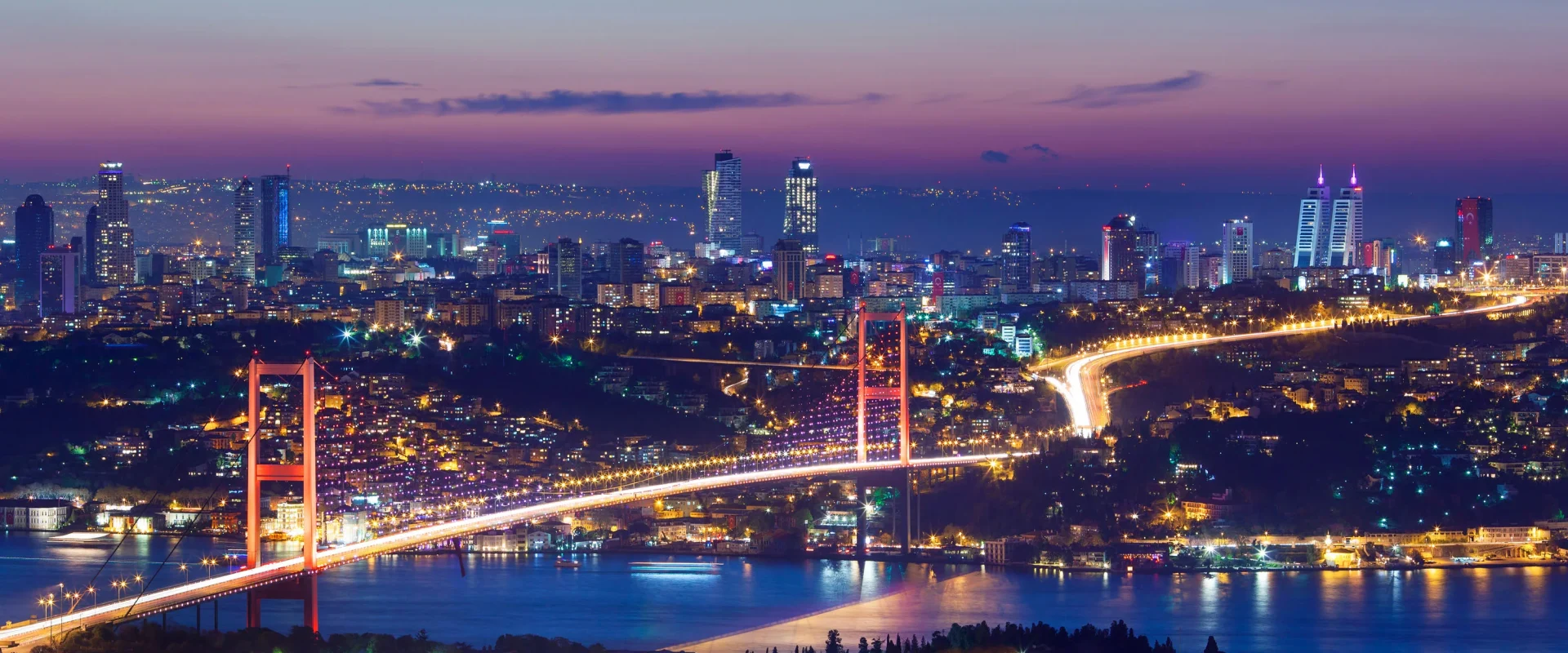
Istanbul doesn’t gently introduce itself. The moment you step outside, it hits you all at once with the call to prayer echoing between minarets, the Bosphorus glittering below the hills, and the smell of simit and grilled fish drifting through packed streets. For a first-time visitor, it can feel overwhelming before you’ve even figured out the tram.
This guide is built for exactly that moment. It covers the 10 places in Istanbul that every first-time traveler genuinely must see, providing a clear answer as to why each one earns its place above the hundreds of other mosques, palaces, and viewpoints in this city. You’ll also find a hidden nearby tip for each stop because some of the best Istanbul moments happen 200 meters off the main path.
Also Read: Best Things to Do in Antalya
The Essential Guide to Istanbul: Top 10 Must-Visit Places
- Hagia Sophia
- The Blue Mosque
- Topkapi Palace
- Grand Bazaar
- Basilica Cistern
- Bosphorus Cruise
- Galata Tower
- Spice Bazaar and Eminönü
- Istiklal Avenue and Beyoğlu
- Kadıköy — The Asian Side
1. Hagia Sophia — Where Two Civilizations Share One Dome
Why Hagia Sophia and Not Any Other Mosque in Istanbul?
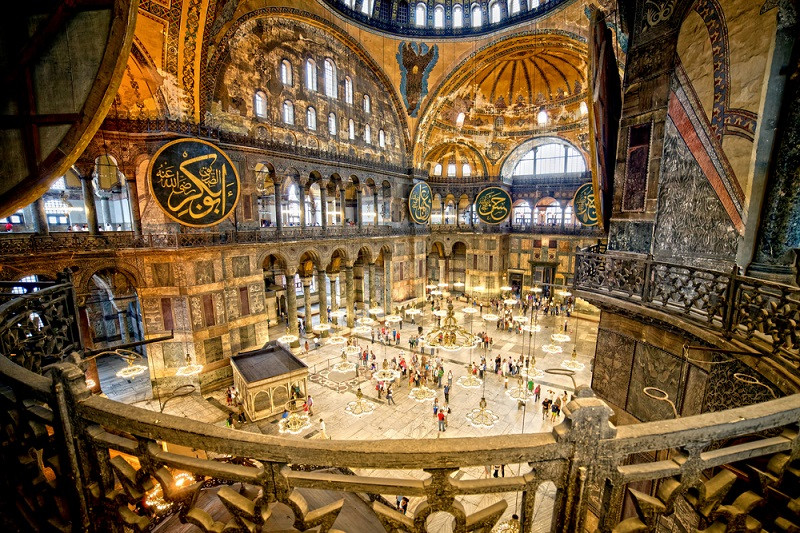
Hagia Sophia isn’t just a building because it is a 1,500-year-old witness to the entire sweep of human history in this part of the world. It is the only place on earth where 6th-century Christian mosaics and massive 19th-century Ottoman calligraphy medallions share the same sacred space, often just meters apart from each other.
Built in 537 AD, it served as the crown jewel of Christian Byzantium for nearly a thousand years before becoming the most celebrated mosque of the Ottoman Empire after 1453. Today it functions once again as an active mosque while simultaneously welcoming visitors from around the world to experience its extraordinary layered history. Standing beneath that 31-meter dome, you feel the weight of centuries in a way that no photograph can quite prepare you for. That collision of faiths, empires, and eras in a single building is something you genuinely cannot find anywhere else on the planet.
Visitor Information for 2026
The entry structure at Hagia Sophia has been updated to manage visitor flow while preserving the sanctity of worship. The building operates across two dedicated areas. The main prayer hall on the ground floor is open for worship, welcoming Muslims from around the world to pray exactly as mosques throughout Turkey do. For those visiting for sightseeing and historical exploration, a separate visitor entrance leads directly to the upper galleries, where you will find the most celebrated Byzantine mosaics and a panoramic view of the dome’s extraordinary interior.
Tickets, Pricing and Hours
The visitor gallery entry fee is €25 per person. Children under 8 enter free with a valid ID. One important note that catches many travelers off guard: the Museum Pass Istanbul is not valid at Hagia Sophia, so you will need to purchase a separate ticket here regardless of which pass you carry. Opening hours run from 09:00 to 19:00 daily, with an earlier opening of 08:00 during the summer months from April through October.
Dress Code and Etiquette
At the mosque, modest dress is required for everyone entering. Women should cover their heads and shoulders, and men should cover their knees. If you happen to arrive unprepared, headscarves and wraps are usually available for purchase at the visitor entrance. However, many travelers prefer to bring their own scarf to ensure it is comfortable and to avoid the extra expense on-site
Friday Visits and Peak Times
On Fridays, visitor access is more limited during the midday prayer window. If you are planning your itinerary around a Friday visit, aim for early morning or mid-afternoon. In peak summer months, ticket queues can stretch to an hour or more, so booking a skip-the-line ticket in advance by searching for a Hagia Sophia skip-the-line ticket is well worth it.
Hidden Nearby Tip
After exiting, skip the main square and walk for 5 minutes to Caferağa Medresesi. This 16th-century Islamic school was designed by the master architect Mimar Sinan, and it functions today as a quiet cultural center where local artisans practice traditional ebru, the ancient art of paper marbling. You can sit in the courtyard, watch the artisans work, and have a glass of tea. Almost no tourists come here despite it being steps from one of the most visited buildings on earth.
2. The Blue Mosque — 20,000 Tiles, Six Minarets and a Sultan’s Ambition
Why the Blue Mosque Above All Other Ottoman Mosques in the City?
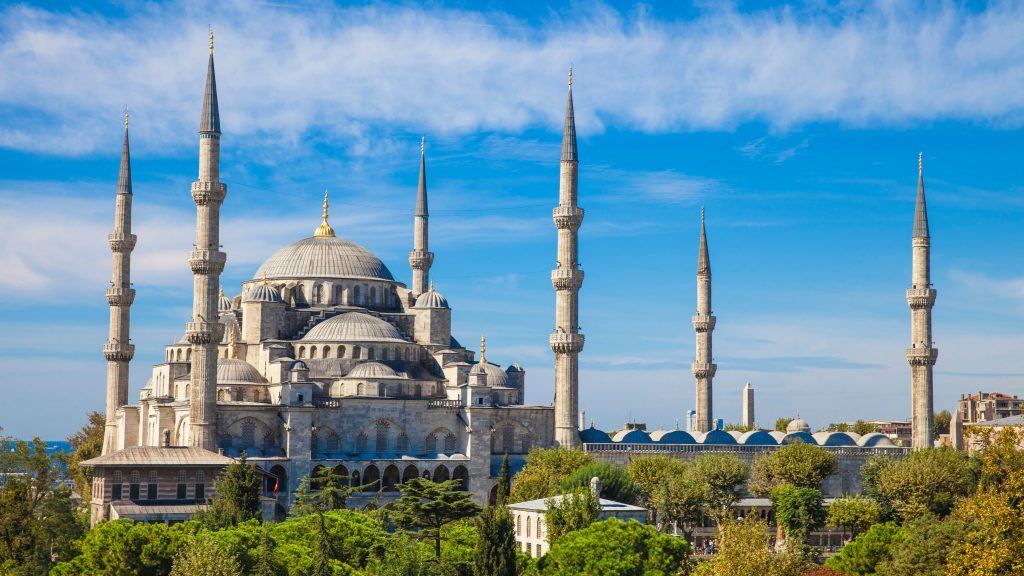
The Blue Mosque was built specifically to outshine everything that came before it, including Hagia Sophia, which it faces directly across Sultanahmet Square. Sultan Ahmed I commissioned it in 1609 at just 19 years old, driven by the ambition to leave a legacy that matched the Byzantine masterpiece he looked at from his palace window every single day.
The result was the first imperial Ottoman mosque ever built with six minarets. This was a decision so audacious that it caused a diplomatic crisis because only the mosque in Mecca had that many at the time. The Sultan reportedly had to fund a seventh minaret in Mecca to resolve the tension. Inside, over 20,000 hand-painted Iznik tiles cover the walls in blues and turquoises that shift in tone as natural light pours through 260 stained-glass windows. The effect at 9 AM, with morning light streaming in at low angles, is truly unlike any other interior in Istanbul.
Visitor Information for 2026
The Blue Mosque is completely free to visit and no ticket is required for anyone.
If you visited before 2023 and remember scaffolding covering half the interior, things have changed significantly. Following a comprehensive six-year restoration that was the most thorough in its 400-year history, the mosque fully reopened in April 2023. The work focused on restoring the original splendor of the tiles and improving earthquake safety. By 2026, the restoration is entirely complete, allowing you to see the full interior exactly as it was meant to be seen without any scaffolding obstructing the domes or the tiles.
Prayer Times and Visiting Windows
As an active mosque, the Blue Mosque is closes to visitors during the five daily prayer times. The general visiting windows as of early 2026 are 08:30 to 12:15, then 13:45 to 15:15, and again from 16:15 to 17:30. These windows shift slightly throughout the year as prayer times change with the seasons, so it is best to check the prayer schedule board posted at the entrance on the day you visit. On Fridays, the mosque opens to visitors only after approximately 14:30 due to the Friday congregational prayer.
Dress Code and Etiquette
Women should bring a headscarf. Free scarves and long skirts are available to borrow at the entrance for anyone who arrives without one, so you won’t be turned away.
Hidden Nearby Tip
Walk two minutes from the mosque to the Hippodrome of Constantinople, now called Sultanahmet Square. This open plaza is actually the footprint of one of the ancient world’s greatest chariot-racing stadiums, built by Emperor Constantine in the 4th century. Three extraordinary monuments still stand in the middle: an Egyptian obelisk from 1500 BC, the Serpent Column from 479 BC, and the Column of Constantine. Most tourists stroll through it as a shortcut between mosques without realizing they are walking through a 1,600-year-old arena.
3. Topkapi Palace — The Empire That Hid From the World
Why Topkapi Over the Newer, More Opulent Dolmabahçe Palace on the Bosphorus?
Topkapi was never built to impress anyone. While European palaces like Versailles were designed as theatrical displays of wealth for foreign dignitaries and the public, Topkapi was built for concealment. It was a walled city for 4,000 people including the Sultan, his ministers, his military commanders, his cooks, his servants, and a Harem of hundreds. Everyone lived and governed in complete seclusion behind high walls and heavy gates.
You visit Topkapi not to admire a pretty building but to understand how an empire actually functioned in secret for four centuries. The Harem alone contains over 300 tiled rooms and private courtyards that were closed to the outside world from the 15th century until the palace became a museum in 1924. The Treasury houses the 86-carat Spoonmaker’s Diamond and the emerald-encrusted Topkapi Dagger. The terrace views over the confluence of the Bosphorus and the Golden Horn are among the finest in Istanbul, so you should give yourself a proper half-day here because rushing through is a waste.
Visitor Information for 2026
The palace entrance for foreign visitors is 2,750 TL for a combined ticket. This ticket is valid for one day from the date of purchase and provides access to the main palace complex. It includes entry to the Harem and Hagia Irene, allowing you to explore all major sections without needing to purchase additional tickets separately. The Museum Pass Istanbul is also valid here and remains one of the primary reasons the pass is genuinely worth buying, as it allows you to bypass the main ticket lines.
Opening Hours and Planning
The palace is closed every Tuesday, so you will need to plan your itinerary around this day. Generally, the palace gates open at 09:00 and remain open until 18:00 throughout the year. To avoid the heaviest crowds, it is best to arrive right at opening at 09:00 or wait until after 15:00 when the large tour groups begin to leave.
Hidden Nearby Tip
After exiting the palace, walk downhill toward the waterfront to find Soğukçeşme Sokağı, which translates roughly as the Street of the Cold Fountain. This narrow cobblestone lane is lined with perfectly restored Ottoman wooden houses painted in terracotta and mustard yellow tones. It feels like walking into an illustrated history book. Even on busy days in the old city, this street is usually quiet and stands as one of the most photogenic spots in all of Sultanahmet.
4. Grand Bazaar — And Why You Should Never Pay the First Price
Why Does a Covered Market Make a Must-Visit List?
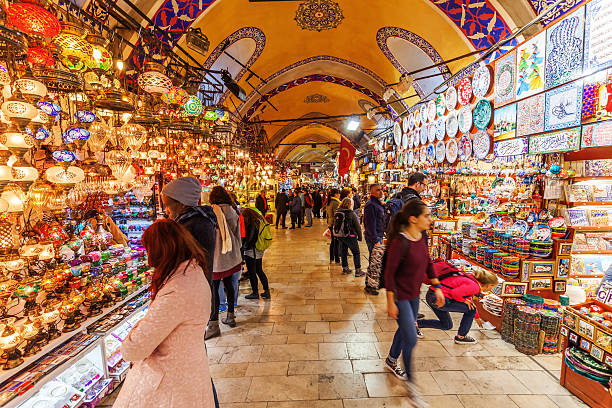
The Grand Bazaar was founded in 1455 just two years after the Ottoman conquest of Constantinople and it is not really a market in the traditional sense. It is a neighborhood that happens to be indoors. Over 4,000 shops spread across 61 covered streets organized by trade the way they have been for nearly 600 years. You will find jewelers in one lane, leather workers in another, and carpet dealers near the center. The vaulted ceilings are beautifully painted and gilded, and the lanes are so intricate that getting lost is genuinely inevitable. That is exactly the point of the experience, so you should not try to navigate it systematically and simply allow yourself to wander.
The Bargaining Rule — And What Nobody Tells You
Bargaining in the Grand Bazaar is not just expected but is part of the cultural fabric of the place. Refusing to engage with it can actually feel a little abrupt to the shopkeepers who have been doing this their whole lives. The ritual has its own rhythm where tea is offered, an opening number is floated, and theatrical expressions of outrage are exchanged on both sides until everyone eventually lands somewhere reasonable. You should enjoy it for what it is because it is a performance that both parties understand.
The opening price quoted to foreign tourists is routinely two to three times the price the shopkeeper actually expects to accept. A ceramic plate offered at 500 lira might leave the shop at 180, and a carpet quoted at $300 might genuinely sell for $100. This is not a hostile tactic but is simply the starting point of a negotiation that both sides are expected to participate in. You should not feel embarrassed about countering firmly or feel bad about walking away if the number does not suit you. In most cases, the real offer appears the moment you start moving toward the door.
Entry to the Grand Bazaar is free. It is open Monday through Saturday from 08:30 to 19:00 and closed on Sundays. The stalls near the main entrances tend to be the most tourist-oriented; the lanes toward the center of the bazaar generally have better quality and more authentic goods.
Visitor Information for 2026
Entry to the Grand Bazaar is free for everyone. As of early 2026, it is open Monday through Saturday from 08:30 to 19:00 and remains closed on Sundays. It is also important to note that the bazaar closes entirely during major religious holidays, including the full duration of Eid al-Fitr and Eid al-Adha. In 2026, a popular trend is joining a mosaic lamp workshop near the bazaar where you can actually sit down and create your own lamp to take home as a personalized souvenir.
Hidden Nearby Tip
Exit toward the Nuruosmaniye Gate and walk three minutes to the Nuruosmaniye Mosque. This 18th-century Ottoman Baroque mosque draws almost no tourists despite sitting right next to one of the most visited markets in the world. The interior is flooded with natural light from 174 windows and has a warmth and calm that the more famous mosques crowded with tour groups can rarely match.
5. Basilica Cistern — The Underground Cathedral That Kept Constantinople Alive
Why This Over the Dozens of Other Ancient Sites in Istanbul?
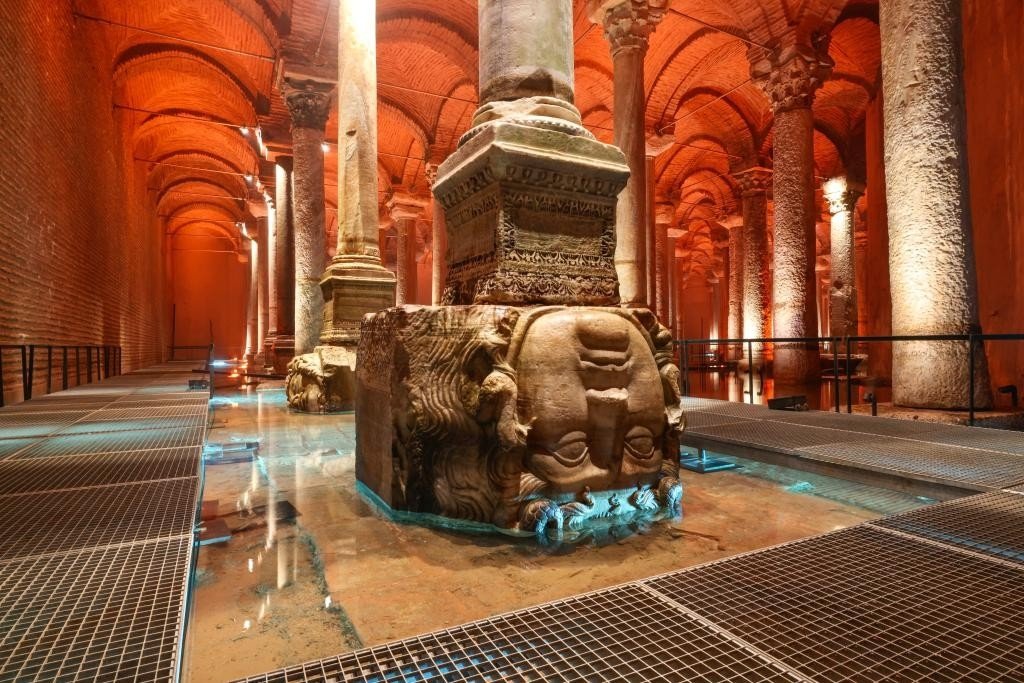
Nothing prepares you for the moment you descend a staircase from an ordinary street in Sultanahmet and suddenly find yourself inside an underground chamber the size of a cathedral. Three hundred and thirty-six marble columns rise from still dark water, classical music echoes between them, and carefully placed lights turn the ancient stone into shades of amber, green, and gold. It is entirely unlike anything you will see above ground in Istanbul or anywhere else.
Built in 532 AD under Emperor Justinian to supply water to the Great Palace of Constantinople, the cistern could hold 80,000 cubic meters of water. After the Ottoman conquest, it was gradually forgotten and only rediscovered in 1545 when locals noticed they could lower buckets through gaps in the floors of their houses to pull up fish. At the far end, two columns stand on bases carved with Medusa heads which were placed face-down and sideways to neutralize the mythological figure’s power. The recent renovation added a light-mapping installation called “Deeper Beneath” that projects the story of Medusa and the ancient city directly onto the stone walls after dark.
Visitor Information for 2026
As of early 2026, the standard daytime entry for foreign visitors is approximately 1,950 TL, while special evening sessions that run from 19:30 to 22:00 cost roughly 3,000 TL. Book your ticket in advance, as this is one of the longest queues in Istanbul and regularly sells out during peak months. The Museum Pass Istanbul is not valid here, so a separate ticket is required for everyone.
Opening Hours
The Basilica Cistern welcomes visitors every day from 09:00 until 22:00, including all public holidays. If you are visiting on a standard daytime ticket, you should aim to arrive before 18:30, as the doors briefly close then to prepare for the more atmospheric “Night Shift” sessions. These evening sessions begin at 19:30 and run until 22:00, though they do require a separate, higher-priced ticket.
Hidden Nearby Tip
Exit the cistern and look for the Million Stone, a crumbling Byzantine pillar standing just outside that almost every visitor walks past without a second glance. This was the Zero Mile marker of the Byzantine Empire and the exact point from which all distances across the empire to Rome and Jerusalem were officially calculated. There is no ticket or queue, just a quiet piece of history standing on a street corner.
6. Bosphorus Cruise — The Only Way to Truly Understand This City
Why Is a Ferry Ride on a Must-Visit List?
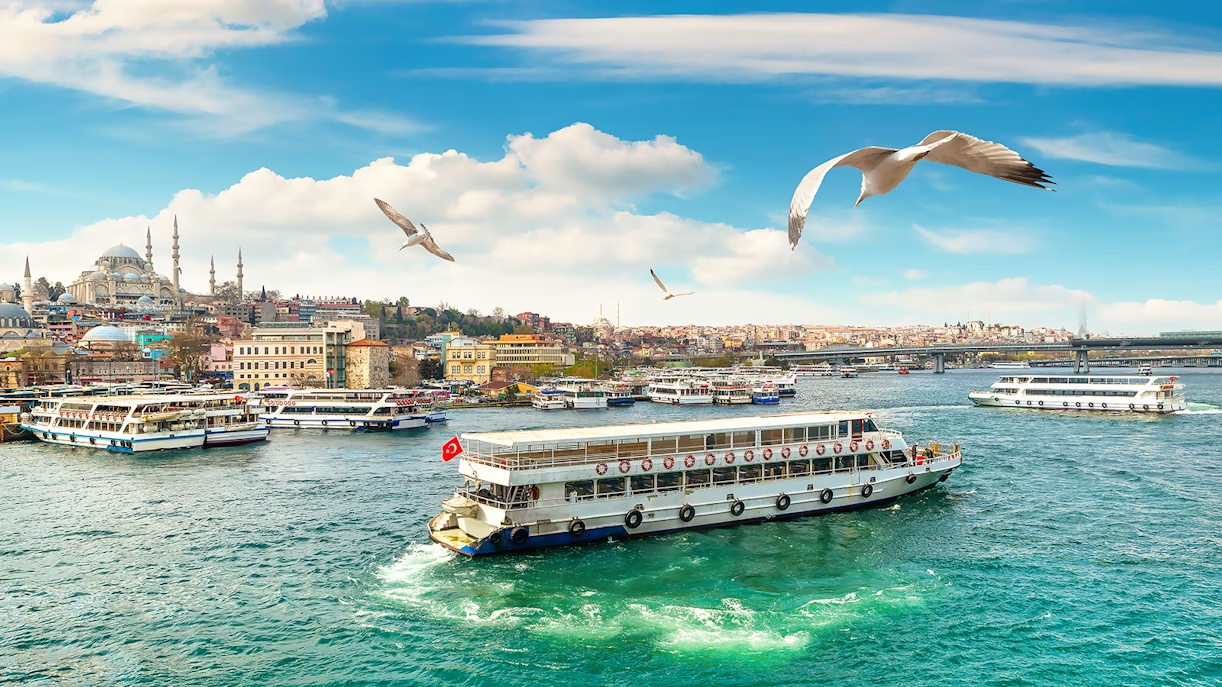
Istanbul is built on hills across two continents divided by a single strait, and you simply cannot grasp the scale or geography of the city until you see it from the water. Standing on the deck of a Bosphorus ferry gives you unobstructed views of Ottoman-era waterfront mansions called yalı, medieval fortresses, imperial palaces, and fishing villages. You will see both the Fatih Sultan Mehmet and Bosphorus suspension bridges spanning two continents all in a single journey, making the skyline you have been looking at from the streets suddenly make complete sense.
Choosing Your Route
There are two main ways to experience the strait. The public ferry run by Şehir Hatları from Eminönü is the most authentic option as it is how locals travel between neighborhoods. The “Short Bosphorus Tour” is ideal for first-timers, taking about two hours to loop up to the second bridge and back. For those with more time, the “Long Bosphorus Tour” is a full-day commitment that goes all the way to the edge of the Black Sea, stopping at the charming village of Anadolu Kavağı for a three-hour seafood lunch break before returning.
Visitor Information for 2026
As of early 2026, the price for foreign visitors on the public Şehir Hatları Short Tour is approximately 340 TL, while the Long Bosphorus Tour is 640 TL. Tickets can be purchased directly at the Eminönü ferry terminal. Private tour boats like Turyol also depart frequently from the same area and typically cost around 250 TL for a 90-minute sightseeing loop. If you are looking for something more formal, you can search for a Bosphorus dinner cruise to find options that include traditional performances and a multi-course meal under the lights of the bridges.
General Timings
The Short Bosphorus Tour typically departs from Eminönü daily at 14:40, with additional departures added during the summer months. The Long Bosphorus Tour usually departs once daily around 10:35 AM. Because schedules can shift seasonally, it is always a good idea to check the digital boards at the Eminönü pier on the morning of your trip.
Hidden Nearby Tip
Before boarding at Eminönü, buy a grilled fish sandwich (balık ekmek) from one of the painted wooden boats moored along the quay. Fishermen have been grilling fresh mackerel from rocking boats at this exact spot for generations. It is a simple combination of fresh fish, open flame, bread, onions, and a squeeze of lemon that tastes exactly like Istanbul. This small experience is often what first-time visitors remember most vividly from their entire trip.
7. Galata Tower — 360° Views and the City’s Most Legendary Jump
Why Visit This Over the Rooftop Bars and Newer Viewpoints in the City?
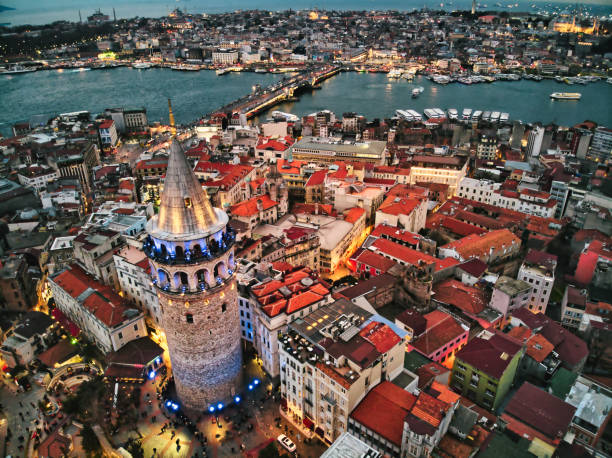
Galata Tower has a story that makes the view mean something. In the 1630s, a man named Hezarfen Ahmed Çelebi allegedly strapped artificial wings to his arms, leapt from the top of this tower, and glided across the width of the Bosphorus to land on the Asian shore while being watched by Sultan Murad IV from his palace window. Whether the details are entirely historical or partly legendary, the story has defined this tower for four centuries as a symbol of Istanbul’s relationship with ambition and flight.
Built by the Genoese in 1348, it stands 67 meters tall and provides a true 360 degree panorama. On a clear day you can see the Bosphorus stretching north toward the Black Sea, the Golden Horn cutting through the European side, the domed skyline of Sultanahmet, and the hills of Asia rising in the distance. The surrounding Galata neighborhood is also one of the best areas in Istanbul for simply wandering because independent coffee shops, vintage bookstores, instrument makers, and excellent local lunch restaurants are all within a short walk.
Visitor Information for 2026
The entry cost for foreign visitors is €30 per person. Because visitor caps are now in place to protect the structure, it is highly recommended to book your ticket in advance during the busy summer months. The Museum Pass Istanbul is valid here and remains a core reason the pass pays for itself when combined with a visit to Topkapi Palace. The tower is open daily from 08:30 to 23:00, though the box office typically stops selling tickets at 22:00.
Best Time to Visit
The best times to go are either right at opening at 08:30 or about 45 minutes before sunset when the light is warmest, and the crowds are thinner than at midday. Visiting during the “golden hour” provides incredible photography opportunities as the sun sets over the domes and minarets of the Old City.
Hidden Nearby Tip
Walk two minutes from the tower to the Camondo Stairs. This curved Art Nouveau staircase was built in the 1870s by the Camondo family, a legendary Jewish banking dynasty that shaped the commercial life of the Galata neighborhood. The stairs spiral gracefully between old apartment buildings and function as the most elegant and quietly beautiful street corner in all of Istanbul. It is an excellent spot for a photograph and rarely has large crowds.
8. Spice Bazaar and Eminönü — The Sensory Heart of Old Istanbul
Why Add This When You’ve Already Seen the Grand Bazaar?
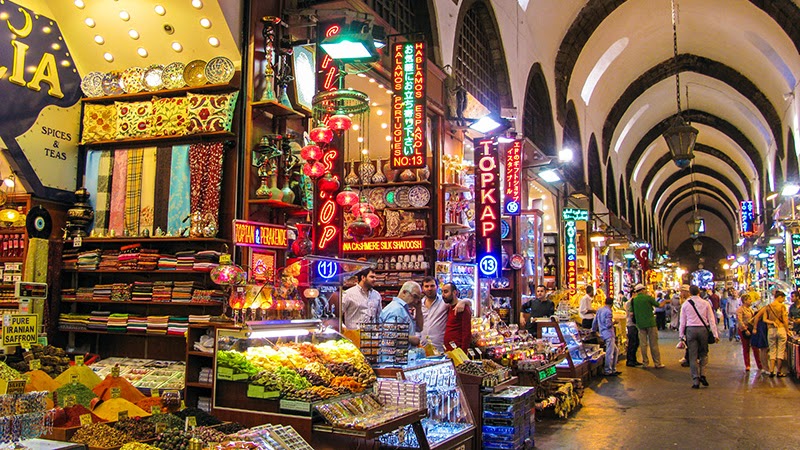
The two markets offer completely different experiences. The Grand Bazaar is vast, labyrinthine, and built for browsing without a clear direction. In contrast, the Spice Bazaar, known in Turkish as Mısır Çarşısı, is compact, focused, and surrounded by streets that feel genuinely lived-in rather than constructed primarily for tourism. It is navigable in a way the Grand Bazaar never quite is, and the neighborhood around it which is the Eminönü waterfront stands as one of the most atmospheric parts of the old city.
Inside the L-shaped market, stalls are piled high with saffron, sumac, dried herbs, and hand-blended spice mixes. You will also find Turkish coffee, every variety of Turkish delight, and towers of dried fruit and nuts. The surrounding streets outside the bazaar are equally worth exploring because you will find fishmongers on the waterfront, produce vendors loading handcarts, and small tea houses tucked into doorways where the clientele is almost entirely local.
Visitor Information for 2026
Entry to the Spice Bazaar is free for everyone. As of early 2026, the bazaar is open Monday through Saturday from 08:00 to 19:30 and on Sundays from 09:30 to 19:00. Though, the market is closed during the first days of major religious holidays.
Expert Buying Tip
One buying tip worth knowing is that saffron is one of the most counterfeited spices in Turkish markets. Real saffron is always expensive. If the price seems suspiciously low, it is almost certainly mixed with safflower or dyed threads. You should buy from established-looking stalls and ask for a small sample you can rub between your fingers to check the color depth.
Hidden Nearby Tip
Walk uphill for about ten minutes from the Spice Bazaar to find the Rüstem Pasha Mosque. This tiny masterpiece was designed by Mimar Sinan in 1563 and is hidden above a row of shops, reached by a set of narrow stairs that most tourists walk straight past. The interior is covered floor to ceiling in the finest quality Iznik tiles anywhere in Istanbul. Many historians argue that they surpass even the Blue Mosque in craftsmanship and yet it draws a fraction of the visitors. It remains one of the great hidden gems of the old city.
9. Istiklal Avenue and Beyoğlu — Modern Istanbul’s Beating Heart
Why Visit a Shopping Street?
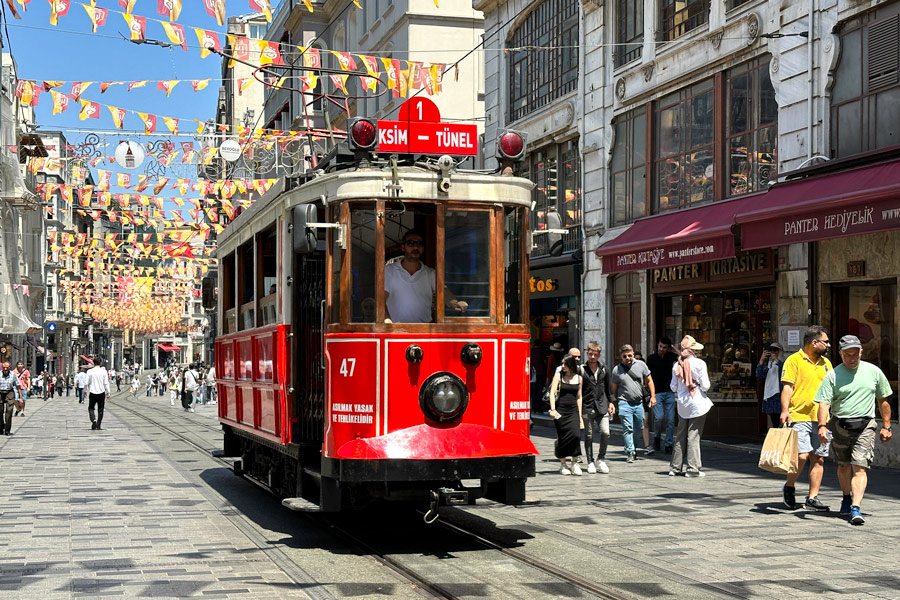
Istiklal is not really a shopping street. It is 1.4 kilometers of accumulated Istanbul history featuring Art Nouveau apartment buildings from the 19th century, active Greek Orthodox churches, and French Gothic passage buildings. This neighborhood was the cosmopolitan heart of the city during the Ottoman era and remains so today with independent cinemas, traditional meyhanes, and the only surviving historic red tram in Istanbul running through the middle of the pedestrian boulevard. On weekends, up to three million people walk here, creating an extraordinary energy that defines modern Turkey.
The real reason to visit is what lives off the main strip. The passages and side lanes branching left and right contain the Istanbul that existed long before the tourists arrived. Çiçek Pasajı, which is the Flower Passage stands as a covered arcade from the 19th century, lined with meyhanes where people have been eating and drinking for generations. Balık Pazarı is a fish market alley surrounded by restaurant tables that spill onto the street, while Çukurcuma is a nearby neighborhood of antique shops and vintage dealers where Istanbullus spend their Sunday mornings.
Visitor Information for 2026
Walking Istiklal Avenue is free, and the street never truly closes. However, if you want to ride the iconic red Nostalgic Tram (NT), you will need a small balance on your Istanbulkart. As of early 2026, the tram runs daily from 07:00 to 21:00. Most shops and passages along the avenue stay open until at least 22:00, while the restaurants and bars in the side streets often remain vibrant until the early hours of the morning.
Hidden Nearby Tip
Duck into Çiçek Pasajı from Istiklal and walk through to Balık Pazarı on the other side. This is where locals have been eating meze and drinking rakı at outdoor tables since the 19th century, and it looks almost exactly as it did then. You should order a cold meze platter and settle in for a couple of hours to experience one of the oldest and best dining traditions in the city without the typical tourist trap pricing.
10. Kadıköy — The Asian Side That Shows You the Real Istanbul
Why Cross to Asia When All the Famous Sites Are in Europe?
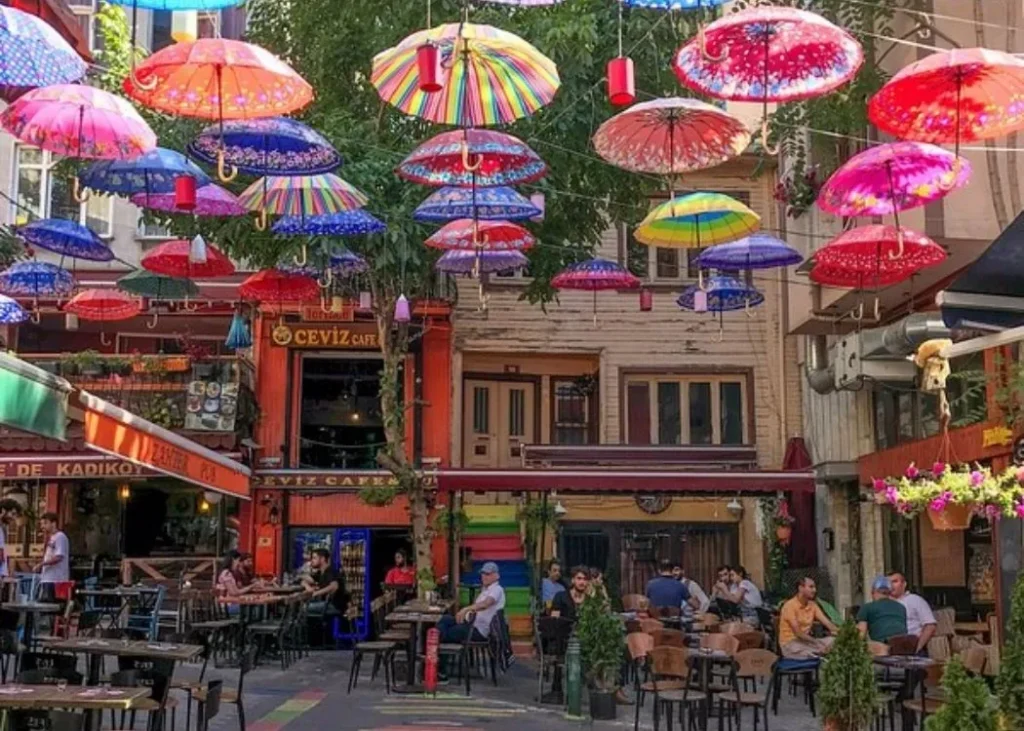
Kadıköy shows you what Istanbul looks like when it is not performing for visitors. The Asian side of the city is younger in spirit, more bohemian in character, and considerably more local in feel than anything in Sultanahmet or even Beyoğlu. The Kadıköy produce market is one of the most photogenic and authentic food markets in Turkey, while the Moda neighborhood features a seafront promenade lined with tea gardens and cats. The restaurants and street food here are consistently better and cheaper than their European side equivalents because the crowds are almost entirely made up of people who actually live there.
Visitor Information for 2026
The best way to reach Asia is by taking the public ferry from Eminönü or Karaköy. As of early 2026, the ferry crossing for foreign visitors using an Istanbulkart costs approximately 70 TL. The journey takes about 25 minutes and is one of the city’s great simple pleasures as you watch the European skyline recede, and the Asian shore draw closer. Ferries run frequently from 06:30 until approximately 23:00, after which you can use the Marmaray underwater train or a Dolmuş (yellow shared taxi) to cross back to Europe.
What to eat in Kadıköy?
When you arrive, look for midye dolma which are stuffed mussels sold by street vendors and eaten standing up. You should also seek out fresh fish at any restaurant facing the water or try whatever is coming off the grill at the kokoreç stalls near the market. For a more formal sit-down meal, the restaurants along Güneşlibahçe Street offer some of the best traditional Turkish cuisine in the city.
Hidden Nearby Tip
From central Kadıköy, walk about ten minutes or take a short tram ride to Moda. This quiet and tree-lined residential neighborhood has a seafront promenade where locals sit for hours over tea while playing backgammon and watching the ships. The view back across the Bosphorus toward the European skyline including the domes and minarets of the Old City is arguably the best photograph you will take in Istanbul. It is the one view that almost no first-time visitor knows exists until they arrive.
Essential Planning Tips for Your 2026 Visit
The Museum Pass — What It Covers and What It Does Not
This is where a lot of first-time visitors get confused, so here is a clear breakdown of the two main options.
The Museum Pass Istanbul is the official government pass issued by the Ministry of Culture and Tourism. It provides free one-time access to over ten state museums and remains valid for five consecutive days from your first use. Key sites included in the pass are Topkapi Palace with the Harem, Galata Tower, the Istanbul Archaeological Museums, and the Turkish and Islamic Arts Museum. Just keep in mind that the pass does not cover three of the most visited city spots: Hagia Sophia, the Basilica Cistern, and Dolmabahçe Palace. For most travelers planning to see both Topkapi and the Galata Tower, the pass typically pays for itself on those two sites alone while offering the added benefit of skipping the main ticket lines.
The Istanbul Tourist Pass is a private alternative that covers a broader range of attractions including the Basilica Cistern and various Bosphorus cruise options. While it costs more, it fills the gaps the government pass leaves behind. The most cost-effective approach for most first-time visitors in 2026 is to combine the official Museum Pass Istanbul for the major palaces and towers with individual tickets for the Basilica Cistern and Hagia Sophia.
The Honest Bottom Line: No single pass covers everything. For most first-timers visiting five to seven attractions over three to five days, combining the Museum Pass Istanbul for Topkapi and Galata with individual tickets for Hagia Sophia and the Basilica Cistern is the most cost-effective approach. You should do the math based on your specific itinerary before buying anything to ensure you are getting the best value for your trip.
Getting Around the City
Istanbul public transport is excellent, clean, and very affordable. You should pick up an Istanbulkart at any major metro station or ferry terminal because this rechargeable card works on all metros, trams, buses, and ferries. Alternatively, you can now tap a contactless credit card directly at any turnstile for a slightly higher per-ride fee which is very convenient for short stays. The T1 tram line is the single most useful route for sightseers as it connects the modern areas near Taksim to the historic heart of Sultanahmet.
Where to Stay?
Sultanahmet puts you within walking distance of Hagia Sophia, Topkapi Palace, and the Grand Bazaar. It is the most convenient base for a history-focused first trip.
Beyoğlu and Galata offer a more local atmosphere with better restaurants and nightlife while remaining just a short tram ride away from the main sights. This area is a great option if you are spending more than three days in the city.
Best Time to Visit Istanbul
April through May and September through October are the ideal windows for a visit. Temperatures usually sit comfortably between 18°C and 25°C, crowds are more manageable, and hotel prices are lower than in mid-summer. July and August can be very hot and crowded, while the winter months from December to February are quiet and atmospheric for those who do not mind the cold. Some outdoor sites lose some of their appeal, but the city itself is magical with far fewer visitors.
The Friday Rule
Both Hagia Sophia and the Blue Mosque have restricted access for tourists during Friday midday prayers. If your visit falls on a Friday, you should use that time to explore the Grand Bazaar, the Spice Bazaar, or the Basilica Cistern and plan to return to the mosques in the mid-afternoon.
Final Thought — Istanbul Rewards the Curious
Every city makes promises it cannot fully keep, but Istanbul keeps all of its promises and then quietly offers you ten more things it never mentioned. You might come for Hagia Sophia and leave thinking about a quiet tea you had in a hidden medrese. You might come for the Grand Bazaar and leave thinking about the peaceful mosque around the corner that almost no one was visiting.
Istanbul is a city built for getting lost in the best possible way. Jump on a tram, get off somewhere that looks interesting, and follow the smell of fresh simit or grilled corn. The famous sites are extraordinary, but the city has a second layer of discovery just beneath the surface. Go with comfortable shoes, an appetite for history, and more time than you think you need. Istanbul has a way of making every visitor start planning their next trip before the current one is even over.
Planning your first trip to Istanbul? Drop your questions in the comments below and I will help you plan the perfect itinerary.
FAQs
What should I do in Istanbul for the first time?
Start with the Sultanahmet district on your first morning. Hagia Sophia, the Blue Mosque, and the Basilica Cistern are all within a ten-minute walk of each other and cover the full span of Byzantine and Ottoman history in a single neighborhood. Spend your first afternoon at Topkapi Palace, then take the T1 tram up to Galata Tower and the Beyoğlu neighborhood for the evening. On your second day, do the Bosphorus cruise in the morning, the Grand Bazaar and Spice Bazaar in the afternoon, and cross to Kadıköy for dinner. That two-day structure covers everything essential and leaves time to follow your instincts.
What should I not miss in Istanbul?
If you only have time for five things, make them Hagia Sophia, Topkapi Palace, the Basilica Cistern, a Bosphorus ferry crossing, and a meal in Beyoğlu. Those five experiences give you the full range of what makes Istanbul unlike anywhere else: Byzantine history, Ottoman imperial power, ancient engineering, the city’s two-continent geography, and its living cosmopolitan culture. The Blue Mosque and the Grand Bazaar are also essential if your schedule allows.
What is the best area in Istanbul for first-time visitors?
Sultanahmet is the classic choice for a first trip and for good reason. You are within walking distance of almost every major historical site, the neighborhood is easy to navigate on foot, and the density of things worth seeing is unmatched anywhere in the city. The trade-off is that it is the most tourist-heavy part of Istanbul, so dining and accommodation tend to be pricier and less local in character. If you are staying five days or more, consider splitting your time. Start in Sultanahmet for the first two or three nights, then move to Beyoğlu or Galata for the remainder. You get the convenience of being near the sights and the pleasure of a more lived-in neighborhood.
Is Istanbul safe for first-time tourists?
Yes. Istanbul is a welcoming, heavily visited city and is generally very safe for international travelers. The main tourist districts are busy and well-policed throughout the day. Standard urban precautions apply: keep an eye on your belongings in crowded markets and on the tram, use established taxi apps like BiTaksi rather than unmarked street cabs, and stay aware of your surroundings in late-night settings. Solo travelers, families, and people of all backgrounds visit Istanbul regularly without incident.
What should I eat in Istanbul as a first-time visitor?
Start with the street food classics before you do anything else. Simit, sesame-encrusted bread rings, from a street cart for breakfast. A grilled fish sandwich (balık ekmek ) from the boats at Eminönü before boarding a ferry. Lahmacun or pide at any neighborhood lokanta that isn’t directly facing the Blue Mosque. Midye dolma (stuffed mussels) from a street vendor in Kadıköy, eaten standing up. And baklava from a proper pastry shop (Güllüoğlu is a reliable name) not a tourist café. For a sit-down meal, find a meyhane in the Balık Pazarı alley near Istiklal, order the cold meze platter, and work your way through it slowly. Istanbul’s food is one of its great underrated pleasures and it costs very little when you eat where locals eat.
What is best to buy in Turkey as a souvenir or gift?
Turkey produces some genuinely exceptional things worth bringing home. Hand-painted Iznik ceramics, the blue and white style you see throughout the mosques, are one of the best purchases you can make, particularly if you buy from a workshop rather than a tourist stall. Handwoven Turkish towels (peshtemals) are beautiful, lightweight, and useful. Copper and brass goods from the Grand Bazaar age well and are hard to find elsewhere. For food, saffron from the Spice Bazaar is a safe buy if you choose carefully, along with specialty Turkish delight from a dedicated shop like Hafız Mustafa rather than a generic souvenir box. Turkish tea sets, leather goods, and hand-knotted rugs are also worth considering if you have the budget and the luggage space. Whatever you buy in the Grand Bazaar or the Spice Bazaar, remember that the first price is never the final price.
How many days do you need in Istanbul to see the main sights?
Three full days is the realistic minimum to cover the essential historical sites at a reasonable pace: Hagia Sophia, Topkapi, the Blue Mosque, the Grand Bazaar, and a Bosphorus cruise. Five days lets you also explore Beyoğlu, Galata, and Kadıköy without feeling rushed. A week gives you enough time to genuinely settle into the city’s rhythm, follow some detours, and discover things that weren’t on any list.
Is the Museum Pass Istanbul worth buying?
Yes, if your itinerary includes Topkapi Palace and Galata Tower alongside at least two or three other state museums. Those two sites alone bring you close to breaking even on the pass price, and the queue-skipping benefit at Topkapi is worth real money in peak season. It does not cover Hagia Sophia or the Basilica Cistern, so budget for separate tickets at those two sites regardless of which pass you carry.
Do I need to book Istanbul attractions in advance?
For Topkapi Palace and the Basilica Cistern, booking in advance is strongly recommended between May and September. Queue times without advance tickets can exceed two hours at both sites. Hagia Sophia does not offer official online ticketing but booking a skip-the-line tour through a reputable platform saves significant waiting time. The Blue Mosque, Grand Bazaar, and Spice Bazaar require no ticket or booking at all.